Steam, Cold Butter, and the Last Holdout in the Bakery Case
A buttermilk biscuit is a temperature problem before it is a recipe problem, which explains why a warehouse chain selling them counts as news.
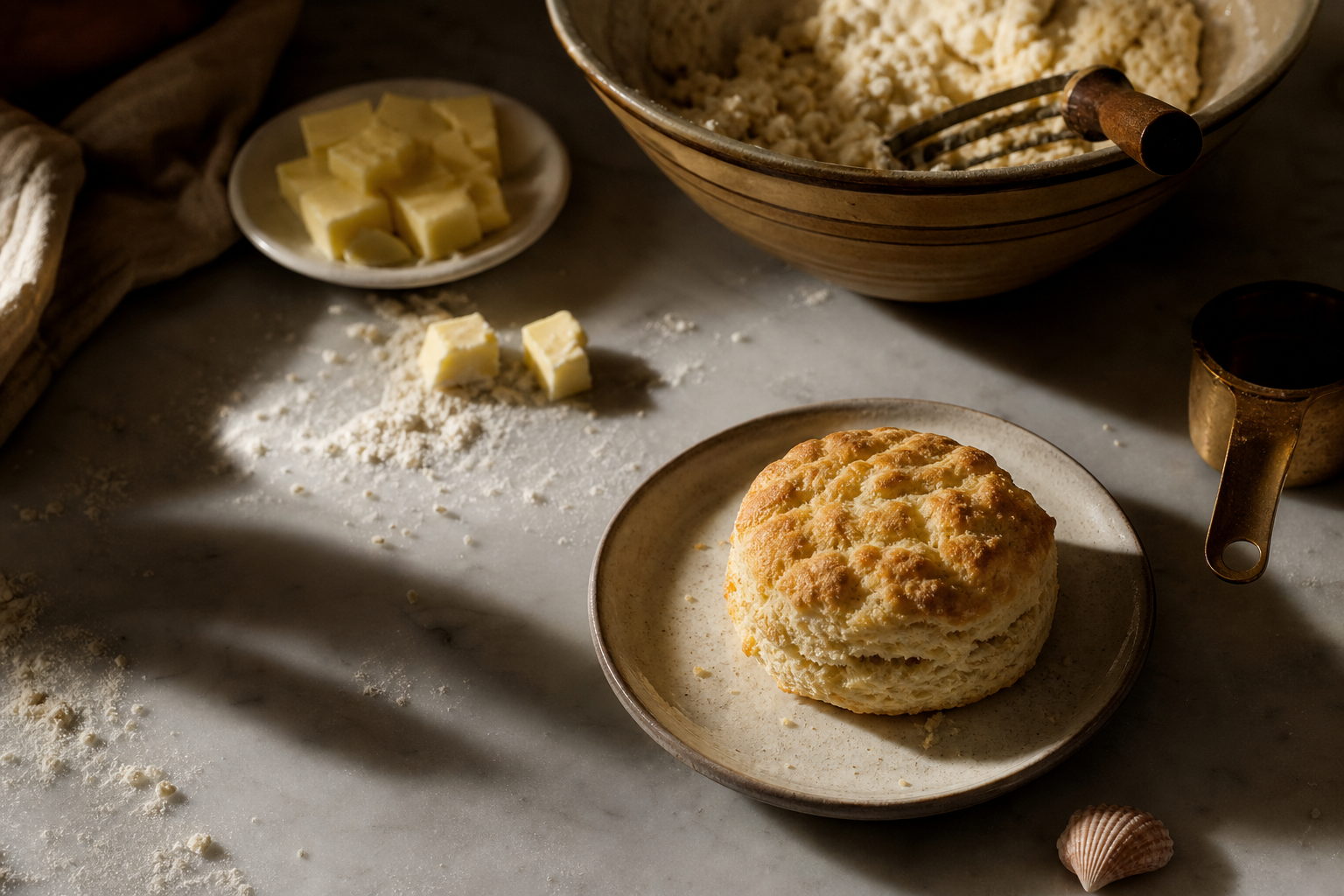
A buttermilk biscuit is a temperature problem before it is a recipe problem. Cold fat, minimal handling, a hot oven, and steam doing the structural work in the first four minutes. That is the whole trick, and it explains why a warehouse chain selling Southern-style biscuits in bulk qualifies as news. Costco has moved croissants and muffins by the pallet for years, and both of those tolerate long holding times and a little neglect. A biscuit peaks and then slumps, sometimes inside the same hour. Coverage of the new bakery item has settled on the surprise of the timing and the delight of shoppers who called it a dream come true, which is fair enough as reporting goes. It leaves the harder question alone: what a biscuit demands from whoever makes it, and whether those demands survive multiplication by several thousand.
Stack up the constraints. Butter has to stay in visible pieces through mixing, so the dough cannot be worked long or warm. Dough that sits loses lift, which pushes baking as close to the point of sale as the schedule allows. Humidity changes how much liquid the flour will take, and a bakery in Savannah in August is working in different air than one outside Denver in January. Then the finished biscuit has to sit in a clamshell without steaming itself soft. Each of those is solvable. The solution is a formula built to survive handling, which usually means more leavener and a dough that shrugs off a rough mix. That formula shapes the product, and it shapes what got traded away. Seeing the trade clearly requires knowing what an uncompromised biscuit involves, and that knowledge sits with people who make them a few dozen at a time.
Cheryl Day's Treasury of Southern Baking is a good place to look, because it treats the biscuit as something that has to be explained. Day, who ran Back in the Day Bakery in Savannah, gathers more than two hundred from-scratch recipes, and the early practical sections handle the unglamorous mechanics: creaming butter properly, reading your kitchen's temperature and humidity, coaxing layers that separate instead of merging into cake. The biscuit methods are written out step by step, on the assumption that you did not grow up watching someone do it by feel. Most of us did not.
What comes through is that flakiness is a consequence of restraint. Fat stays solid, water turns to steam, steam shoves the layers apart. Once that sequence is clear, the failures explain themselves. A tough biscuit has been overworked. A flat one had butter that melted before it ever met heat. The book then widens out, and the widening costs something. Two hundred recipes covering scones, muffins, fritters, pies, and layer cakes is a great deal of territory, and if you came for one reliable breakfast biscuit, the abundance can feel like being handed a library card when you asked for directions.
The variations compound the problem. Encouragement to improvise with cornmeal, pecans, sorghum, or cane syrup is generous, and it arrives early for anyone whose first batch came out dense enough to skip across a pond. Improvisation earns its place once the plain version works. The framing gives me more trouble than the sprawl does. Recipes rooted in family history and one bakery in one city carry an implicit promise of authenticity, and authenticity is the single claim here you cannot test. Day's technical guidance you can check in your own oven at four in the afternoon.
The lineage you take on faith, and it quietly tips the scale when you are deciding whether your batch failed or simply came out different from hers. The recipes would stand up with less heritage attached to them. The technique holds either way. A skillet-style loaf and a showpiece layer cake for a gathering come out of the same understanding of fat, flour, and heat, which is the argument the collection actually makes. Learn the mechanism and the recipes become adjustable.
Expect more of this. Regional baked goods travel as retail categories now, and the biscuit held out longest because it is the most fragile thing in the case. Whatever version shows up next, the useful skill is telling a well-built biscuit from a merely convenient one, and that comes from making a few yourself and paying attention to what went wrong. Day's collection is one way in, sprawling and exact at the same time. Somewhere between the frozen butter and the sorghum variations, you stop reading the recipe as a set of orders and start reading it as a description of what heat does to flour.
Why this book
Try it on a Saturday. Freeze the butter for fifteen minutes and grate it into the flour, since grated frozen butter stays in pieces through the rushed mixing you will inevitably do. Hold back some of the buttermilk if the air is heavy, add it by feel, and stop the moment the dough coheres. Fold it over on itself three or four times for layers. Bake hot, and eat within twenty minutes, because biscuits are honest about time in a way muffins never have to be. The same understanding changes how you read the Costco version. Pull one apart and look for separation between the layers, the sign that solid fat did its work. Notice whether the crumb is tender or springy, since springiness suggests a dough engineered to survive being stacked, wrapped, and trucked. Notice how it tastes cold, four hours later, in the car. A warehouse bakery is solving a hard distribution problem at a price no home baker can match on labor alone. The point is to know what you are tasting, and what the formula gave up in order to arrive intact.
Bridges by email
A news story and the book that goes with it, whenever we publish one.