What a Thousand Years of Clan Rivalry Says About the Royal Summer
King Charles is heading north again, and he is making no secret of his delight.
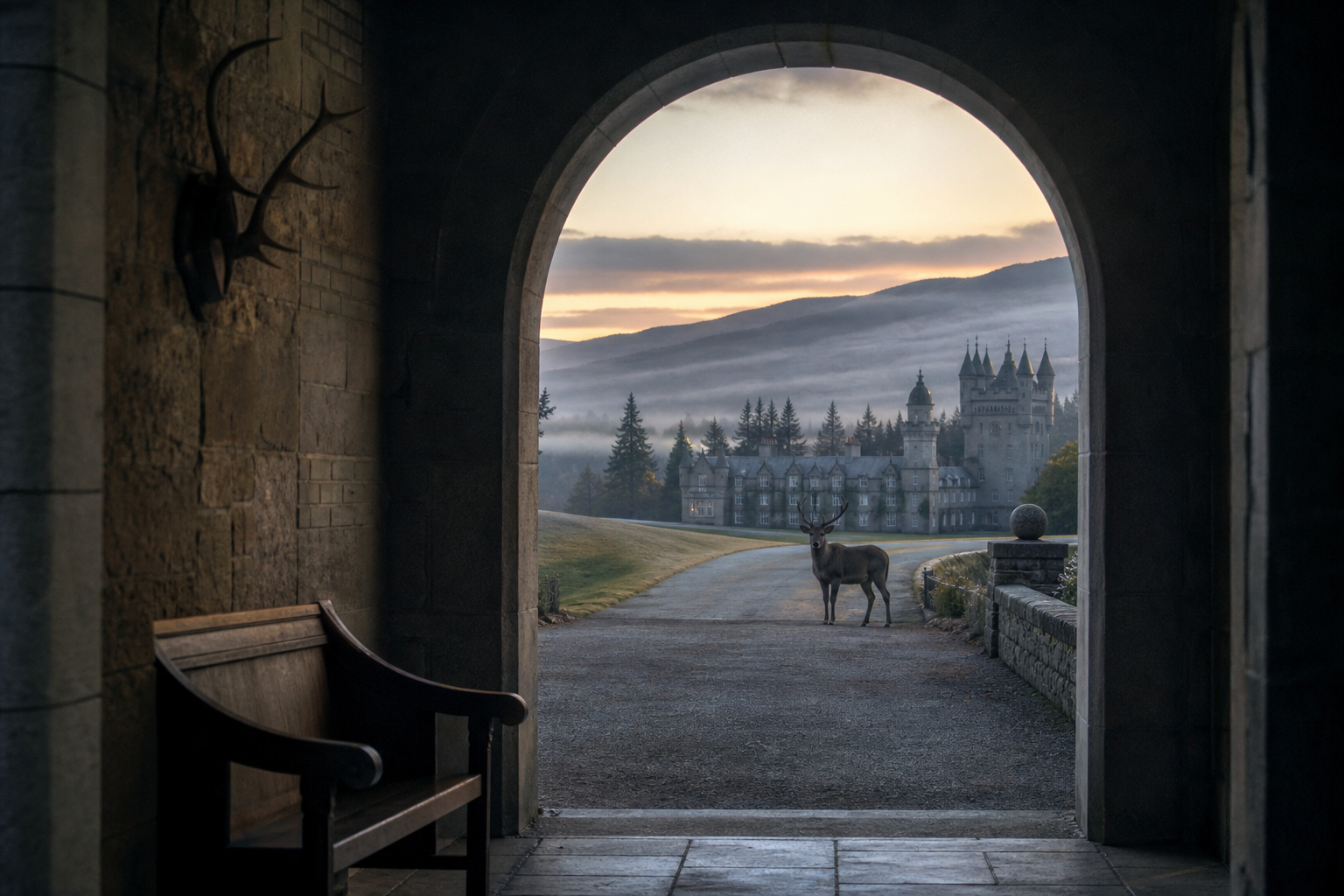
King Charles is heading north again, and he is making no secret of his delight. In Dingwall he worked the crowd, thanked the people who make a Balmoral summer possible, and looked like a man counting the hours until the traffic thins out. The coverage files itself the way it always does: monarch on holiday, tweed, hills, a stretch of hard-won privacy. The country he disappears into spent most of the past thousand years being impossible to disappear in. Those glens were crowded with claims, pressed and defended and inherited, family by family, watercourse by watercourse. The emptiness is the newest thing about them, and it is the thing worth holding in mind before the gates shut for August.
Filed as leisure news, the story stays small: a tired sovereign, a favourite house, some shooting weather. The seclusion itself has a history. In 1746 this region was the losing side of a war, and Culloden closed down a way of holding land through kinship and obligation. Within a century the Clearances moved people off the hills and shipped a good many of them to Canada, the United States, Australia and New Zealand, where the clan names still turn up on mailboxes. Royal affection for the Highlands arrived afterwards, once the glens had gone quiet. The annual retreat rests on a very specific silence, and the headlines treat that silence as scenery.
Alistair Moffat's The Highland Clans takes the long view on purpose. He starts with Celtic origins and the arrival of the Romans, then moves through Somerled the Viking and Robert the Bruce, through Bannockburn and Flodden, and on to Bonnie Prince Charlie and the Jacobite Risings that finished at Culloden in 1746. The Scotsman called it a brisk and accessible guide to a thousand years of reiving and rivalry, and brisk is the operative word. What holds the book together is an account of how clan society actually worked. Moffat's answer is obligation: kinship that came with duties attached, and duties that came with cattle, men and ground.
Loyalty and valour get their due, and so does lineage, but the hills do a great deal of the political work. Terrain decided who could reach you in bad weather, who owed you a share of the herd, and whose byre you could raid without a reckoning. A glen with one narrow entrance was a different kind of property from an open coastal strip, and the families holding each of them behaved accordingly. That compression comes at a price. A thousand years in a short book means some families arrive as a name and a territory and depart a page later, and Culloden can read like a curtain line instead of the opening of a long administrative campaign against Gaelic Scotland.
The pain of the Clearances is acknowledged. The bureaucratic patience of the process deserves more room than a survey can spare: sheep arithmetic, estate ledgers, decades of polite correspondence that emptied a parish by increments. That is the chapter I wanted twice as long. The scope pays off when Moffat follows the emigrant ships rather than waving them off at the pier. Nova Scotia, Otago and the Carolinas turn the clans into loyalties that survived by leaving, carried in names and songs while the glens behind them went to grass. That continuity is the book's best idea.
Clan identity outlasted the land that produced it, and the headstones in Ontario and Dunedin belong to the Highland story proper. The supporting material earns its keep. A clan map and an alphabetical list of Highland clans let you attach a place-name to a family and a family to a stretch of ground, which serves equally well at the kitchen table or at a passing place on a single-track road. It also tilts the book toward the heritage-tourism customer, and Moffat seems untroubled by that. His subject is a region whose modern economy runs partly on ancestry and access, so the tilt is an honest admission of where the story ended up.
Moffat's thousand years keep circling one question: who holds this ground, and on what terms. Balmoral in 2026 is one more answer, reached by a route that runs through Culloden and the emigrant ships. If the clan map at the back is the part you use most, it will still change what the place-names sound like on the A9, every Glen and Strath turning back into an address with owners and arguments behind it. The Highlands were fought over for centuries before they became somewhere to go and be left alone, and the fighting is the better story.
Why this book
Watch the Dingwall walkabout with any of this in mind and the mechanics look older than the tailoring. Charles turned up in person, named local people, and marked a town's 800 years as a Royal Burgh. Clan chiefs held their ground by exactly that method, maintaining face-to-face relationships across a district, minus the press pool. The direction of dependence has since been reversed. A chief could not afford to lose his tenants, who were the rent, the herd and the fighting strength at once. A modern occupant of a Highland estate benefits from their absence, because absence is what makes quiet marketable. The privacy Charles is so plainly looking forward to was manufactured in the nineteenth century and monetised in the twentieth. That is a blunter account than August coverage tends to offer, and it is the one the evidence supports: the calm at Balmoral has a documented history, and Moffat follows it.
Bridges by email
A news story and the book that goes with it, whenever we publish one.