
RF Microelectronics
Pearson Education · Print & ebook · September 22, 2011
A Reference pick for readers exploring RF Microelectronics.
We earn from qualifying purchases.
- Who it’s for
- A detailed guide to RF circuit analysis and design, from core principles to transceiver architectures.
- Themes
- RF circuit design, Wireless transceivers, RF analysis and design
- Genres
- Microelectronics, Microwaves, Technology
Nearest books
Matched by what the books are about, then ordered by what their readers also loved.
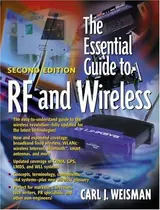 The Essential Guide to RF and WirelessCarl J. Weisman67% matchShares Microwaves and Technology
 Fundamentals of MicroelectronicsBehzad Razavi63% matchShares Microelectronics
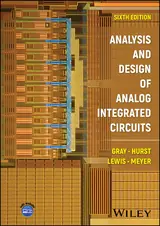 Analysis and Design of Analog Integrated CircuitsPaul R. Gray, Paul J. Hurst56% matchShares Microelectronics
 Signal and Power Integrity - SimplifiedEric Bogatin56% match
 Electromagnetic Compatibility EngineeringHenry W. Ott56% match
 Practical Electronics for Inventors, Fourth EditionPaul Scherz, Simon Monk54% match
 Building Wireless Sensor NetworksRobert Faludi53% match
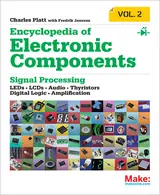 Encyclopedia of Electronic Components Volume 2Charles Platt51% match
For younger readers: Easy Electronics, The Way Things Work: Newly Revised Edition
Start with three books, and this one can be the first.
Members get a new edition every morning: a route out from their books to essays, research and talks, with the reason for each.
Start with this bookAbout this book
The Acclaimed RF Microelectronics Best-Seller, Expanded and Updated for the Newest Architectures, Circuits, and Devices Wireless communication has become almost as ubiquitous as electricity, but RF design continues to challenge engineers and researchers. In the 15 years since the first edition of this classic text, the demand for higher performance has led to an explosive growth of RF design techniques.
Continue reading
In RF Microelectronics, Second Edition, Behzad Razavi systematically teaches the fundamentals as well as the state-of-the-art developments in the analysis and design of RF circuits and transceivers. Razavi has written the second edition to reflect today’s RF microelectronics, covering key topics in far greater detail. At nearly three times the length of the first edition, the second edition is an indispensable tome for both students and practicing engineers. With his lucid prose, Razavi now - Offers a stronger tutorial focus along with hundreds of examples and problems - Teaches design as well as analysis with the aid of step-by-step design procedures and a chapter dedicated to the design of a dual-band WiFi transceiver - Describes new design paradigms and analysis techniques for circuits such as low-noise amplifiers, mixers, oscillators, and frequency dividers This edition’s extensive coverage includes brand new chapters on mixers, passive devices, integer-N synthesizers, and fractional-N synthesizers. Razavi’s teachings culminate in a new chapter that begins with WiFi’s radio specifications and, step by step, designs the transceiver at the transistor level. Coverage includes - Core RF principles, including noise and nonlinearity, with ties to analog design, microwave theory, and communication systems - An intuitive treatment of modulation theory and wireless standards from the standpoint of the RF IC designer - Transceiver architectures such as heterodyne, sliding-IF, directconversion, image-reject, and low-IF topologies. - Low-noise amplifiers, including cascode common-gate and commonsource topologies, noise-cancelling schemes, and reactance-cancelling configurations - Passive and active mixers, including their gain and noise analysis and new mixer topologies - Voltage-controlled oscillators, phase noise mechanisms, and various VCO topologies dealing with noisepower-tuning trade-offs - All-new coverage of passive devices, such as integrated inductors, MOS varactors, and transformers - A chapter on the analysis and design of phase-locked loops with emphasis on low phase noise and low spur levels - Two chapters on integer-N and fractional-N synthesizers, including the design of frequency dividers - Power amplifier principles and circuit topologies along with transmitter architectures, such as polar modulation and outphasing
RF Circuit Design
A detailed guide to RF circuit analysis and design, from core principles to transceiver architectures.
Come here for
- Step-by-step design of a dual-band WiFi transceiver
- Coverage of mixers, synthesizers, oscillators, and power amplifiers
Expect
- Noise and nonlinearity, modulation theory, and wireless standards
- Design procedures, examples, and problems
Where it sits
| Technology | 59% |
|---|---|
| Microelectronics | 58% |
| Microwaves | 53% |
Percentages are BookFrontier’s reading of the book.
Publisher categories
- Semiconductors
- Technology
- Authors
- Behzad Razavi
- Publisher
- Pearson Education
- Published
- September 22, 2011
- Format
- Print & ebook
- Theme
- RF circuit design · Wireless transceivers · RF analysis and design
- Reading lane
- Semiconductors