
The Prisoner
In Search of Lost Time, Volume 5
Penguin Publishing Group · Print & ebook · January 8, 2019
The long-awaited fifth volume--representing "the very summit of Proust's art" (Slate)--in the acclaimed Penguin translation of "the greatest literary work of the twentieth century" (The New York Times) A Penguin Classics Deluxe Edition, with flaps and deckle-edged paper Carol Clark's acclaimed translation of The Prisoner introduces a new generation of American readers to the literary riches of Marcel Proust.
We earn from qualifying purchases.
- Who it’s for
- Possessive love turns comic and troubling amid Proust’s reflections on class, art, and memory.
- Themes
- Possessive love, Time and memory, Class and social snobbery
- Genres
- 20th-Century French Fiction, Psychological Fiction, The Classics
Nearest books
Matched by what the books are about, then ordered by what their readers also loved. Most of these share its genre: The Classics.
 Swann's WayMarcel Proust63% matchAlso shares 20th-Century French Fiction
 The TrialFranz Kafka, Idris Parry53% matchAlso shares Psychological Fiction
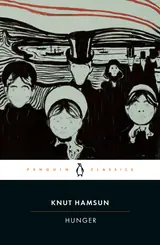 HungerKnut Hamsun48% matchAlso shares Psychological Fiction
 The New York TrilogyPaul Auster58% match
 NadjaAndré Breton, Mark Polizzotti48% matchAlso shares 20th-Century French Fiction
 In Search of Lost TimeMarcel Proust, D.J. Enright65% matchAlso shares 20th-Century French Fiction
 His MasterpieceÉmile Zola50% match
 The LoverMarguerite Duras46% match
For younger readers: The Phantom of the Opera
Start with three books, and this one can be the first.
Members get a new edition every morning: a route out from their books to essays, research and talks, with the reason for each.
Start with this bookAbout this book
The long-awaited fifth volume--representing "the very summit of Proust's art" (Slate)--in the acclaimed Penguin translation of "the greatest literary work of the twentieth century" (The New York Times) A Penguin Classics Deluxe Edition, with flaps and deckle-edged paper Carol Clark's acclaimed translation of The Prisoner introduces a new generation of American readers to the literary riches of Marcel Proust.
Continue reading
The fifth volume in Penguin Classics' superb new edition of In Search of Lost Time--the first completely new translation of Proust's masterpiece since the 1920s--brings us a more comic and lucid prose than readers of English have previously been able to enjoy. The titular "prisoner" is Albertine, the tall, dark orphan with whom Marcel had fallen in love at the end of Sodom and Gomorrah (volume 4). Albertine has moved in with Marcel in his family's apartment in Paris, where the pair have a seemingly limitless supply of money and are chaperoned only by Marcel's judgmental family servant, Françoise. Marcel, who worries obsessively about Albertine's relationships with other women, grows more and more irrational in his attempts to control her, keeping her prisoner in his apartment and buying her couture gowns, furs, and jewelry in an attempt to protect her from herself and from the outside world and. And yet in addition to being a tragedy of possessive love, The Prisoner is also a comedy of human folly and misunderstanding, linked to the other volumes of the larger novel through its themes of class differences, art, irrationality, social snobbery, and, of course, time and memory. For more than seventy-five years, Penguin has been the leading publisher of classic literature in the English-speaking world. With more than 2,000 titles, Penguin Classics represents a global bookshelf of the best works throughout history and across genres and disciplines. Readers trust the series to provide authoritative texts enhanced by introductions and notes by distinguished scholars and contemporary authors, as well as up-to-date translations by award-winning translators.
Love, With Footnotes
Possessive love turns comic and troubling amid Proust’s reflections on class, art, and memory.
Come here for
- The uneasy comedy of love turning possessive
- Proust’s mix of art, snobbery, and memory
Expect
- Layered reflections on irrationality and time
- The fifth volume in a larger novel
Where it sits
| 20th-Century French Fiction | 93% |
|---|---|
| The Classics | 44% |
| Psychological Fiction | 35% |
Percentages are BookFrontier’s reading of the book.
Publisher categories
- The Classics
- Literary Fiction
- French Literary Collections
- Authors
- Marcel Proust, Christopher Prendergast
- Publisher
- Penguin Publishing Group
- Published
- January 8, 2019
- Format
- Print & ebook
- Theme
- Possessive love · Time and memory · Class and social snobbery
- Reading lane
- The Classics