
Superintelligence
Paths, Dangers, Strategies
Oxford University Press · Print & ebook · April 12, 2016
The human brain has some capabilities that the brains of other animals lack.
We earn from qualifying purchases.
- Who it’s for
- Readers interested in the future of artificial intelligence and its societal impact
- Themes
- Artificial Intelligence, Existential Risk, Future of Humanity
- Pacing
- Reflective
Nearest books
Matched by what the books are about, then ordered by what their readers also loved. Most of these share its genres: AI & Machine Learning and Futures & Foresight.
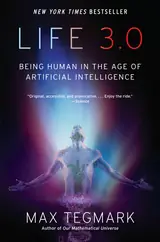 Life 3.0Max Tegmark74% match
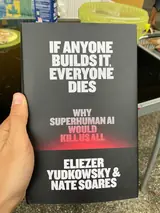 If Anyone Builds It, Everyone DiesRafe Beckley, Eliezer Yudkowsky73% match
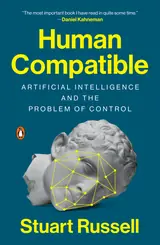 Human CompatibleStuart Russell71% matchAlso shares Science & Society
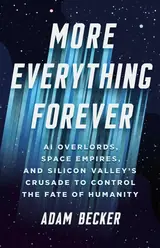 More Everything ForeverAdam Becker, Greg Tremblay70% match
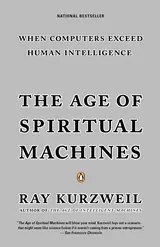 The Age of Spiritual MachinesRay Kurzweil70% match
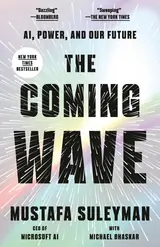 The Coming WaveMustafa Suleyman, Michael Bhaskar69% match
For younger readers: Basher Science Mini: Artificial Intelligence, Future Tense, Unstoppable US, Volume 1: How Humans Took Over the World
Start with three books, and this one can be the first.
Members get a new edition every morning: a route out from their books to essays, research and talks, with the reason for each.
Start with this bookAbout this book
The human brain has some capabilities that the brains of other animals lack. It is to these distinctive capabilities that our species owes its dominant position. Other animals have stronger muscles or sharper claws, but we have cleverer brains. If machine brains one day come to surpass human brains in general intelligence, then this new superintelligence could become very powerful.
Continue reading
As the fate of the gorillas now depends more on us humans than on the gorillas themselves, so the fate of our species then would come to depend on the actions of the machine superintelligence. But we have one advantage: we get to make the first move. Will it be possible to construct a seed AI or otherwise to engineer initial conditions so as to make an intelligence explosion survivable? How could one achieve a controlled detonation? To get closer to an answer to this question, we must make our way through a fascinating landscape of topics and considerations. Read the book and learn about oracles, genies, singletons; about boxing methods, tripwires, and mind crime; about humanity's cosmic endowment and differential technological development; indirect normativity, instrumental convergence, whole brain emulation and technology couplings; Malthusian economics and dystopian evolution; artificial intelligence, and biological cognitive enhancement, and collective intelligence. This profoundly ambitious and original book picks its way carefully through a vast tract of forbiddingly difficult intellectual terrain. Yet the writing is so lucid that it somehow makes it all seem easy. After an utterly engrossing journey that takes us to the frontiers of thinking about the human condition and the future of intelligent life, we find in Nick Bostrom's work nothing less than a reconceptualization of the essential task of our time.
Who it’s for
- Readers interested in the future of artificial intelligence and its societal impact
- Those seeking a deep, philosophical exploration of superintelligence and existential risks
Where it sits
| AI & Machine Learning | 96% |
|---|---|
| Futures & Foresight | 36% |
| Science & Society | 32% |
Percentages are BookFrontier’s reading of the book.
Publisher categories
- Computers
- Authors
- Nick Bostrom
- Publisher
- Oxford University Press
- Published
- April 12, 2016
- Format
- Print & ebook
- Theme
- Artificial Intelligence · Existential Risk · Future of Humanity
- Reading lane
- Computers