
Admiration and Awe
Morisco Buildings and Identity Negotiations in Early Modern Spanish Historiography
Oxford University Press · Print & ebook · June 10, 2017
This book offers the first systematic analysis of the cultural and religious appropriation of Andalusian architecture by Spanish historians during the sixteenth and seventeenth centuries.
We earn from qualifying purchases.
- Who it’s for
- This study traces how Spanish historians recast Andalusian architecture amid debates over faith and national identity.
- Genres
- Spanish & Portuguese History, Medieval Architecture, 16th-Century History
- Published
- Oxford University Press, June 10, 2017
Nearest books
Matched by what the books are about, then ordered by what their readers also loved. Most of these share its genre: Spanish & Portuguese History.
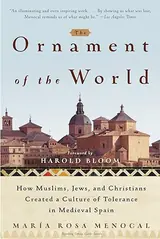 The Ornament of the WorldMaria Rosa Menocal, María Rosa Menocal58% match
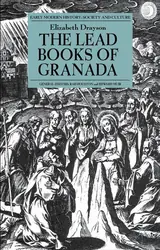 The Lead Books of GranadaE. Drayson, Elizabeth Drayson56% matchAlso shares 16th-Century History
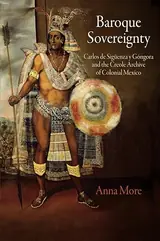 Baroque SovereigntyAnna More54% match
 ConquistadoresFernando Cervantes52% matchAlso shares 16th-Century History
For younger readers: Mosque, The Genius of Islam
Start with three books, and this one can be the first.
Members get a new edition every morning: a route out from their books to essays, research and talks, with the reason for each.
Start with this bookAbout this book
This book offers the first systematic analysis of the cultural and religious appropriation of Andalusian architecture by Spanish historians during the sixteenth and seventeenth centuries. To date this process of Christian appropriation has generally been discussed as a phenomenon of architectural hybridisation. However, this was a period in which the construction of a Spanish national identity became a key focus of historical discourse.
Continue reading
As a result, cultural hybridity encountered partial opposition from those seeking to establish cultural and religious homogeneity. Spain's Islamic past became a major concern in this period and historical writing served as the site for a complex negotiation of identity. Historians and antiquarians used a range of strategies to re-appropriate the meaning of medieval Islamic heritage as befitted the new identity of Spain as a Catholic monarchy and empire. On the one hand, the monuments' Islamic origin was subjected to historical revisions and re-identified as Roman or Phoenician. On the other hand, religious forgeries were invented that staked claims for buildings and cities having been founded by Christians prior to the arrival of the Muslims in Spain. Islamic stones were used as core evidence in debates that shaped the early development of archaeology, and they also became the centre of a historical controversy about the origin of Spain as a nation as well as its ecclesiastical history.
Andalusian Architecture
This study traces how Spanish historians recast Andalusian architecture amid debates over faith and national identity.
Come here for
- How historians re-identified Islamic monuments as Roman or Phoenician
- Religious forgeries claiming Christian origins for buildings and cities
Expect
- Islamic stones in early archaeological debates
- Historical writing shaped by competing claims about Spain’s origins
Where it sits
| Spanish & Portuguese History | 47% |
|---|---|
| Medieval Architecture | 40% |
| 16th-Century History | 36% |
Percentages are BookFrontier’s reading of the book.
Publisher categories
- European History
- Authors
- Antonio Urquízar-Herrera, Antonio Urquizar-Herrera
- Publisher
- Oxford University Press
- Published
- June 10, 2017
- Format
- Print & ebook
- Reading lane
- European History