
Programming With POSIX Threads
Pearson Education · Print & ebook · May 16, 1997
A Programming pick for readers exploring Programming With POSIX Threads.
We earn from qualifying purchases.
- Who it’s for
- A practical guide to POSIX threads, from asynchronous programming basics to realtime scheduling and debugging.
- Themes
- POSIX threads, Thread synchronization, Debugging concurrent code
- Genres
- Parallel Programming, C Programming, UNIX Systems
Nearest books
Matched by what the books are about, then ordered by what their readers also loved.
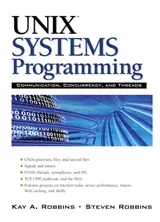 UNIX Systems ProgrammingKay Robbins, Steve Robbins71% matchShares C Programming and UNIX Systems
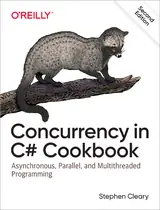 Concurrency in C# CookbookStephen Cleary66% matchShares Parallel Programming
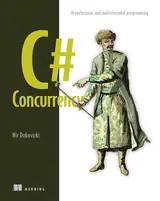 C# ConcurrencyNir Dobovizki65% matchShares Parallel Programming
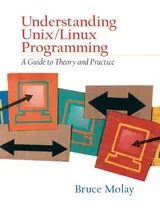 Understanding UNIX/LINUX ProgrammingBruce Molay62% matchShares C Programming and UNIX Systems
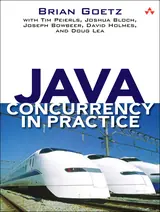 Java Concurrency in PracticeBrian Goetz, Tim Peierls62% matchShares Parallel Programming
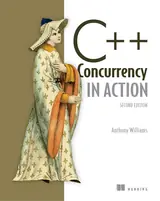 C++ Concurrency in ActionAnthony Williams62% matchShares Parallel Programming
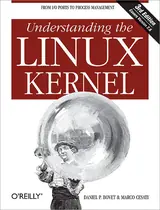 Understanding the Linux KernelDaniel Bovet, Marco Cesati61% matchShares C Programming
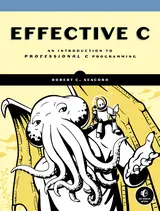 Effective CRobert C. Seacord61% matchShares C Programming
For younger readers: The CS Detective
Start with three books, and this one can be the first.
Members get a new edition every morning: a route out from their books to essays, research and talks, with the reason for each.
Start with this bookAbout this book
With this practical book, you will attain a solid understanding of threads and will discover how to put this powerful mode of programming to work in real-world applications. The primary advantage of threaded programming is that it enables your applications to accomplish more than one task at the same time by using the number-crunching power of multiprocessor parallelism and by automatically exploiting I/O concurrency in your code, even on a single processor machine.
Continue reading
The result: applications that are faster, more responsive to users, and often easier to maintain. Threaded programming is particularly well suited to network programming where it helps alleviate the bottleneck of slow network I/O. This book offers an in-depth description of the IEEE operating system interface standard, POSIXAE (Portable Operating System Interface) threads, commonly called Pthreads. Written for experienced C programmers, but assuming no previous knowledge of threads, the book explains basic concepts such as asynchronous programming, the lifecycle of a thread, and synchronization. You then move to more advanced topics such as attributes objects, thread-specific data, and realtime scheduling. An entire chapter is devoted to "real code," with a look at barriers, read/write locks, the work queue manager, and how to utilize existing libraries. In addition, the book tackles one of the thorniest problems faced by thread programmers-debugging-with valuable suggestions on how to avoid code errors and performance problems from the outset. Numerous annotated examples are used to illustrate real-world concepts. A Pthreads mini-reference and a look at future standardization are also included.
POSIX Threading
A practical guide to POSIX threads, from asynchronous programming basics to realtime scheduling and debugging.
Come here for
- Thread lifecycles, synchronization, and thread-specific data
- A chapter on real code, including barriers and read/write locks
Expect
- Annotated examples of real-world concepts
- A Pthreads mini-reference and discussion of future standardization
Where it sits
| Parallel Programming | 70% |
|---|---|
| C Programming | 62% |
| UNIX Systems | 48% |
Percentages are BookFrontier’s reading of the book.
Publisher categories
- UNIX Systems
- Authors
- David R. Butenhof
- Publisher
- Pearson Education
- Published
- May 16, 1997
- Format
- Print & ebook
- Theme
- POSIX threads · Thread synchronization · Debugging concurrent code
- Reading lane
- UNIX Systems