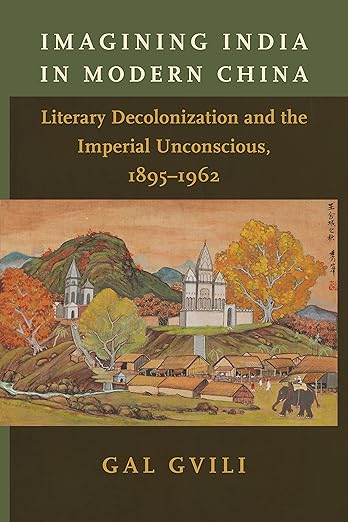
Imagining India in Modern China
Literary Decolonization and the Imperial Unconscious, 1895–1962
Columbia University Press · Print & ebook · October 11, 2022
Winner, 2023 Harry Levin Prize, American Comparative Literature Association Beginning in the late Qing era, Chinese writers and intellectuals looked to India in search of new literary possibilities and anticolonial solidarity.
We earn from qualifying purchases.
- Genres
- Comparative Literature, Chinese Literary Criticism, Indic Literary Criticism
- Published
- Columbia University Press, October 11, 2022
Nearest books
Matched by what the books are about, then ordered by what their readers also loved. Most of these share its genre: Chinese Literary Criticism.
 Translingual PracticeLydia Liu, Lydia H. Liu62% matchAlso shares Comparative Literature
 Questioning BordersRobin Visser60% match
 More Than RealDavid Shulman, David Dean Shulman59% matchAlso shares Indic Literary Criticism
For younger readers: You Bring the Distant Near
Start with three books, and this one can be the first.
Members get a new edition every morning: a route out from their books to essays, research and talks, with the reason for each.
Start with this bookAbout this book
Winner, 2023 Harry Levin Prize, American Comparative Literature Association Beginning in the late Qing era, Chinese writers and intellectuals looked to India in search of new literary possibilities and anticolonial solidarity. In their view, India and China shared both an illustrious past of cultural and religious exchange and a present experience of colonial aggression.
Continue reading
These writers imagined India as an alternative to Western imperialism—a Pan-Asian ideal that could help chart an escape route from colonialism and its brutal grasp on body and mind by ushering in a new kind of modernity in Asian terms. Gal Gvili examines how Chinese writers’ image of India shaped the making of a new literature and spurred efforts to achieve literary decolonization. She argues that multifaceted visions of Sino-Indian connections empowered Chinese literary figures to resist Western imperialism and its legacies through novel forms and genres. However, Gvili demonstrates, the Global North and its authority mediated Chinese visions of Sino-Indian pasts and futures. Often reading Indian literature and thought through English translations, Chinese writers struggled to break free from deeply ingrained imperialist knowledge structures. Imagining India in Modern China traces one of the earliest South-South literary imaginaries: the hopes it inspired, the literary rejuvenation it launched, and the shadow of the North that inescapably haunted it. By unearthing Chinese writers’ endeavors to decolonize literature and thought as well as the indelible marks that imperialism left on their minds, it offers new perspective on the possibilities and limitations of anticolonial movements and South-South solidarity.
Where it sits
| Comparative Literature | 71% |
|---|---|
| Chinese Literary Criticism | 60% |
| Indic Literary Criticism | 59% |
Percentages are BookFrontier’s reading of the book.
Publisher categories
- Literary Theory
- Chinese Literary Criticism
- Indic Literary Criticism
- 20th-Century Literary Criticism
- Authors
- Gal Gvili
- Publisher
- Columbia University Press
- Published
- October 11, 2022
- Format
- Print & ebook
- Reading lane
- Literary Theory