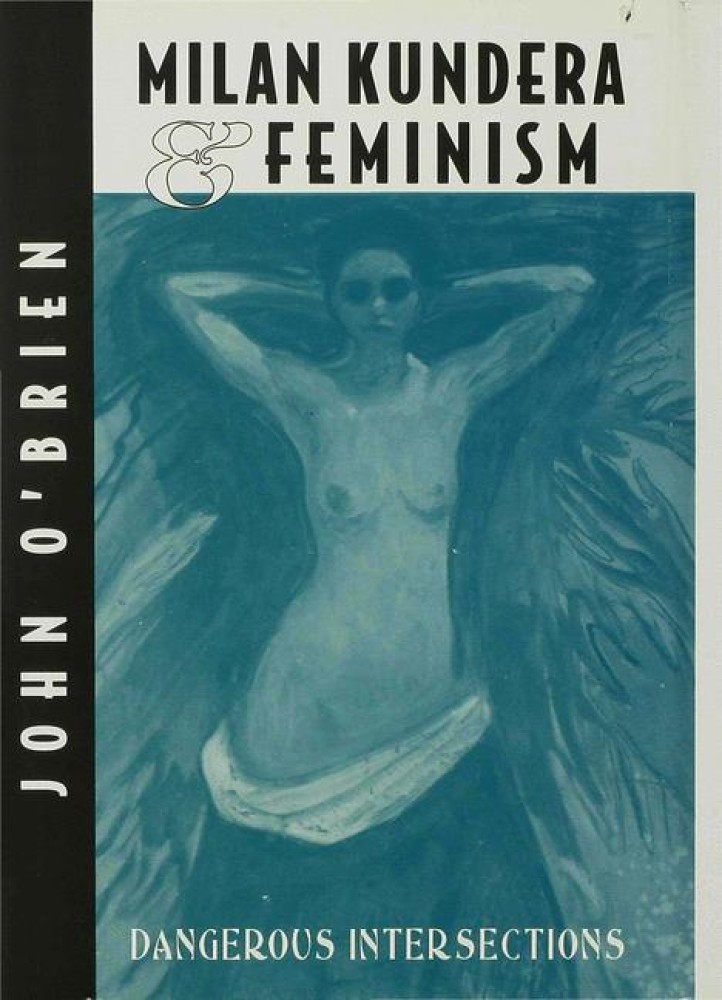
Milan Kundera and Feminist Criticism
Dangerous Intersection
Palgrave Macmillan · Print & ebook · July 12, 1995
'Eliot to Derrida is a book which should be read by all students contemplating enrolment for a university course in modern English or European literary studies.' - Times Higher Educational Supplement This study offers the first extensive critique of the problematic representation of women in the fiction of Milan Kundera, in particular the apparent reliance on simplistic binary oppositions in the representation of women (beauty/ugliness, Madonna/whore, free will/fate, and others).
We earn from qualifying purchases.
- Who it’s for
- J. O’Brien examines gendered binaries in Kundera’s fiction and the ambiguities beneath their surfaces.
- Genres
- Feminist Lit Crit, European Lit Crit, 20th-Century Literary Criticism
- Published
- Palgrave Macmillan, July 12, 1995
Nearest books
Matched by what the books are about, then ordered by what their readers also loved.
 Laughable LovesMilan Kundera63% match
 The Festival of InsignificanceMilan Kundera58% match
 Jacques and His MasterMilan Kundera57% match
Start with three books, and this one can be the first.
Members get a new edition every morning: a route out from their books to essays, research and talks, with the reason for each.
Start with this bookAbout this book
'Eliot to Derrida is a book which should be read by all students contemplating enrolment for a university course in modern English or European literary studies.' - Times Higher Educational Supplement This study offers the first extensive critique of the problematic representation of women in the fiction of Milan Kundera, in particular the apparent reliance on simplistic binary oppositions in the representation of women (beauty/ugliness, Madonna/whore, free will/fate, and others).
Continue reading
Without waving away these concerns, this study goes on to show that a feminist criticism attentive to poststructural theoretical perspectives is able to engage Kundera's work most fully. While remaining ambivalent about a number of Kundera's representational strategies, this consideration of Kundera suggest that Kundera exposes the very narrative practices and representational strategies that he seems to proliferate himself on the misogynist surface of these expansive novels. Using an eclectic perspective that draws on the insights and methodology of feminist criticism, poststructuralism, and deconstruction, O'Brien argues that the character of Sabina herself offers the most effective paradigm for reading Kundera's work. Suggesting a dual vision of surface/depth, this understanding of Kundera accounts for the simplistic surfaces and ambiguous depths, both of which pose serious problems for the feminist reader.
Kundera’s Gendered Binaries
J. O’Brien examines gendered binaries in Kundera’s fiction and the ambiguities beneath their surfaces.
Come here for
- A critique of how Kundera’s fiction represents women
- A feminist reading attentive to poststructuralism and deconstruction
Expect
- Attention to Sabina as a way of reading Kundera
- An account of feminist criticism’s tensions with narrative strategy
Where it sits
| Feminist Lit Crit | 92% |
|---|---|
| 20th-Century Literary Criticism | 47% |
| European Lit Crit | 32% |
Percentages are BookFrontier’s reading of the book.
Publisher categories
- Creative Writing
- Sociology
- Authors
- J. O'Brien, John O'Brien
- Publisher
- Palgrave Macmillan
- Published
- July 12, 1995
- Format
- Print & ebook
- Reading lane
- Creative Writing