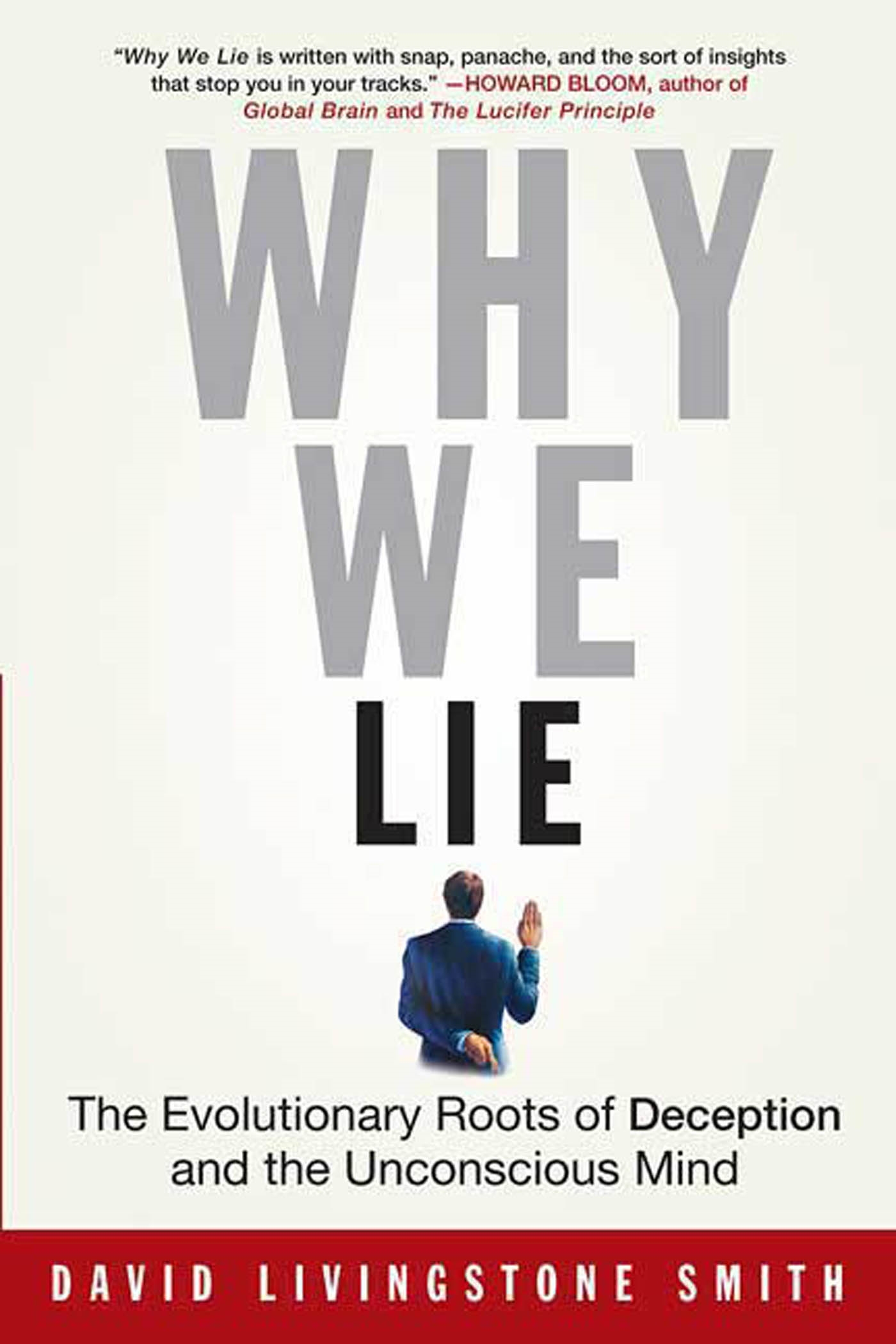
Why We Lie
The Evolutionary Roots of Deception and the Unconscious Mind
St. Martin's Press · Print & ebook · August 7, 2007
Deceit, lying, and falsehoods lie at the very heart of our cultural heritage.
We earn from qualifying purchases.
- Who it’s for
- readers interested in psychology and human behavior
- Themes
- deception, evolution, self-deception
- Pacing
- Reflective
Nearest books
Matched by what the books are about, then ordered by what their readers also loved. Most of these share its genre: Evolution.
 The Secret History of MagicPeter Lamont, Jim Steinmeyer55% match
 Survival of the FriendliestBrian Hare, Vanessa Woods52% matchAlso shares How We Evolved to Think
 The Story of the Human BodyDaniel E. Lieberman51% match
For younger readers: Big Lies, Don't Buy the Lie, How to Build a Human
Start with three books, and this one can be the first.
Members get a new edition every morning: a route out from their books to essays, research and talks, with the reason for each.
Start with this bookAbout this book
Deceit, lying, and falsehoods lie at the very heart of our cultural heritage. Even the founding myth of the Judeo-Christian tradition, the story of Adam and Eve, revolves around a lie. Our seemingly insatiable appetite for stories of deception spans the extremes of culture from King Lear to Little Red Riding Hood, retaining a grip on our imaginations despite endless repetition.
Continue reading
These tales of deception are so enthralling because they speak to something fundamental in the human condition. The ever-present possibility of deceit is a crucial dimension of all human relationships, even the most central: our relationships with our own selves. Why We Lie elucidates the essential role that deception and self-deception have played in evolution and shows that the very structure of our minds has been shaped from our earliest beginnings by the need to deceive. Smith shows us how, by examining the stories we tell, the falsehoods we weave, and the unconscious signals we send out, we can learn much about ourselves and our minds.
Who it’s for
- readers interested in psychology and human behavior
- those curious about the evolutionary basis of deception
Where it sits
| How We Evolved to Think | 80% |
|---|---|
| Social Psychology | 47% |
| Evolution | 42% |
Percentages are BookFrontier’s reading of the book.
Publisher categories
- How We Think & Learn
- Biology
- Evolution
- Authors
- David Livingstone Smith
- Publisher
- St. Martin's Press
- Published
- August 7, 2007
- Format
- Print & ebook
- Theme
- deception · evolution · self-deception
- Reading lane
- How We Think & Learn