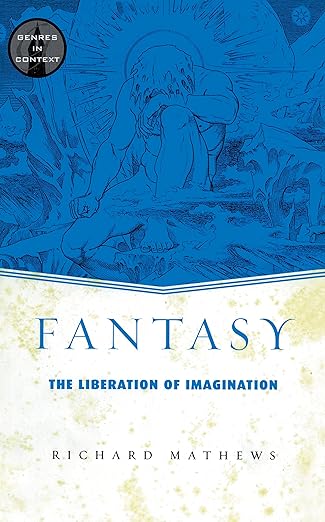
Fantasy
The Liberation of Imagination
Taylor and Francis · Print & ebook · January 4, 2002
Using a broad definition of fantasy to include myth, folklore, legend and fairy tale, this survey of the genre will entice as well as inform any student interested in the mysterious, mystical or magical.
We earn from qualifying purchases.
- Who it’s for
- A genre survey that treats myth, folklore, legend, and fairy tale as fantasy.
- Genres
- SF & Fantasy Criticism, Fairy Tale & Myth Criticism
- Published
- Taylor and Francis, January 4, 2002
Nearest books
Matched by what the books are about, then ordered by what their readers also loved.
 The King of Elfland's DaughterLord Dunsany58% match
 Other Worlds Than TheseJohn Joseph Adams56% match
 Beyond the WoodsPaula Guran55% match
For younger readers: The Wand in the Word, Chosen Ones, Reflections
Start with three books, and this one can be the first.
Members get a new edition every morning: a route out from their books to essays, research and talks, with the reason for each.
Start with this bookAbout this book
Using a broad definition of fantasy to include myth, folklore, legend and fairy tale, this survey of the genre will entice as well as inform any student interested in the mysterious, mystical or magical. Beloved authors like J. R. R. Tolkien, Ursula K. Le Guin, William Morris and Robert E. Howard are examined closely.
Fantasy’s Wide Borders
A genre survey that treats myth, folklore, legend, and fairy tale as fantasy.
Come here for
- Close examinations of J. R. R. Tolkien
- Close examinations of Ursula K. Le Guin
Expect
- A broad definition of fantasy spanning myth, folklore, legend, and fairy tale
Where it sits
| SF & Fantasy Criticism | 93% |
|---|---|
| Fairy Tale & Myth Criticism | 81% |
Percentages are BookFrontier’s reading of the book.
Publisher categories
- Literary Criticism
- Authors
- Richard Mathews
- Publisher
- Taylor and Francis
- Published
- January 4, 2002
- Format
- Print & ebook
- Reading lane
- Literary Criticism