
$2.00 a Day
Living on Almost Nothing in America
HarperCollins · Print & ebook · September 13, 2016
A New York Times Notable Book of the Year The story of a kind of poverty in America so deep that we, as a country, don't even think exists—from a leading national poverty expert who “defies convention.” (The New York Times) Jessica Compton’s family of four would have no income if she didn’t donate plasma twice a week at her local donation center in Tennessee.
We earn from qualifying purchases.
- Who it’s for
- A close look at extreme poverty pairs stark figures with the lives behind them.
- Themes
- Extreme poverty, Income inequality, Material hardship
- Genres
- Poverty & Homelessness, Social Class, Social Policy
Nearest books
Matched by what the books are about, then ordered by what their readers also loved.
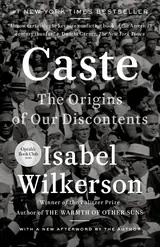 CasteIsabel Wilkerson55% match
 Dear AmericaJose Antonio Vargas53% match
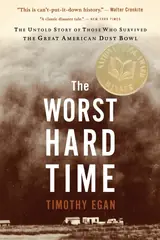 The Worst Hard TimeTimothy Egan51% match
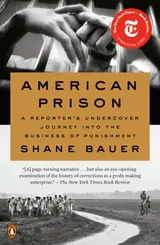 American PrisonShane Bauer49% matchShares Social Policy
 Nickel and DimedBarbara Ehrenreich, Sara Bershtel75% matchShares Poverty & Homelessness and Social Class
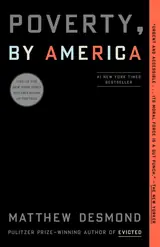 Poverty, by AmericaMatthew Desmond73% matchShares Poverty & Homelessness, Social Class and Social Policy
 How the Other Half EatsPriya Fielding-Singh PhD, Priya Fielding-Singh63% matchShares Social Class
 When We Walk byKevin F. Adler, Donald W. Burnes60% matchShares Poverty & Homelessness
For younger readers: Money Hungry (coretta Scott King Author Honor Title), Munmun, Free Lunch
Start with three books, and this one can be the first.
Members get a new edition every morning: a route out from their books to essays, research and talks, with the reason for each.
Start with this bookAbout this book
A New York Times Notable Book of the Year The story of a kind of poverty in America so deep that we, as a country, don't even think exists—from a leading national poverty expert who “defies convention.” (The New York Times) Jessica Compton’s family of four would have no income if she didn’t donate plasma twice a week at her local donation center in Tennessee. Modonna Harris and her teenage daughter, Brianna, in Chicago, often have no food but spoiled milk on weekends.
Continue reading
After two decades of brilliant research on American poverty, Kathryn Edin noticed something she hadn’t seen before—households surviving on virtually no cash income. Edin teamed with Luke Shaefer, an expert on calculating incomes of the poor, to discover that the number of American families living on $2.00 per person, per day, was one and a half million households, including about three million children. Where do these families live? How did they get so desperately poor? Through this book’s eye-opening analysis and many compelling profiles, moving and startling answers emerge. $2.00 a Day delivers provocative ideas to our national debate on income inequality. “Powerful . . . Presents a deeply moving human face that brings the stunning numbers to life. It is an explosive book . . . The stories will make you angry and break your heart.”—American Prospect “Harrowing . . . [An] important and heart-rending book, in the tradition of Michael Harrington’s The Other America.”—Los Angeles Times
Poverty in Focus
A close look at extreme poverty pairs stark figures with the lives behind them.
Come here for
- Understand what living on almost nothing can mean for families.
- Consider poverty through profiles and analysis, not numbers alone.
Expect
- Eye-opening analysis alongside moving, startling profiles.
- A serious contribution to debates about income inequality.
Where it sits
| Poverty & Homelessness | 99% |
|---|---|
| Social Class | 69% |
| Social Policy | 33% |
Percentages are BookFrontier’s reading of the book.
Publisher categories
- Social Services & Welfare
- Social Policy
- Research & Fieldwork
- Sociology
Show all 8 publisher categories
- Marriage & Family
- Rural Life
- Race & Discrimination
- Poverty & Homelessness
- Authors
- Kathryn J. Edin, H. Luke Shaefer
- Publisher
- HarperCollins
- Published
- September 13, 2016
- Format
- Print & ebook
- Theme
- Extreme poverty · Income inequality · Material hardship
- Reading lane
- Social Services & Welfare