
The Arrogant Ape
The Myth of Human Exceptionalism and Why It Matters
Penguin Publishing Group · Print & ebook · September 2, 2025
A New York Times’s Notable Book of 2025 An impassioned celebration of humility before the living world that leads us to a new understanding of other species—and ourselves Darwin considered humans one part of the web of life, not the apex of a natural hierarchy.
We earn from qualifying purchases.
- Who it’s for
- A brisk look at the stories humans tell about themselves, and why they wobble.
- Genres
- Primatology, Science & Society, Evolution
- Published
- Penguin Publishing Group, September 2, 2025
Nearest books
Matched by what the books are about, then ordered by what their readers also loved.
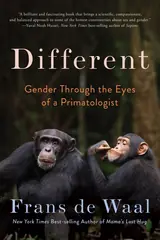 DifferentFrans de Waal58% matchShares Primatology
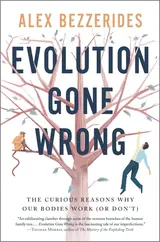 Evolution Gone WrongAlex Bezzerides, Joe Knezevich59% matchShares Evolution
 Winners Take AllAnand Giridharadas55% match
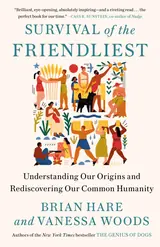 Survival of the FriendliestBrian Hare, Vanessa Woods76% matchShares Evolution
For younger readers: Unstoppable US, Volume 1: How Humans Took Over the World, Skull in the Rock, the, Eve (adapted for Young Adults)
Start with three books, and this one can be the first.
Members get a new edition every morning: a route out from their books to essays, research and talks, with the reason for each.
Start with this bookAbout this book
A New York Times’s Notable Book of 2025 An impassioned celebration of humility before the living world that leads us to a new understanding of other species—and ourselves Darwin considered humans one part of the web of life, not the apex of a natural hierarchy. Yet today many maintain that we are the most intelligent, virtuous, successful species that ever lived.
Continue reading
This flawed thinking enables us to exploit the earth towards our own exclusive ends, throwing us into a perilous planetary imbalance. But is this view and way of life inevitable? The Arrogant Ape shows that human exceptionalism is an ideology that relies more on human culture than our biology, more on delusion and faith than on evidence. Harvard primatologist Christine Webb has spent years researching the rich social, emotional, and cognitive lives of our closest living relatives. She exposes the ways that many scientific studies are biased against other species and reveals underappreciated complexities of nonhuman life—from the language of songbirds and prairie dogs, to the cultures of chimpanzees and reef fishes, to the acumen of plants and fungi. With compelling stories and fresh research she gives us a paradigm-shifting way of looking at other organisms on their own terms, one that is revolutionizing our perception both of them and of ourselves. Critiques of human exceptionalism tend to focus on our moral obligation towards other species. They overlook what humanity also stands to gain by dismantling its illusions of uniqueness and superiority. This shift in perspective fills us with a sense of awe and satisfies one of our oldest and deepest desires to belong to the larger whole we inhabit. What’s at stake is a better, sustainable way of life with the potential to heal and rejuvenate our shared planet.
Human Myths
A brisk look at the stories humans tell about themselves, and why they wobble.
Come here for
- human exceptionalism, taken apart
- primatology with a cultural-literacy angle
Expect
- insight over anecdote
- science folded into a sustained argument
Where it sits
| Primatology | 32% |
|---|---|
| Science & Society | 31% |
| Evolution | 30% |
Percentages are BookFrontier’s reading of the book.
Publisher categories
- Animals
- Evolution
- How Cultures Work
- Authors
- Christine Webb, Christine E. Webb
- Publisher
- Penguin Publishing Group
- Published
- September 2, 2025
- Format
- Print & ebook
- Reading lane
- Animals