
Getting to Reparations
How Building a Different America Requires a Reckoning With Our Past
Crown · Print & ebook · January 20, 2026
A bold manifesto arguing that there is a clear precedent for paying reparations to atone for America’s original sin of slavery, offering a compelling legal strategy to achieve this goal—from the acclaimed author of The Whiteness of Wealth.
We earn from qualifying purchases.
- Who it’s for
- Readers interested in legal strategies for reparations
- Themes
- Reparations for Black Americans, Racial justice, American history
- Genres
- African American Studies, Civil Rights
Nearest books
Matched by what the books are about, then ordered by what their readers also loved.
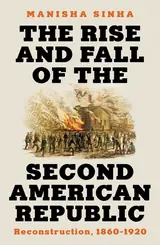 The Rise and Fall of the Second American RepublicManisha Sinha58% matchShares Civil Rights
 Are Prisons Obsolete?Angela Y. Davis52% match
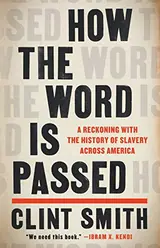 How the Word Is PassedClint Smith68% match
 W.e.b. Du Bois: Black Reconstruction (LOA #350)W.E.B. Du Bois64% match
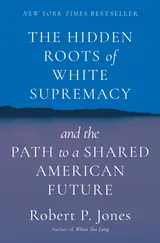 The Hidden Roots of White SupremacyRobert P. Jones64% matchShares Civil Rights
 Black AF HistoryMichael Harriot64% matchShares African American Studies
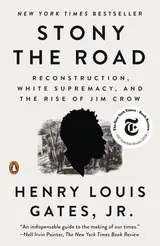 Stony the RoadHenry Louis Gates Jr.64% matchShares African American Studies
 The Second FoundingEric Foner62% match
For younger readers: Stolen Justice: the Struggle for African American Voting Rights (scholastic Focus), Now Is Your Time!, We Are Not Yet Equal
Start with three books, and this one can be the first.
Members get a new edition every morning: a route out from their books to essays, research and talks, with the reason for each.
Start with this bookAbout this book
A bold manifesto arguing that there is a clear precedent for paying reparations to atone for America’s original sin of slavery, offering a compelling legal strategy to achieve this goal—from the acclaimed author of The Whiteness of Wealth. The idea of reparations is not a new or original one; it is one that is baked into American history.
Continue reading
When the District of Columbia Emancipation Act of 1862 went into effect, wealthy slaveowners like Margaret Barber were compensated for the loss of their enslaved workers. Barber received $9,000—an equivalent to $250,000 today. When a group of Italian immigrants were lynched in 1892, President Harrison compensated Italy a total of $25,000 for their deaths—an equivalent to almost $766,000 today. The Indian Claims Commission, an arm of the federal government, paid Indigenous Americans $818 million for underhandedly stealing their land in the eighteenth and nineteenth centuries—an equivalent to almost $350 billion today. Dorothy A. Brown addresses the glaring question: if reparations can be achieved for others, why not for Black Americans? If lynching can be remedied for Italian immigrants, and slaveholders compensated for losses associated with abolition and emancipation, then the government’s failure to provide such remedies to Black communities harmed by similar violence, loss, and destruction is long overdue. The fight for reparations is truly a fight for the soul of America, to produce the country our founding fathers idealized but never achieved. Getting to Reparations makes a logical and necessary case for reparations for Black Americans. It lays out a path as to how we might achieve this, built on the frameworks used throughout U.S. history by the government to pay restitution. It is now time to do the same for America's Black population.
Where it sits
| Civil Rights | 24% |
|---|---|
| African American Studies | 22% |
Percentages are BookFrontier’s reading of the book.
Publisher categories
- Civil War Era
- Race & Discrimination
- Social Class
- Authors
- Dorothy A. Brown
- Publisher
- Crown
- Published
- January 20, 2026
- Format
- Print & ebook
- Theme
- Reparations for Black Americans · Racial justice · American history
- Reading lane
- Civil War Era