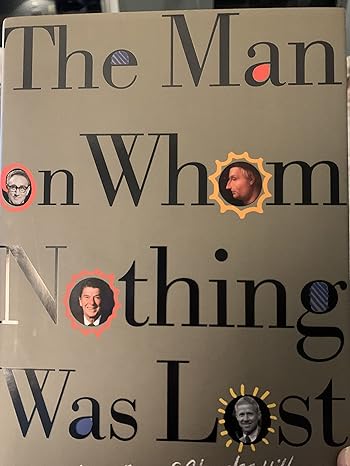
The Man on Whom Nothing Was Lost
The Grand Strategy of Charles Hill
Houghton Mifflin Harcourt · Print & ebook · February 15, 2006
A brilliant new voice lively and contrarianturns biography on its head in this remarkable story of a diplomat and his disciple.
We earn from qualifying purchases.
- Who it’s for
- A former diplomat’s career and a Yale student’s evolving portrait of her professor.
- Genres
- Political Lives, 20th-Century America, Lives in Education
- Published
- Houghton Mifflin Harcourt, February 15, 2006
Nearest books
Matched by what the books are about, then ordered by what their readers also loved. Most of these share its genre: Political Lives.
 On Grand StrategyJohn Lewis Gaddis60% match
 KingmakerSonia Purnell55% match
 Kissinger's ShadowGreg Grandin55% match
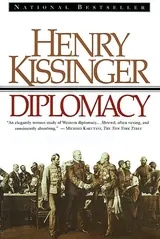 DiplomacyHenry Kissinger55% matchAlso shares 20th-Century America
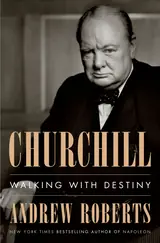 ChurchillAndrew Roberts, Stephen Thorne54% match
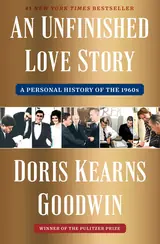 An Unfinished Love StoryDoris Kearns Goodwin53% matchAlso shares 20th-Century America
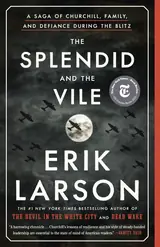 The Splendid and the VileJohn Lee, Erik Larson53% match
 BuckleySam Tanenhaus53% matchAlso shares 20th-Century America
For younger readers: Hillary Rodham Clinton, The Rise and Fall of Charles Lindbergh
Start with three books, and this one can be the first.
Members get a new edition every morning: a route out from their books to essays, research and talks, with the reason for each.
Start with this bookAbout this book
A brilliant new voice lively and contrarianturns biography on its head in this remarkable story of a diplomat and his disciple. As a college freshman, Molly Worthen wrote the words Charles Hill Is God” on the inside cover of her history and politics notebook.
Continue reading
Hill was her professor, a former diplomat and behind-the-scenes operator who shaped American foreign policy in his forty-year career as an adviser to Henry Kissinger, George Shultz, and Boutros Boutros-Ghali, among others. Hill’s Grand Strategy class (taught with John Lewis Gaddis and Paul Kennedy) developed a cult following at Yale, and Worthen soon found herself caught in his aura. We’ve all had a teacher, at one time or another, who showed us the world, clarified our fuzzy thinking, and made us grow up. At Yale, Hill was worldly-wise and never afraid to tell students how to think or what to do. For a generation adrift, he proved irresistiblesometimes dangerously soand Worthen was determined to get inside his head. The Man on Whom Nothing Was Lost is the story of Worthen’s quest and the man who fueled it. She began in his classroom, recording his every word in her spiral notebook, allowing him to shape her. Years later, as his biographer, she found that she was shaping him. Surprisingly, Hill granted Worthen full access to his life, meticulously documented in over 25,000 pages of notes on everything from the Iran-Contra affair to the dissolution of his marriage. In the end, she was forced to reconcile the teacher she admired with the man she learned was brilliant, but fallible.She put Hill’s classroom lessons to the ultimate test: she applied them to his own life. The result is a genre-busting bookone that charts the intricate relationship between biographer and subject, student and teacher, even as it illuminates a momentous period in American history. Psychologically astute and passionately written, it lays bare the joy as well as the heartache of coming to know someone you once revered. Molly Worthen graduated in 2003 from Yale University, where she wrote a prize-winning newspaper column and conducted an ethnographic study of Russian Orthodox old believers in Alberta. She has also written for the Toledo Blade, the Dallas Morning News, and Time. She is currently pursuing a Ph.D. in American religious history at Yale. This is her first book. Advance praise for The Man on Whom Nothing Was Lost What a fascinating and compelling book! In weaving the personal and professional tale of Charles Hill, a backstage diplomat who became a revered professor, Molly Worthen has pulled together some profound themes: how foreign policy really works, how inner lives play out on public stages, and the concept of grand strategy’ as a way to understand international relations. But above all this is a very personal and poignant account of what it’s like to struggle to know someone you admire.” Walter Isaacson, author of Benjamin Franklin: An American Life Engrossing...I highly recommend it.” Henry Kissinger This is one of the most artful biographies I’ve read. Worthen takes the life of a relatively obscure but, as we learn, influential figure in American diplomacy, who upon retirement became a professor at Yale, where Worthen herself encountered him as a student. By interspersing her own experience of him as a teacher and mentor with his life story, she makes his and her story equally compelling. The Man on Whom Nothing Was Lost is certainly a contribution to the history of foreignpolicy, but this book is, above all, the story of an American life, told with language and sensitivity of a novelist, that stands on its own regardless of its subject’s ultimate importance. I had trouble putting it down.” John Judis, author of The Folly of Empire
Charles Hill’s Classroom
A former diplomat’s career and a Yale student’s evolving portrait of her professor.
Come here for
- Charles Hill’s career advising Henry Kissinger, George Shultz, and Boutros Boutros-Ghali
- A Yale student’s changing relationship with the professor she later biographed
Expect
- Hill’s classroom lessons examined against his own life
- A view of American foreign policy through Hill’s forty-year career
Where it sits
| Political Lives | 89% |
|---|---|
| 20th-Century America | 45% |
| Lives in Education | 39% |
Percentages are BookFrontier’s reading of the book.
Publisher categories
- Lives in Education
- Authors
- Molly Worthen
- Publisher
- Houghton Mifflin Harcourt
- Published
- February 15, 2006
- Format
- Print & ebook
- Reading lane
- Lives in Education