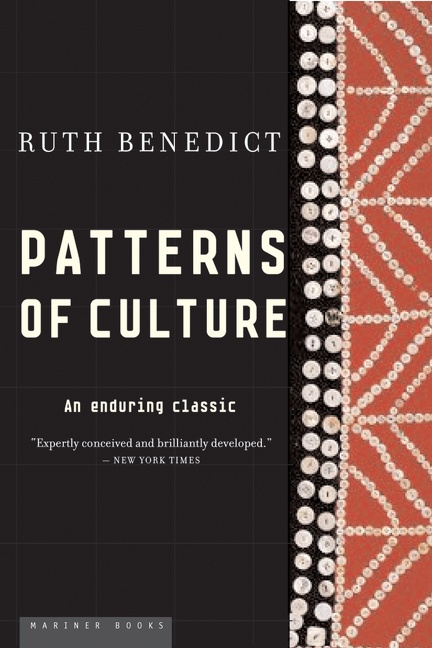
Patterns of Culture
HarperCollins · Print & ebook · January 25, 2006
A Anthropology pick for readers exploring Patterns of Culture.
We earn from qualifying purchases.
- Who it’s for
- A clear-eyed comparison of cultural patterns opens questions about how culture shapes human life.
- Themes
- Culture and human life, Cultural diversity, Culture and the individual
- Genres
- How Cultures Work, Ethnic Studies, Customs & Traditions
Nearest books
Matched by what the books are about, then ordered by what their readers also loved. Most of these share its genre: How Cultures Work.
 Christmas UnwrappedRichard A. Horsley, James Tracy47% match
 The Chrysanthemum and the SwordRuth Benedict65% match
 Coming of Age in SamoaMargaret Mead56% match
 Status and CultureW. David Marx57% match
 Gods of the Upper AirCharles King56% match
 From Dawn to Decadence: 1500 to the PresentJacques Barzun52% match
For younger readers: China: Land of Dragons and Emperors, The Power of Style, Clothes Around the World
Start with three books, and this one can be the first.
Members get a new edition every morning: a route out from their books to essays, research and talks, with the reason for each.
Start with this bookAbout this book
"Unique and important . . . Patterns of Culture is a signpost on the road to a freer and more tolerant life." -- New York Times A remarkable introduction to cultural studies, Patterns of Culture is an eloquent declaration of the role of culture in shaping human life.
Continue reading
In this fascinating work, the renowned anthropologist Ruth Benedict compares three societies -- the Zuni of the southwestern United States, the Kwakiutl of western Canada, and the Dobuans of Melanesia -- and demonstrates the diversity of behaviors in them. Benedict's groundbreaking study shows that a unique configuration of traits defines each human culture and she examines the relationship between culture and the individual. Featuring prefatory remarks by Franz Boas, Margaret Mead, and Louise Lamphere, this provocative work ultimately explores what it means to be human. "That today the modern world is on such easy terms with the concept of culture . . . is in very great part due to this book." -- Margaret Mead "Benedict's Patterns of Culture is a foundational text in teaching us the value of diversity. Her hope for the future still has resonance in the twenty-first century: that recognition of cultural relativity will create an appreciation for 'the coexisting and equally valid patterns of life which mankind has created for itself from the raw materials of existence.'" -- from the new foreword by Louise Lamphere, past president of the American Anthrolopological Association Ruth Benedict (1887-1948) was one of the most eminent anthropologists of the twentieth century. Her profoundly influential books Patterns of Culture and The Chrysanthemum and the Sword: Patterns of Japanese Culture were bestsellers when they were first published, and they have remained indispensable works for the study of culture in the many decades since.
Culture in Contrast
A clear-eyed comparison of cultural patterns opens questions about how culture shapes human life.
Come here for
- Three societies considered through their distinct configurations of cultural traits
- A foundational study of culture and the individual
Expect
- Comparative anthropology with an argument about cultural diversity
- Big questions about what it means to be human
Where it sits
| How Cultures Work | 98% |
|---|---|
| Ethnic Studies | 43% |
| Customs & Traditions | 31% |
Percentages are BookFrontier’s reading of the book.
Publisher categories
- Social History
- Social Psychology
- Mental Health
- How We Evolved to Think
Show all 8 publisher categories
- Evolution
- History of Science
- Science Resources
- Cultural Anthropology
- Authors
- Ruth Benedict
- Publisher
- HarperCollins
- Published
- January 25, 2006
- Format
- Print & ebook
- Theme
- Culture and human life · Cultural diversity · Culture and the individual
- Reading lane
- Social History