
Curious Behavior
Yawning, Laughing, Hiccupping, and Beyond
WW Norton · Print & ebook · June 9, 2014
Robert Provine boldly goes where other scientists seldom tread—in search of hiccups, coughs, yawns, sneezes, and other lowly, undignified human behaviors.
We earn from qualifying purchases.
- Who it’s for
- Everyday bodily quirks become clues to the brain, evolution, and our distinctly social habits.
- Themes
- Instinctive human behavior, Evolutionary origins, Sociality and empathy
- Genres
- How We Evolved to Think, Neuroscience, Evolution
Nearest books
Matched by what the books are about, then ordered by what their readers also loved.
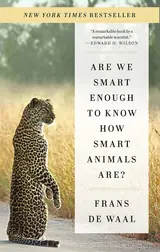 Are We Smart Enough to Know How Smart Animals Are?Frans de Waal, Sean Runnette50% match
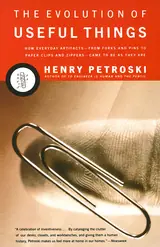 The Evolution of Useful ThingsHenry Petroski47% match
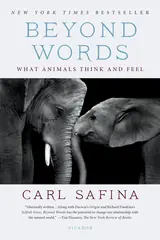 Beyond WordsCarl Safina56% match
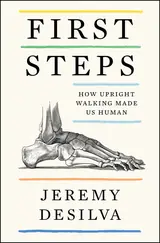 First StepsJeremy DeSilva54% matchShares Evolution
 About BehaviorismB.F. Skinner50% match
 Tamed and UntamedSy Montgomery, Elizabeth Marshall Thomas47% match
 The Age of EmpathyFrans de Waal55% match
 Gifts of the CrowJohn Marzluff, Tony Angell49% match
For younger readers: How to Build a Human, How Does My Body Work? Human Body Book for Kids, Toot
Start with three books, and this one can be the first.
Members get a new edition every morning: a route out from their books to essays, research and talks, with the reason for each.
Start with this bookAbout this book
Robert Provine boldly goes where other scientists seldom tread—in search of hiccups, coughs, yawns, sneezes, and other lowly, undignified human behaviors. Upon investigation, these instinctive acts bear the imprint of our evolutionary origins and can be uniquely valuable tools for understanding how the human brain works and what makes us different from other species.
Continue reading
Many activities showcased in Curious Behavior are contagious, but none surpasses yawning in this regard—just reading the word can make one succumb. Though we often take it as a sign of sleepiness or boredom, yawning holds clues to the development of our sociality and ability to empathize with others. Its inescapable transmission reminds us that we are sometimes unaware, neurologically programmed beasts of the herd. Other neglected behaviors yield similar revelations. Tickling, we learn, may be the key to programming personhood into robots. Coughing comes in musical, medical, and social varieties. Farting and belching have import for the evolution of human speech. And prenatal behavior is offered as the strangest exhibit of all, defying postnatal logic in every way. Our earthiest acts define Homo sapiens as much as language, bipedalism, tool use, and other more studied characteristics. As Provine guides us through peculiarities right under our noses, he beckons us to follow with self-experiments: tickling our own feet, keeping a log of when we laugh, and attempting to suppress yawns and sneezes. Such humble investigations provide fodder for grade school science projects as well as doctoral dissertations. Small Science can yield big rewards.
Ordinary Oddities
Everyday bodily quirks become clues to the brain, evolution, and our distinctly social habits.
Come here for
- A curious look at yawns, coughs, tickling, and other undignified acts
- The surprising links between bodily behavior and human sociality
Expect
- Evolutionary and brain-science insight in familiar behaviors
- Invitations to try small self-experiments
Where it sits
| Neuroscience | 48% |
|---|---|
| Evolution | 47% |
| How We Evolved to Think | 33% |
Percentages are BookFrontier’s reading of the book.
Publisher categories
- Mind-Body Psychology
- Neuroscience
- Physical Anthropology
- Authors
- Robert R. Provine
- Publisher
- WW Norton
- Published
- June 9, 2014
- Format
- Print & ebook
- Theme
- Instinctive human behavior · Evolutionary origins · Sociality and empathy
- Reading lane
- Mind-Body Psychology