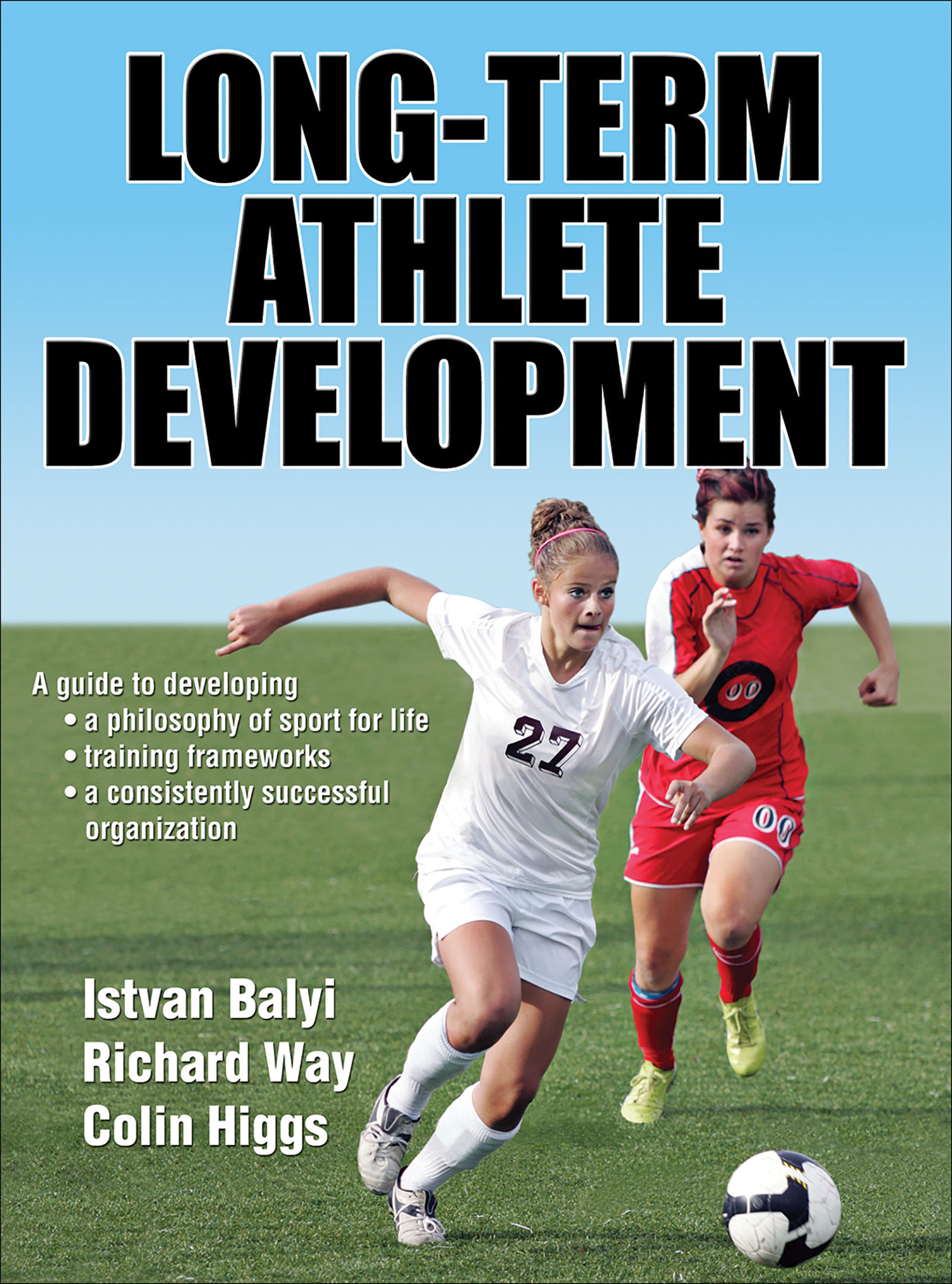
Long-term Athlete Development
First Edition
Human Kinetics · Print & ebook · September 4, 2013
We earn from qualifying purchases.
- Who it’s for
- Explore the LTAD model, its seven stages, and planning considerations across an athlete’s development.
- Themes
- Long-term athlete development, Talent identification and assessment, Inclusive sport development
- Genres
- Coaching, Training & Conditioning, Youth Sports
Nearest books
Matched by what the books are about, then ordered by what their readers also loved. Most of these share its genre: Training & Conditioning.
 Developing PowerNSCA -National Strength & Conditioning Association, Paul Comfort54% match
 Developing the CoreJeffrey M. Willardson53% match
 Pilates and Conditioning for AthletesAmy Lademann, Rick Lademann52% match
 PeakDr. Marc Bubbs, Chelsea Green Publishing51% match
For younger readers: Strength and Conditioning for Teenagers, Our Big Book of Sports, Play Basketball Like a Pro
Start with three books, and this one can be the first.
Members get a new edition every morning: a route out from their books to essays, research and talks, with the reason for each.
Start with this bookAbout this book
Long-Term Athlete Development describes how to systematically develop sporting excellence and increase active participation in local, regional, and national sport organizations. This resource describes the long-term athlete development (LTAD) model, an approach to athlete-centered sport that combines skill instruction with long-term planning and an understanding of human development.
Continue reading
By learning about LTAD, sport administrators and coaches will gain the knowledge and tools to enhance participation and improve performance and growth of athletes. This text offers the first in-depth and practical explanation of the LTAD model. Long-Term Athlete Development integrates current research on talent development and assessment into practice to help sport leaders plan athletic development across the life span or design detailed programs for a particular group, including those with physical and cognitive disabilities. Authors Balyi, Way, and Higgs—pioneers and veteran LTAD facilitators—critique current talent development models, discuss the limitations of the LTAD model, and demonstrate the benefits of LTAD as a new approach. By integrating knowledge of these models, readers are able to analyze their own programs and take steps to improve sport and coaching philosophies and reach adherence and performance goals. Explanations and visuals of concepts help readers understand the state of knowledge in talent identification and long-term athlete development. Chapter-opening vignettes offer examples of how the LTAD model can be used to alleviate common issues. Listings at the end of each chapter offer sources for further study, and reflection questions guide readers in applying the content. The text offers a logical presentation of current research: • Key factors that guide and shape the LTAD model, such as physical literacy, the differences between early- and late-specialization sports, and variations in trainability across the life span • Information on the time needed to develop excellence in sport and how periodization of training is related to the developmental stage of the athlete • The seven stages of LTAD, from development of fundamental movement skills to training for elite competition and the transition to lifelong physical activity • Considerations in the development of optimal programs for participants passing through each of the seven stages Long-Term Athlete Development is an essential guide to improving the quality of sport, developing high-performance athletes, and creating healthy, active citizens. It offers parents, coaches, and sport administrators a deeper understanding of the LTAD model, helping them create an enjoyable, developmentally appropriate environment for both competitive athletes and enthusiastic participants.
LTAD’s Seven Stages
Explore the LTAD model, its seven stages, and planning considerations across an athlete’s development.
Come here for
- The LTAD model’s seven stages, from fundamental movement skills to lifelong activity
- Planning considerations for athletes at each developmental stage
Expect
- Discussion of physical literacy, specialization, and trainability across the life span
- Chapter-opening vignettes and reflection questions for applying the material
Where it sits
| Coaching | 55% |
|---|---|
| Training & Conditioning | 43% |
| Youth Sports | 27% |
Percentages are BookFrontier’s reading of the book.
Publisher categories
- Parks & Recreation Management
- Authors
- Istvan Balyi, Richard Way, Colin Higgs
- Publisher
- Human Kinetics
- Published
- September 4, 2013
- Format
- Print & ebook
- Theme
- Long-term athlete development · Talent identification and assessment · Inclusive sport development
- Reading lane
- Parks & Recreation Management