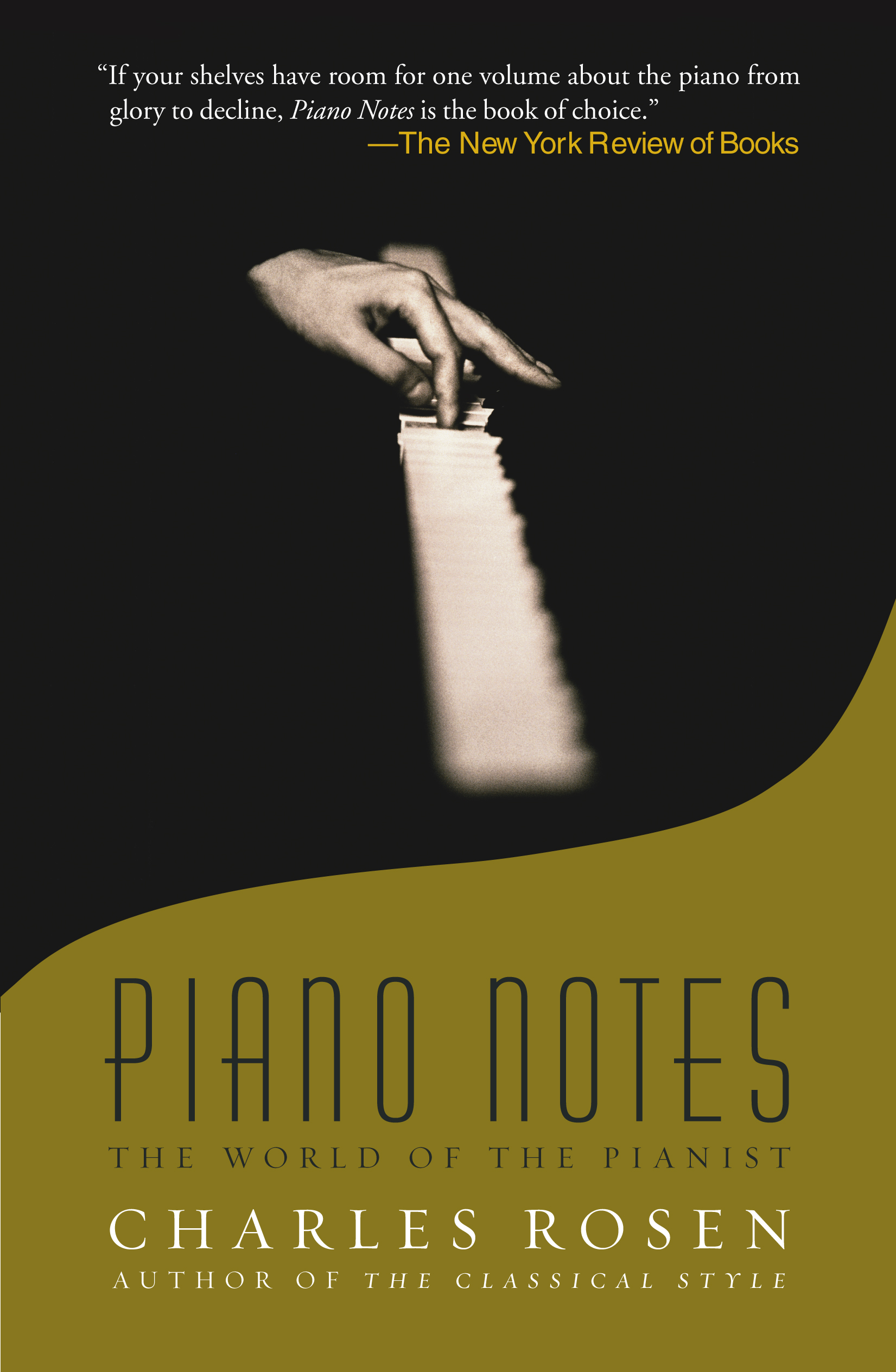
Piano Notes
The World of the Pianist
Free Press · Print & ebook · February 3, 2004
Among the world's instruments, the piano stands out as the most versatile, powerful, and misunderstood -- even by those who have spent much of their lives learning to play.
We earn from qualifying purchases.
- Who it’s for
- Charles Rosen makes piano playing a meeting point of mechanics, musical meaning, and cultural change.
- Themes
- Piano technique and sound, The piano’s influence on Western music, Piano playing in the age of recordings
- Pacing
- Reflective
Nearest books
Matched by what the books are about, then ordered by what their readers also loved.
 A Natural History of the PianoStuart Isacoff76% matchShares Piano & Keyboards and Music History
 Playing the Piano for PleasureCharles Cooke56% matchShares Piano & Keyboards
 On Late StyleEdward W. Said46% matchShares Music History
 BeethovenJan Swafford55% match
 Where I'm Reading FromTim Parks43% match
 Great BooksDavid Denby43% match
 The Art of the PianoDavid Dubal66% matchShares Piano & Keyboards and Music History
 The Piano HandbookCarl Humphries60% matchShares Piano & Keyboards
For younger readers: Allegro, The Mozart Season, Dancing Hands
Start with three books, and this one can be the first.
Members get a new edition every morning: a route out from their books to essays, research and talks, with the reason for each.
Start with this bookAbout this book
Among the world's instruments, the piano stands out as the most versatile, powerful, and misunderstood -- even by those who have spent much of their lives learning to play. In Piano Notes, a finalist for a 2003 National Book Critics Circle Award, Charles Rosen, one of the world's most talented pianists, distills a lifetime of wisdom and lore into an unforgettable tour of the hidden world of piano playing.
Continue reading
You'll read about how a note is produced, why a chord can move us, why the piano -- "hero and villain" of tonality -- has shaped the course of Western music, and why it is growing obsolete. Rosen explains what it means that Beethoven composed in his head whereas Mozart would never dream of doing so, why there are no fortissimos in the works of Ravel, and why a piano player's acrobatics have an important dramatic effect but nothing more. Ending on a contemplative note, Piano Notes offers an elegant argument that piano music "is not just sound or even significant sound" but a mechanical, physical, and fetishistic experience that faces new challenges in an era of recorded music. Rosen ponders whether piano playing will ever again be the same, and his insights astonish.
Inside the Piano
Charles Rosen makes piano playing a meeting point of mechanics, musical meaning, and cultural change.
Come here for
- Curious explanations of how notes, chords, and pianists work
- A pianist’s perspective on the instrument’s place in Western music
Expect
- Ideas that connect physical technique with musical drama
- A thoughtful question about piano playing in an age of recordings
Where it sits
| Music History | 83% |
|---|---|
| Piano & Keyboards | 76% |
| Music Appreciation | 34% |
Percentages are BookFrontier’s reading of the book.
Publisher categories
- Music
- Classical
- Piano & Keyboards
- Authors
- Charles Rosen
- Publisher
- Free Press
- Published
- February 3, 2004
- Format
- Print & ebook
- Theme
- Piano technique and sound · The piano’s influence on Western music · Piano playing in the age of recordings
- Reading lane
- Music