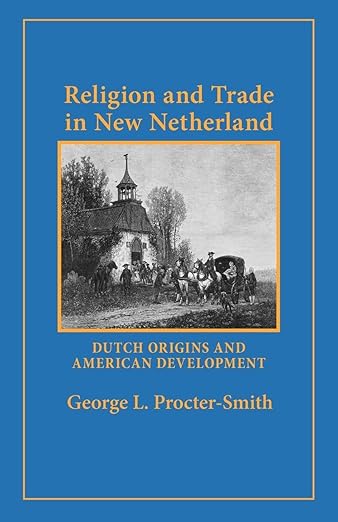
Religion and Trade in New Netherland
Dutch Origins and American Development
Cornell University Press · Print & ebook · October 29, 2010
The Dutch colony of New Netherland in the seventeenth century enjoyed a greater diversity of religious beliefs than any of the English colonies in America at the time, except possibly Rhode Island.
We earn from qualifying purchases.
- Who it’s for
- Procter-Smith traces how Dutch religious policy and trading interests shaped toleration in New Netherland.
- Genres
- Colonial America (to 1775), Middle Atlantic History, Christian History
- Published
- Cornell University Press, October 29, 2010
Nearest books
Matched by what the books are about, then ordered by what their readers also loved.
 Religion in Nineteenth Century AmericaGrant Wacker58% matchShares Christian History
 The Dutch RepublicJonathan Israel, Jonathan I. Israel54% match
 The Embarrassment of RichesSimon Schama54% match
 Of Plymouth PlantationWilliam Bradford52% matchShares Colonial America (to 1775)
 Did America Have a Christian Founding?Mark David Hall52% match
 Netherlands - Culture Smart!Sheryl Buckland50% match
 AmsterdamRussell Shorto50% match
For younger readers: Colonial America, Colonization and the Wampanoag Story, The New Americans
Start with three books, and this one can be the first.
Members get a new edition every morning: a route out from their books to essays, research and talks, with the reason for each.
Start with this bookAbout this book
The Dutch colony of New Netherland in the seventeenth century enjoyed a greater diversity of religious beliefs than any of the English colonies in America at the time, except possibly Rhode Island. George L. Procter-Smith has investigated the background and reasons for this religious diversity and toleration despite the legal establishment of the Dutch Reformed Church.
Continue reading
All colonies have to be understood in terms of their mother country; but, Procter-Smith insists, the European background is especially important in the study of New Netherland. He devotes about half the book to the religious situation in the Netherlands and the de facto toleration that existed despite the state church. "The Dutch colony in America was founded for trade, not for religious reasons which were so prominent in the neighboring English colonies. As the Dutch directors of the West India Company, the colony's proprietor, tried to recruit settlers, they realized that intolerance and religious persecution would keep many prospective settlers away. Consequently, they paid lip service to the Dutch Reformed establishment but in practice allowed dissenters to practice their religion in private. Procter-Smith has written a clear, persuasive account of religion and politics, as shaped by the Dutch trading interests, in both Europe and New Netherland."?Review for Religious: A Journal of Catholic Spirituality
Dutch Toleration
Procter-Smith traces how Dutch religious policy and trading interests shaped toleration in New Netherland.
Come here for
- The Netherlands’ religious landscape and de facto toleration
- Trade interests shaping religious practice in New Netherland
Expect
- Attention to the European background
- Religion and politics across the Netherlands and New Netherland
Where it sits
| Colonial America (to 1775) | 87% |
|---|---|
| Middle Atlantic History | 33% |
| Christian History | 29% |
Percentages are BookFrontier’s reading of the book.
Publisher categories
- Western European History
- Colonial America (to 1775)
- Middle Atlantic History
- Authors
- George L. Procter-Smith
- Publisher
- Cornell University Press
- Published
- October 29, 2010
- Format
- Print & ebook
- Reading lane
- Western European History