
Making and Selling Cars
Innovation and Change in the U.s. Automotive Industry
Johns Hopkins University Press · Print & ebook · June 5, 2008
From the creation of fast food, to the design of cities, to the character of our landscape, the automobile has shaped nearly every aspect of modern American life.
We earn from qualifying purchases.
- Who it’s for
- A history of U.S. automotive production and marketing, traced through twentieth-century changes and challenges.
- Genres
- Automobile Industry, Automotive History, Corporate Histories
- Published
- Johns Hopkins University Press, June 5, 2008
Nearest books
Matched by what the books are about, then ordered by what their readers also loved. Most of these share its genre: Automobile Industry.
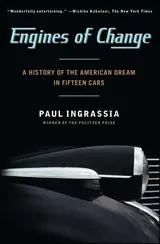 Engines of ChangePaul Ingrassia67% matchAlso shares Automotive History
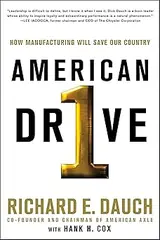 American DriveRichard E. Dauch, Hank H. Cox65% match
 Car Guys Vs. Bean CountersBob Lutz62% match
 FinsWilliam Knoedelseder60% matchAlso shares Automotive History
 Wheels for the WorldDouglas G. Brinkley, Douglas Brinkley59% matchAlso shares Corporate Histories
For younger readers: Who Was Henry Ford?, Black Gold, The Industrial Revolution
Start with three books, and this one can be the first.
Members get a new edition every morning: a route out from their books to essays, research and talks, with the reason for each.
Start with this bookAbout this book
From the creation of fast food, to the design of cities, to the character of our landscape, the automobile has shaped nearly every aspect of modern American life. In fact, the U.S. motor vehicle industry is the largest manufacturing industry in the world. James Rubenstein documents the story of the automotive industry... which despite its power, is an industry constantly struggling to redefine itself and assure its success.
Continue reading
Making and Selling Cars: Innovation and Change in the U.S. Automotive Industry shows how this industry made adjustments and fostered innovations in both production and marketing in order to remain a viable force throughout the twentieth-century. Rubenstein builds his study of the American auto industry with care, taking the reader through this quintessentially modern history of production and consumption. Avoiding jargon while never over simplifying, Rubenstein gives a detailed and straightforward account of both the production and merchandising of cars. We learn how the industry began and about its methods for building cars and the modern American marketplace. Along the way there were many missteps and challenges—the Edsel, the fuel crisis, and the ascendancy of Japanese cars in the 1980s. The industry met these types of problems with new techniques and approaches. To demonstrate this, Rubenstein gives the reader examples of how the auto industry used to work, which he alternates with chapters showing how the industry has reinvented itself. Making and Selling Cars explains why the U.S. automotive industry has been and remains a vigorous shaper of the American economy.
Auto Industry Changes
A history of U.S. automotive production and marketing, traced through twentieth-century changes and challenges.
Come here for
- How cars were built
- How cars were marketed
Expect
- Industry beginnings and car-building methods
- Examples including the Edsel, fuel crisis, and Japanese competition
Where it sits
| Automobile Industry | 97% |
|---|---|
| Automotive History | 42% |
| Corporate Histories | 37% |
Percentages are BookFrontier’s reading of the book.
Publisher categories
- How Transportation Works
- 20th-Century History
- History of Technology
- Automotive History
- Authors
- James M. Rubenstein
- Publisher
- Johns Hopkins University Press
- Published
- June 5, 2008
- Format
- Print & ebook
- Reading lane
- How Transportation Works