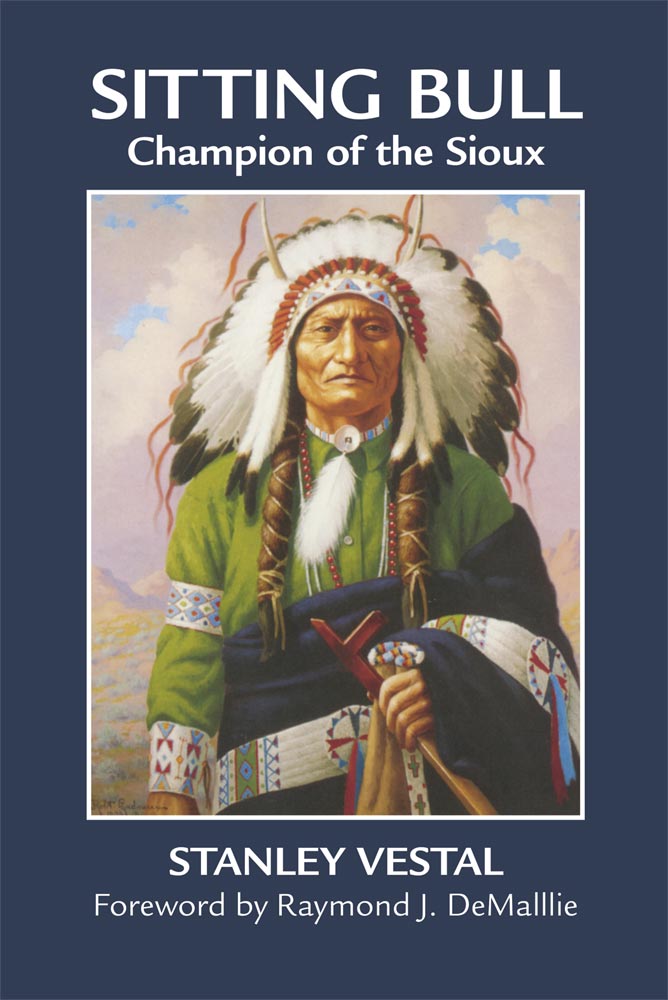
Sitting Bull
Champion of the Sioux
University of Oklahoma Press · Print & ebook · October 15, 1989
"If that is Long Hair, I am the one who killed him," White Bull, the young nephew of Sitting Bull, said when Bad Juice pointed out Custer's body immediately after the Battle of the Little Big Horn.
We earn from qualifying purchases.
- Genres
- Indigenous Lives, 19th-Century America, Civil War Era
- Published
- University of Oklahoma Press, October 15, 1989
Nearest books
Matched by what the books are about, then ordered by what their readers also loved. Most of these share its genres: 19th-Century America and Civil War Era.
 Crazy Horse and CusterStephen E. Ambrose70% matchAlso shares Indigenous Lives
 Thieves' RoadTerry Mort66% match
 Birch CoulieJohn Christgau61% match
 Bury My Heart at Wounded KneeDee Brown, Hampton Sides61% match
 Battle Cry of FreedomJames M. McPherson47% match
 Black Elk SpeaksJohn G. Neihardt, Philip J. Deloria57% matchAlso shares Indigenous Lives
 The Apache WarsPaul Andrew Hutton57% match
 Wild BillJohnny Heller, Tom Clavin57% match
For younger readers: In the Footsteps of Crazy Horse, Wounded Knee, The Star People
Start with three books, and this one can be the first.
Members get a new edition every morning: a route out from their books to essays, research and talks, with the reason for each.
Start with this bookAbout this book
"If that is Long Hair, I am the one who killed him," White Bull, the young nephew of Sitting Bull, said when Bad Juice pointed out Custer's body immediately after the Battle of the Little Big Horn. Yet it was Sitting Bull who acquired the notoriety and was paraded in Buffalo Bill's Wild West Show as "the warrior who killed Custer."
Continue reading
But this new edition of Stanley Vestal's classic biography of the famous chief emphasizes that "Sitting Bull's fame does not rest upon the death of Custer?s five troops. Had he been twenty miles away shooting antelope that morning, he would still remain the greatest of the Sioux." The stirring account of the death throes of a mighty nation and its leader is the story of the "greatest of the Sioux" and his struggle to keep his people free and united. The Sioux were formidable warriors, as attested to by men who fought against them, like General Anson Mills, who said, "They were the best cavalry in the world; their like will never be seen again," but they were up against an overwhelming tide of soldiers, homesteaders, and bureaucrats. Sitting Bull fought long and hard and "He was ... a statesman, one of the most farsighted we have had," but statesmanship could not prevail against such odds. This powerful biography of Sitting Bull is brought to a new generation of readers in h a new and expanded edition, for much new material had been added to the original edition (published in 1932) that could not be disclosed while the informants were still living. Sitting Bull is a moving account of the epic courage of one man in the face of his inevitable defeat as the last defender of his people's rights.
Where it sits
| Indigenous Lives | 97% |
|---|---|
| Civil War Era | 42% |
| 19th-Century America | 32% |
Percentages are BookFrontier’s reading of the book.
Publisher categories
- Indigenous Lives
- Native American History
- Native American Studies
- Authors
- Stanley Vestal
- Publisher
- University of Oklahoma Press
- Published
- October 15, 1989
- Format
- Print & ebook
- Reading lane
- Indigenous Lives