
Blurred Borders
Transnational Migration Between the Hispanic Caribbean and the United States
The University of North Carolina Press · Print & ebook · September 12, 2011
In this comprehensive comparative study, Jorge Duany explores how migrants to the United States from Cuba, the Dominican Republic, and Puerto Rico maintain multiple ties to their countries of origin.
We earn from qualifying purchases.
- Who it’s for
- Jorge Duany compares how Cuban, Dominican, and Puerto Rican migrants sustain ties across borders.
- Genres
- Immigration & Emigration, Hispanic American Studies, Caribbean & Latin American Studies
- Published
- The University of North Carolina Press, September 12, 2011
Nearest books
Matched by what the books are about, then ordered by what their readers also loved. Most of these share its genre: Hispanic American Studies.
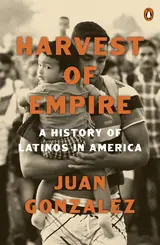 Harvest of EmpireJuan Gonzalez46% matchAlso shares Immigration & Emigration
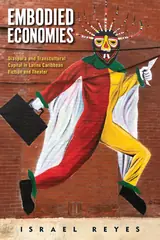 Embodied EconomiesIsrael Reyes65% match
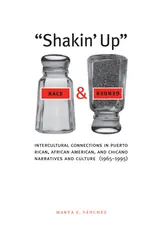 Shakin' Up Race and GenderMarta E. Sánchez55% match
 Creole IndigeneityShona N. Jackson54% matchAlso shares Caribbean & Latin American Studies
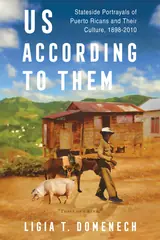 US According to ThemLigia T. Domenech54% matchAlso shares Caribbean & Latin American Studies
 Atlantic Africa and the Spanish Caribbean, 1570-1640David Wheat54% match
 Walk the BarrioCristina Rodriguez, Cristina Rodríguez53% matchAlso shares Immigration & Emigration
For younger readers: Coming to America: the Story of Immigration, The Other Side, Lupita Manana
Start with three books, and this one can be the first.
Members get a new edition every morning: a route out from their books to essays, research and talks, with the reason for each.
Start with this bookAbout this book
In this comprehensive comparative study, Jorge Duany explores how migrants to the United States from Cuba, the Dominican Republic, and Puerto Rico maintain multiple ties to their countries of origin.
Continue reading
Chronicling these diasporas from the end of World War II to the present, Duany argues that each sending country’s relationship to the United States shapes the transnational experience for each migrant group, from legal status and migratory patterns to work activities and the connections migrants retain with their home countries. Blending extensive ethnographic, archival, and survey research, Duany proposes that contemporary migration challenges the traditional concept of the nation-state. Increasing numbers of immigrants and their descendants lead what Duany calls “bifocal” lives, bridging two or more states, markets, languages, and cultures throughout their lives. Even as nations attempt to draw their boundaries more clearly, the ceaseless movement of transnational migrants, Duany argues, requires the rethinking of conventional equations between birthplace and residence, identity and citizenship, borders and boundaries.
Caribbean Migration
Jorge Duany compares how Cuban, Dominican, and Puerto Rican migrants sustain ties across borders.
Come here for
- Comparisons of Cuban, Dominican, and Puerto Rican migration
- Accounts of legal status, work, and ties to countries of origin
Expect
- A history spanning the end of World War II to the present
- An argument about migration and the nation-state
Where it sits
| Immigration & Emigration | 70% |
|---|---|
| Caribbean & Latin American Studies | 51% |
| Hispanic American Studies | 48% |
Percentages are BookFrontier’s reading of the book.
Publisher categories
- Caribbean History
- Cuban History
- Authors
- Jorge Duany
- Publisher
- The University of North Carolina Press
- Published
- September 12, 2011
- Format
- Print & ebook
- Reading lane
- Caribbean History