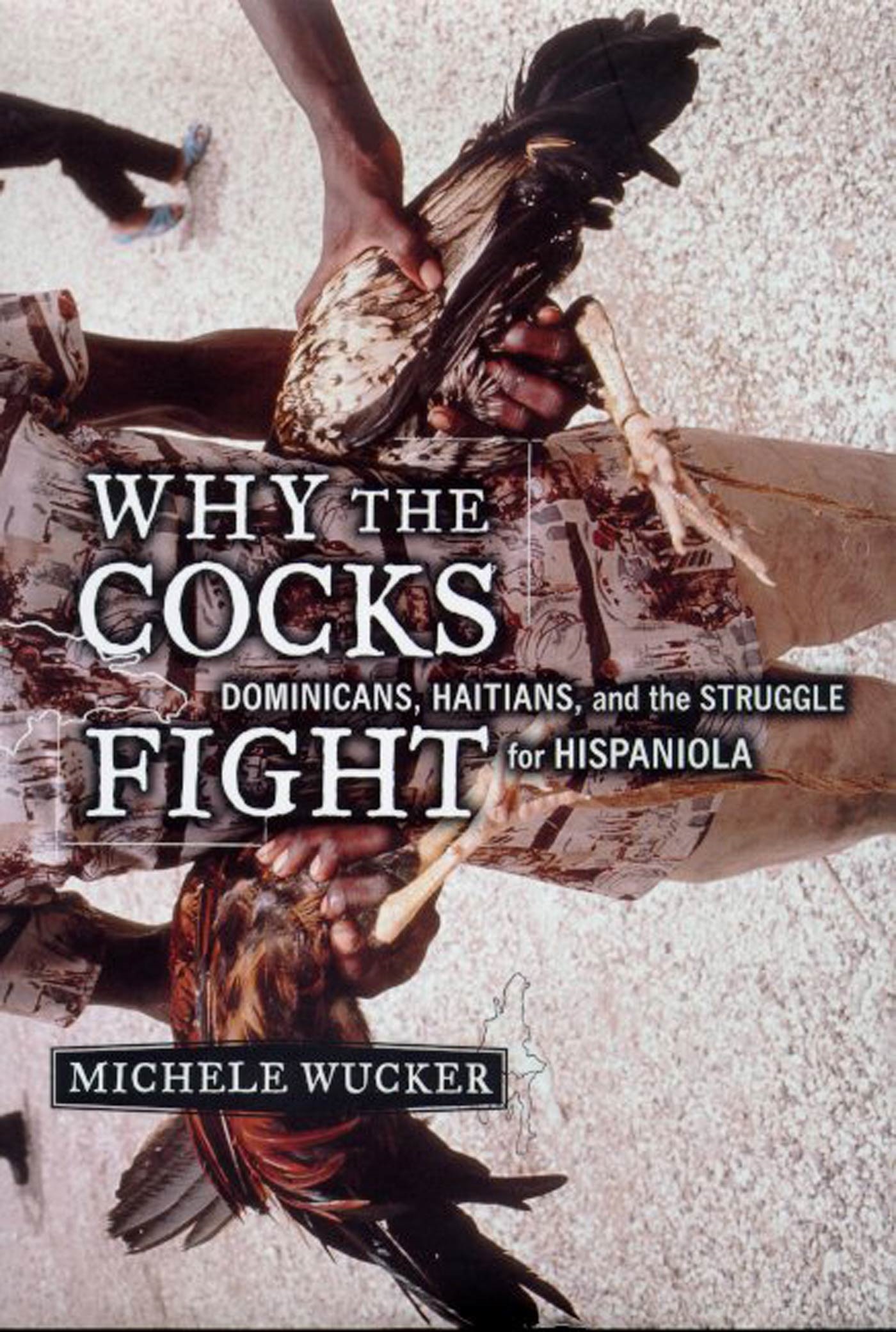
Why the Cocks Fight
Dominicans, Haitians, and the Struggle for Hispaniola
Farrar Straus & Giroux · Print & ebook · April 3, 2000
Like two roosters in a fighting arena, Haiti and the Dominican Republic are encircled by barriers of geography and poverty.
We earn from qualifying purchases.
- Who it’s for
- Readers interested in Caribbean history and politics
- Themes
- Cockfighting as cultural ritual, Haitian-Dominican divisions, U.S. policy in Hispaniola
- Genres
- History of Haiti, Caribbean History, Caribbean & Latin American Studies
Nearest books
Matched by what the books are about, then ordered by what their readers also loved.
 Brazil on the RiseLarry Rohter39% match
 Haiti: the Aftershocks of HistoryLaurent Dubois53% matchShares History of Haiti
 Revolutionary Masculinity and Racial InequalityBonnie A. Lucero50% matchShares Caribbean & Latin American Studies
 Cuba and the U.s. EmpireJane Franklin, Noam Chomsky49% match
 Sexual Revolutions in CubaCarrie Hamilton, Elizabeth Dore49% match
 Cuba in the American ImaginationLouis A. Pérez Jr., Drew Birdseye48% match
 Awakening the AshesMarlene L. Daut48% matchShares History of Haiti
 The History of CubaClifford L. Staten48% match
For younger readers: If Dominican Were a Color, Taste of Salt, My Latin America and the Caribbean: a Celebration
Start with three books, and this one can be the first.
Members get a new edition every morning: a route out from their books to essays, research and talks, with the reason for each.
Start with this bookAbout this book
Like two roosters in a fighting arena, Haiti and the Dominican Republic are encircled by barriers of geography and poverty. They co-inhabit the Caribbean island of Hispaniola, but their histories are as deeply divided as their cultures: one French-speaking and black, one Spanish-speaking and mulatto. Yet, despite their antagonism, the two countries share a national symbol in the rooster--and a fundamental activity and favorite sport in the cockfight.
Continue reading
In this book, Michele Wucker asks: "If the symbols that dominate a culture accurately express a nation's character, what kind of a country draws so heavily on images of cockfighting and roosters, birds bred to be aggressive? What does it mean when not one but two countries that are neighbors choose these symbols? Why do the cocks fight, and why do humans watch and glorify them?" Wucker studies the cockfight ritual in considerable detail, focusing as much on the customs and histories of these two nations as on their contemporary lifestyles and politics. Her well-cited and comprehensive volume also explores the relations of each nation toward the United States, which twice invaded both Haiti (in 1915 and 1994) and the Dominican Republic (in 1916 and 1965) during the twentieth century. Just as the owners of gamecocks contrive battles between their birds as a way of playing out human conflicts, Wucker argues, Haitian and Dominican leaders often stir up nationalist disputes and exaggerate their cultural and racial differences as a way of deflecting other kinds of turmoil. Thus Why the Cocks Fight highlights the factors in Caribbean history that still affect Hispaniola today, including the often contradictory policies of the U.S.
Who it’s for
- Readers interested in Caribbean history and politics
- Readers exploring Haitian-Dominican relations and cockfighting
Where it sits
| History of Haiti | 65% |
|---|---|
| Caribbean & Latin American Studies | 35% |
| Caribbean History | 29% |
Percentages are BookFrontier’s reading of the book.
Publisher categories
- Dominican Republic History
- History of Haiti
- Authors
- Michele Wucker
- Publisher
- Farrar Straus & Giroux
- Published
- April 3, 2000
- Format
- Print & ebook
- Theme
- Cockfighting as cultural ritual · Haitian-Dominican divisions · U.S. policy in Hispaniola
- Reading lane
- Dominican Republic History