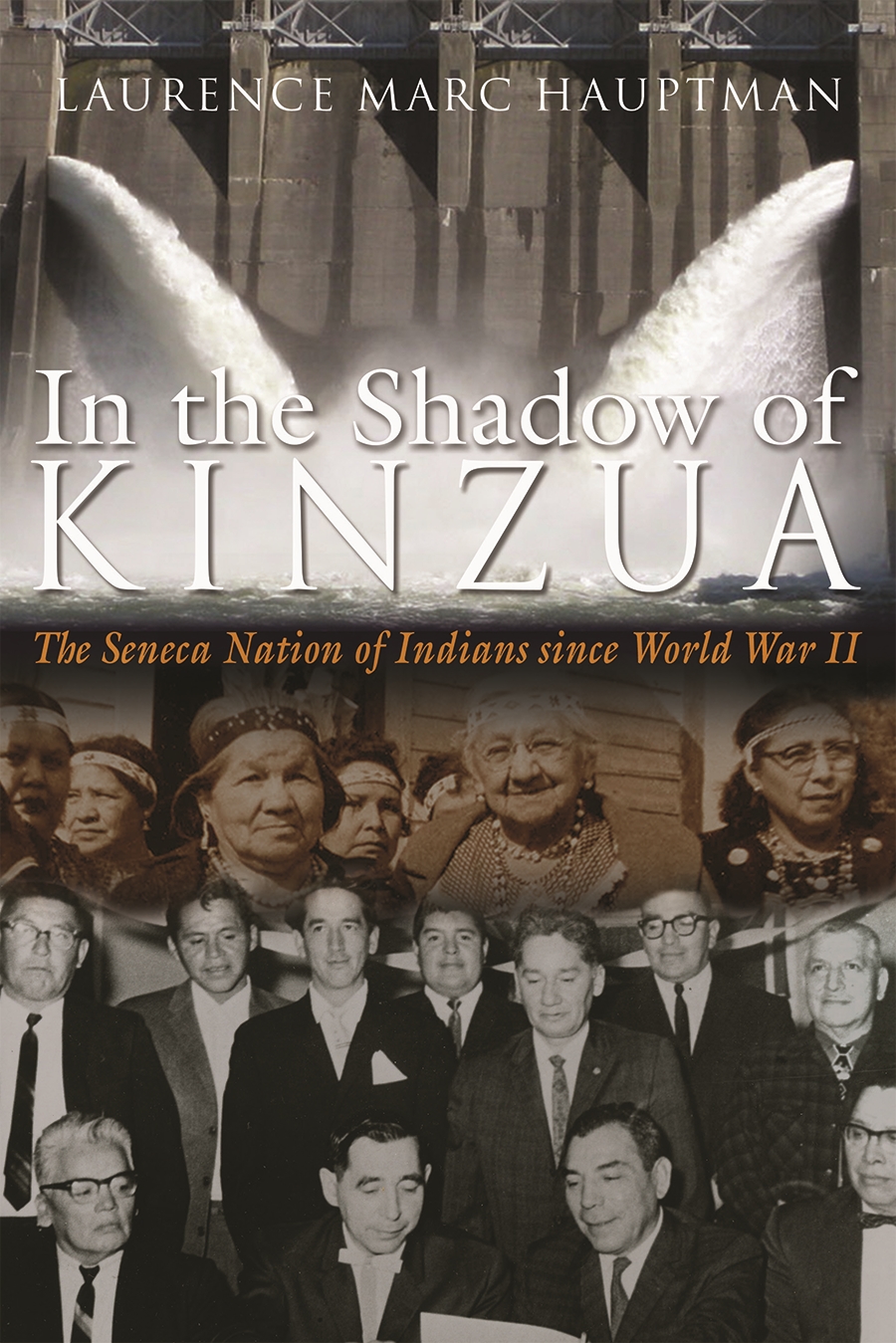
In the Shadow of Kinzua
The Seneca Nation of Indians Since World War II
Syracuse University Press · Print & ebook · January 22, 2014
The Kinzua Dam has cast a long shadow on Seneca life since World War II.
We earn from qualifying purchases.
- Who it’s for
- A study of Kinzua Dam’s political origins and its lasting effects on Seneca lands and governance.
- Themes
- Kinzua Dam and Seneca displacement, Seneca Nation governance, Community resilience and rebuilding
- Genres
- Native American Studies, 20th-Century America, Middle Atlantic History
Nearest books
Matched by what the books are about, then ordered by what their readers also loved.
 Thunder in the MountainsDaniel J. Sharfstein43% match
 Johnstown FloodDavid McCullough50% matchShares Middle Atlantic History
 The St. Lawrence Seaway and Power ProjectClaire Puccia Parham49% matchShares 20th-Century America
 Empire of WaterDavid Soll46% matchShares Middle Atlantic History
 Indian NationCheryl Walker45% matchShares Native American Studies
 ColossusMichael Hiltzik45% matchShares 20th-Century America
For younger readers: Many Voices, Indian Captive, The New York Public Library Amazing Native American History
Start with three books, and this one can be the first.
Members get a new edition every morning: a route out from their books to essays, research and talks, with the reason for each.
Start with this bookAbout this book
The Kinzua Dam has cast a long shadow on Seneca life since World War II. The project, formally dedicated in 1966, broke the Treaty of Canandaigua of 1794, flooded approximately 10,000 acres of Seneca lands in New York and Pennsylvania, and forced the relocation of hundreds of tribal members.
Continue reading
Hauptman offers both a policy study, detailing how and why Washington, Harrisburg, and Albany came up with the idea to build the dam, and a community study of the Seneca Nation in the postwar era. Although the dam was presented to the Senecas as a flood control project, Hauptman persuasively argues that the primary reasons were the push for private hydroelectric development in Pennsylvania and state transportation and park development in New York. This important investigation, based on forty years of archival research as well as on numerous interviews with Senecas, shows that these historically resilient Native peoples adapted in the face of this disaster. Unlike previous studies, In the Shadow of Kinzua highlights the federated nature of Seneca Nation government, one held together in spite of great diversity of opinions and intense politics. In the Kinzua crisis and its aftermath, several Senecas stood out for their heroism and devotion to rebuilding their nation for tribal survival. They left legacies in many areas, including two community centers, a modern health delivery system, two libraries, and a museum. Money allocated in a ?compensation bill? passed by Congress in 1964 produced a generation of college-educated Senecas, some of whom now work in tribal government, making major contributions to the Nation’s present and future. Facing impossible odds and hidden forces, they motivated a cadre of volunteers to help rebuild devastated lands. Although their strategies did not stop the dam’s construction, they laid the groundwork for a tribal governing structure and for managing other issues that followed from the 1980s to the present, including land claims litigation and casinos.
Kinzua Dam’s Aftermath
A study of Kinzua Dam’s political origins and its lasting effects on Seneca lands and governance.
Come here for
- The dam’s policy origins in Washington, Harrisburg, and Albany
- Seneca Nation governance and rebuilding after displacement
Expect
- Treaty, land flooding, and forced relocation
- Community institutions and tribal government in the dam’s aftermath
Where it sits
| Middle Atlantic History | 44% |
|---|---|
| Native American Studies | 38% |
| 20th-Century America | 32% |
Percentages are BookFrontier’s reading of the book.
Publisher categories
- Native American History
- Middle Atlantic History
- Regional Policy
- Authors
- Laurence M. Hauptman
- Publisher
- Syracuse University Press
- Published
- January 22, 2014
- Format
- Print & ebook
- Theme
- Kinzua Dam and Seneca displacement · Seneca Nation governance · Community resilience and rebuilding
- Reading lane
- Native American History