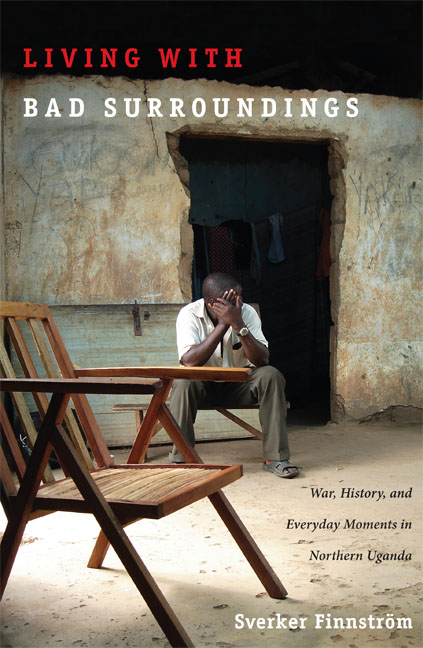
Living With Bad Surroundings
War, History, and Everyday Moments in Northern Uganda
Duke University Press · Print & ebook · February 20, 2008
Since 1986, the Acholi people of northern Uganda have lived in the crossfire of a violent civil war, with the Lord’s Resistance Army and other groups fighting the Ugandan government.
We earn from qualifying purchases.
- Who it’s for
- Sverker Finnström examines how Acholi people make sense of war and seek viable futures.
- Themes
- Acholi experiences of civil war, Survival and resistance, Pursuit of viable futures
- Genres
- African Studies, East African History, Violence in Society
Nearest books
Matched by what the books are about, then ordered by what their readers also loved. Most of these share its genre: East African History.
 First Kill Your FamilyPeter Eichstaedt69% match
 Another Fine MessHelen C. Epstein60% match
 Slow PoisonMahmood Mamdani58% match
 The Dynamics of Violence in Central AfricaRené Lemarchand56% match
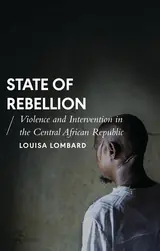 State of RebellionLouisa Lombard, Alcinda Honwana56% match
 Killing NeighborsLee Ann Fujii54% matchAlso shares African Studies
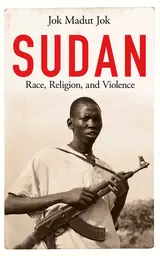 SudanJok Madut Jok53% matchAlso shares African Studies
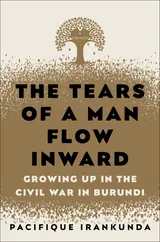 The Tears of a Man Flow InwardPacifique Irankunda52% match
For younger readers: Lost Boy, Lost Girl, AK, Don't Look Back
Start with three books, and this one can be the first.
Members get a new edition every morning: a route out from their books to essays, research and talks, with the reason for each.
Start with this bookAbout this book
Since 1986, the Acholi people of northern Uganda have lived in the crossfire of a violent civil war, with the Lord’s Resistance Army and other groups fighting the Ugandan government. Acholi have been murdered, maimed, and driven into displacement. Thousands of children have been abducted and forced to fight.
Continue reading
Many observers have perceived Acholiland and northern Uganda to be an exception in contemporary Uganda, which has been celebrated by the international community for its increased political stability and particularly for its fight against AIDS. These observers tend to portray the Acholi as war-prone, whether because of religious fanaticism or intractable ethnic hatreds. In Living with Bad Surroundings, Sverker Finnström rejects these characterizations and challenges other simplistic explanations for the violence in northern Uganda. Foregrounding the narratives of individual Acholi, Finnström enables those most affected by the ongoing “dirty war” to explain how they participate in, comprehend, survive, and even resist it. Finnström draws on fieldwork conducted in northern Uganda between 1997 and 2006 to describe how the Acholi—especially the younger generation, those born into the era of civil strife—understand and attempt to control their moral universe and material circumstances. Structuring his argument around indigenous metaphors and images, notably the Acholi concepts of good and bad surroundings, he vividly renders struggles in war and the related ills of impoverishment, sickness, and marginalization. In this rich ethnography, Finnström provides a clear-eyed assessment of the historical, cultural, and political underpinnings of the civil war while maintaining his focus on Acholi efforts to achieve “good surroundings,” viable futures for themselves and their families.
Acholi Surroundings
Sverker Finnström examines how Acholi people make sense of war and seek viable futures.
Come here for
- Individual Acholi narratives of participation, survival, and resistance
- Acholi ideas of good and bad surroundings
Expect
- An ethnography grounded in fieldwork from 1997 to 2006
- Attention to war’s historical, cultural, and political underpinnings
Where it sits
| African Studies | 38% |
|---|---|
| East African History | 35% |
| Violence in Society | 25% |
Percentages are BookFrontier’s reading of the book.
Publisher categories
- African History
- How Cultures Work
- Authors
- Sverker Finnström
- Publisher
- Duke University Press
- Published
- February 20, 2008
- Format
- Print & ebook
- Theme
- Acholi experiences of civil war · Survival and resistance · Pursuit of viable futures
- Reading lane
- African History