
Always More Than One
Individuation's Dance
Duke University Press · Print & ebook · January 9, 2013
In Always More Than One, the philosopher, visual artist, and dancer Erin Manning explores the concept of the "more than human" in the context of movement, perception, and experience.
We earn from qualifying purchases.
- Who it’s for
- Erin Manning traces how choreographic thinking unsettles fixed categories of perception and relation.
- Themes
- Perception and relation, Autistic perception, Ecological politics
- Genres
- Aesthetics, Mind & Body, Social Philosophy
Nearest books
Matched by what the books are about, then ordered by what their readers also loved.
 The Archaeology of KnowledgeMichel Foucault42% match
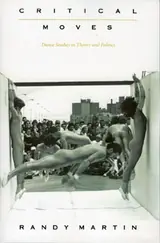 Critical MovesRandy Martin56% match
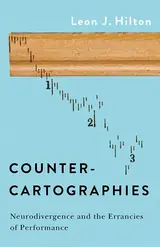 Counter-cartographiesLeon J. Hilton53% match
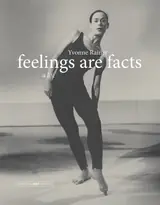 Feelings Are FactsYvonne Rainer52% match
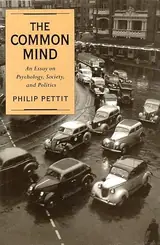 The Common Mind: an Essay on Psychology, Society, and Politics With a New PostscriptPhilip Pettit51% match
 A Guide to a Somatic Movement PracticeNancy Topf50% match
For younger readers: Continuum, This Is What I Know About Art, Tiny Dancer
Start with three books, and this one can be the first.
Members get a new edition every morning: a route out from their books to essays, research and talks, with the reason for each.
Start with this bookAbout this book
In Always More Than One, the philosopher, visual artist, and dancer Erin Manning explores the concept of the "more than human" in the context of movement, perception, and experience. Working from Whitehead's process philosophy and Simondon's theory of individuation, she extends the concepts of movement and relation developed in her earlier work toward the notion of "choreographic thinking."
Continue reading
Here, she uses choreographic thinking to explore a mode of perception prior to the settling of experience into established categories. Manning connects this to the concept of "autistic perception," described by autistics as the awareness of a relational field prior to the so-called neurotypical tendency to "chunk" experience into predetermined subjects and objects. Autistics explain that, rather than immediately distinguishing objects—such as chairs and tables and humans—from one another on entering a given environment, they experience the environment as gradually taking form. Manning maintains that this mode of awareness underlies all perception. What we perceive is never first a subject or an object, but an ecology. From this vantage point, she proposes that we consider an ecological politics where movement and relation take precedence over predefined categories, such as the neurotypical and the neurodiverse, or the human and the nonhuman. What would it mean to embrace an ecological politics of collective individuation?
Choreographic Thinking
Erin Manning traces how choreographic thinking unsettles fixed categories of perception and relation.
Come here for
- Choreographic thinking as a way to examine perception before categories settle
Expect
- An account linking autistic perception, ecology, and collective individuation
Where it sits
| Aesthetics | 38% |
|---|---|
| Social Philosophy | 33% |
| Mind & Body | 19% |
Percentages are BookFrontier’s reading of the book.
Publisher categories
- Art Criticism & Ideas
- Dance Resources
- Mind & Body
- Authors
- Erin Manning
- Publisher
- Duke University Press
- Published
- January 9, 2013
- Format
- Print & ebook
- Theme
- Perception and relation · Autistic perception · Ecological politics
- Reading lane
- Art Criticism & Ideas