
How to Analyse Bank Financial Statements
A Concise Practical Guide for Analysts and Investors
Harriman House · Print & ebook · January 30, 2017
The financial statements of banks differ very much from those of non-banks.
We earn from qualifying purchases.
- Who it’s for
- Learn methods for analysing bank financial statements, with real bank data illustrating each step.
- Genres
- Banks & Banking, Financial Accounting, Financial Risk Management
- Published
- Harriman House, January 30, 2017
Nearest books
Matched by what the books are about, then ordered by what their readers also loved.
 Bank Asset Liability Management Best PracticePolina Bardaeva60% matchShares Banks & Banking and Financial Risk Management
 Financial Modeling and ValuationPaul Pignataro60% match
 Bank Management & Financial ServicesPeter S. Rose, Sylvia C. Hudgins59% matchShares Banks & Banking and Financial Risk Management
 How to Read a Financial ReportTage C. Tracy59% matchShares Financial Accounting
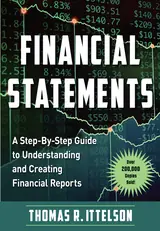 Financial StatementsThomas Ittelson, Thomas R. Ittelson58% matchShares Financial Accounting
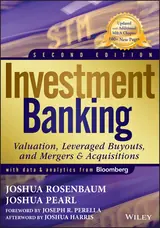 Investment BankingJoshua Rosenbaum, Joshua Pearl57% match
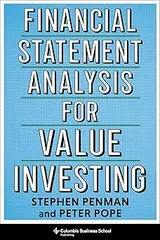 Financial Statement Analysis for Value InvestingStephen Penman, Peter F. Pope57% matchShares Financial Accounting
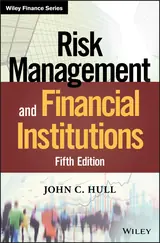 Risk Management and Financial InstitutionsJohn C. Hull55% matchShares Banks & Banking and Financial Risk Management
Start with three books, and this one can be the first.
Members get a new edition every morning: a route out from their books to essays, research and talks, with the reason for each.
Start with this bookAbout this book
The financial statements of banks differ very much from those of non-banks. The assets and liabilities are mostly financial based, and the equity ratio is far lower than the equity ratios of industrial companies. Banking supervision has a big influence on the financial statements too.
Continue reading
Recent years have shown the risks which can evolve from banks, but normal instruments of financial statement analysis are not sufficient to analyse banks and locate these risks: different methods are needed. This book, by experienced bank analyst Thomas Padberg, provides analysts and investors with the tools to analyse bank financial statements, find problems in bank finances, and assess the risks of banks. Examples with real bank financial data are used to show readers the step-by-step methods to follow when looking at bank financial statements. The book covers: - The specific accounting rules that apply to banks - How to analyse bank segment reporting - The ratios to use when analysing bank financial statements - How to analyse bank profit and loss accounts - Equity analysis and stock analysis of banks This is an essential guide for all analysts and serious investors who need to analyse bank financial statements.
Bank Statement Analysis
Learn methods for analysing bank financial statements, with real bank data illustrating each step.
Come here for
- Bank-specific accounting rules and segment reporting
- Ratios, profit and loss, equity, and stock analysis
Expect
- Separate treatment of bank accounting and segment reporting
- Tools for examining bank ratios, profits, equity, and stocks
Where it sits
| Banks & Banking | 43% |
|---|---|
| Financial Accounting | 42% |
| Financial Risk Management | 29% |
Percentages are BookFrontier’s reading of the book.
Publisher categories
- Financial Accounting
- Authors
- Thomas Padberg
- Publisher
- Harriman House
- Published
- January 30, 2017
- Format
- Print & ebook
- Reading lane
- Financial Accounting