
Time Series Modeling of Neuroscience Data
1st Edition
Taylor and Francis · Print & ebook · January 26, 2012
Recent advances in brain science measurement technology have given researchers access to very large-scale time series data such as EEG/MEG data (20 to 100 dimensional) and fMRI (140,000 dimensional) data.
We earn from qualifying purchases.
- Who it’s for
- This book applies the Wiener-Kalman-Akaike approach to large-scale neuroscience time series.
- Genres
- Time Series Analysis, Neuroscience, Signal Processing
- Published
- Taylor and Francis, January 26, 2012
Nearest books
Matched by what the books are about, then ordered by what their readers also loved.
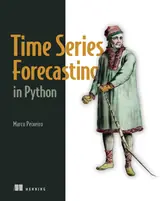 Time Series Forecasting in PythonMarco Peixeiro58% matchShares Time Series Analysis
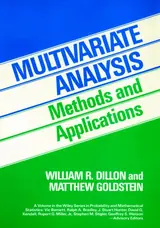 Multivariate AnalysisWilliam R. Dillon, Matthew Goldstein56% matchShares Time Series Analysis
 Chemical Kinetics, Stochastic Processes, and Irreversible ThermodynamicsMoisés Santillán, Moises Santillan55% match
 Mathematical Modeling in Systems BiologyBrian P. Ingalls53% match
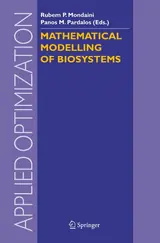 Mathematical Modelling of BiosystemsRubem P. Mondaini, Panos M. Pardalos52% match
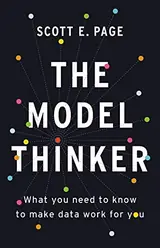 The Model ThinkerScott E. Page, Jamie Renell51% match
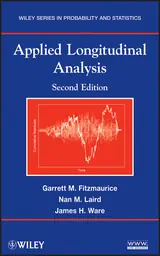 Applied Longitudinal AnalysisGarrett M. Fitzmaurice, Nan M. Laird51% match
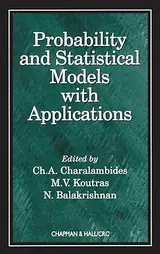 Probability and Statistical Models With ApplicationsCH. A. Charalambides, M.V. Koutras49% match
Start with three books, and this one can be the first.
Members get a new edition every morning: a route out from their books to essays, research and talks, with the reason for each.
Start with this bookAbout this book
Recent advances in brain science measurement technology have given researchers access to very large-scale time series data such as EEG/MEG data (20 to 100 dimensional) and fMRI (140,000 dimensional) data. To analyze such massive data, efficient computational and statistical methods are required.
Continue reading
Time Series Modeling of Neuroscience Data shows how to efficiently analyze neuroscience data by the Wiener-Kalman-Akaike approach, in which dynamic models of all kinds, such as linear/nonlinear differential equation models and time series models, are used for whitening the temporally dependent time series in the framework of linear/nonlinear state space models. Using as little mathematics as possible, this book explores some of its basic concepts and their derivatives as useful tools for time series analysis. Unique features include: - A statistical identification method of highly nonlinear dynamical systems such as the Hodgkin-Huxley model, Lorenz chaos model, Zetterberg Model, and more - Methods and applications for Dynamic Causality Analysis developed by Wiener, Granger, and Akaike - A state space modeling method for dynamicization of solutions for the Inverse Problems - A heteroscedastic state space modeling method for dynamic non-stationary signal decomposition for applications to signal detection problems in EEG data analysis - An innovation-based method for the characterization of nonlinear and/or non-Gaussian time series - An innovation-based method for spatial time series modeling for fMRI data analysis The main point of interest in this book is to show that the same data can be treated using both a dynamical system and time series approach so that the neural and physiological information can be extracted more efficiently. Of course, time series modeling is valid not only in neuroscience data analysis but also in many other sciences and engineering fields where the statistical inference from the observed time series data plays an important role.
Wiener-Kalman-Akaike Approach
This book applies the Wiener-Kalman-Akaike approach to large-scale neuroscience time series.
Come here for
- Identification methods for highly nonlinear dynamical systems
- Methods and applications for dynamic causality analysis
Expect
- State-space methods for dynamicizing inverse-problem solutions
- Innovation-based spatial time-series modeling for fMRI data analysis
Where it sits
| Time Series Analysis | 77% |
|---|---|
| Neuroscience | 74% |
| Signal Processing | 59% |
Percentages are BookFrontier’s reading of the book.
Publisher categories
- Neuroscience
- Authors
- Tohru Ozaki
- Publisher
- Taylor and Francis
- Published
- January 26, 2012
- Format
- Print & ebook
- Reading lane
- Neuroscience