
The Prodigious Muse
Women's Writing in Counter-reformation Italy
Johns Hopkins University Press · Print & ebook · September 1, 2011
Winner, 2012 Book Award, Society for the Study of Early Modern WomenHonorable Mention, Literature, 2012 PROSE Awards, Professional and Scholarly Publishing Division of the Association of American Publishers In her award-winning, critically acclaimed Women’s Writing in Italy, 1400–1650, Virginia Cox chronicles the history of women writers in early modern Italy—who they were, what they wrote, where they fit in society, and how their status changed during this period.
We earn from qualifying purchases.
- Who it’s for
- Virginia Cox traces how Italian women writers expanded across literary genres after 1560.
- Themes
- Women's writing after 1560, Religious and secular literature, Women's work across literary genres
- Genres
- Women Authors Criticism, Italian Literary Criticism, Renaissance Literary Criticism
Nearest books
Matched by what the books are about, then ordered by what their readers also loved.
 The Marriage Portrait: Reese's Book ClubMaggie O'Farrell57% match
 Gender and Nation in the Spanish Modernist NovelRoberta Johnson57% match
 FeminaJanina Ramirez, Janina Ramírez53% match
 The Book of Awesome Women Writers: Medieval Mystics, Pioneering Poets, Fierce Feminists and First Ladies of LiteratureBecca Anderson52% matchShares Women Authors Criticism
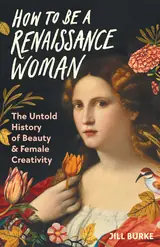 How to Be a Renaissance WomanJill Burke51% match
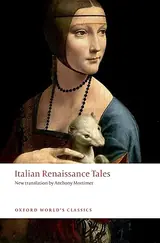 Italian Renaissance TalesAnthony Mortimer, Giovanni Boccaccio51% match
For younger readers: The Siren and the Star, Everything Is Poison, The Vanishing Point
Start with three books, and this one can be the first.
Members get a new edition every morning: a route out from their books to essays, research and talks, with the reason for each.
Start with this bookAbout this book
Winner, 2012 Book Award, Society for the Study of Early Modern WomenHonorable Mention, Literature, 2012 PROSE Awards, Professional and Scholarly Publishing Division of the Association of American Publishers In her award-winning, critically acclaimed Women’s Writing in Italy, 1400–1650, Virginia Cox chronicles the history of women writers in early modern Italy—who they were, what they wrote, where they fit in society, and how their status changed during this period.
Continue reading
In this book, Cox examines more closely one particular moment in this history, in many ways the most remarkable for the richness and range of women’s literary output. A widespread critical notion sees Italian women’s writing as a phenomenon specific to the peculiar literary environment of the mid-sixteenth century, and most scholars assume that a reactionary movement such as the Counter-Reformation was unlikely to spur its development. Cox argues otherwise, showing that women’s writing flourished in the period following 1560, reaching beyond the customary "feminine" genres of lyric, poetry, and letters to experiment with pastoral drama, chivalric romance, tragedy, and epic. There were few widely practiced genres in this eclectic phase of Italian literature to which women did not turn their hand. Organized by genre, and including translations of all excerpts from primary texts, this comprehensive and engaging volume provides students and scholars with an invaluable resource as interest in these exceptional writers grows. In addition to familiar, secular works by authors such as Isabella Andreini, Moderata Fonte, and Lucrezia Marinella, Cox also discusses important writings that have largely escaped critical interest, including Fonte’s and Marinella’s vivid religious narratives, an unfinished Amazonian epic by Maddalena Salvetti, and the startlingly fresh autobiographical lyrics of Francesca Turina Bufalini. Juxtaposing religious and secular writings by women and tracing their relationship to the male-authored literature of the period, often surprisingly affirmative in its attitudes toward women, Cox reveals a new and provocative vision of the Italian Counter-Reformation as a period far less uniformly repressive of women than is commonly assumed.
Genres After 1560
Virginia Cox traces how Italian women writers expanded across literary genres after 1560.
Come here for
- Women’s experiments in pastoral drama
- Translations of excerpts from primary texts
Expect
- A genre-organized account of writing after 1560
- Juxtaposition of religious and secular works
Where it sits
| Renaissance Literary Criticism | 66% |
|---|---|
| Women Authors Criticism | 49% |
| Italian Literary Criticism | 45% |
Percentages are BookFrontier’s reading of the book.
Publisher categories
- Italian History
- Italian Literary Criticism
- Gender Studies
- Authors
- Virginia Cox
- Publisher
- Johns Hopkins University Press
- Published
- September 1, 2011
- Format
- Print & ebook
- Theme
- Women's writing after 1560 · Religious and secular literature · Women's work across literary genres
- Reading lane
- Italian History