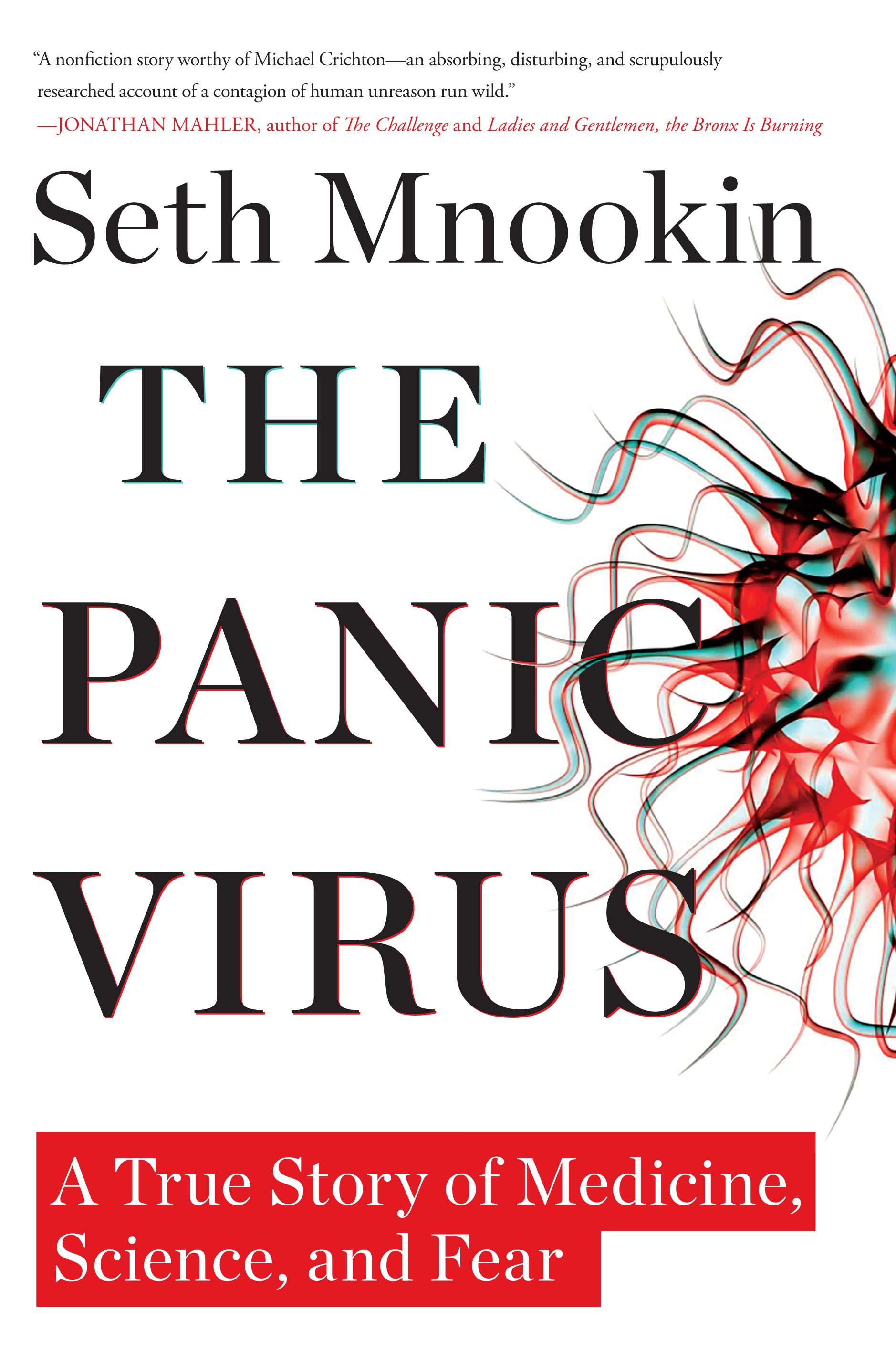
The Panic Virus
A True Story of Medicine, Science, and Fear
Simon & Schuster · Print & ebook · January 11, 2011
WHO DECIDES WHICH FACTS ARE TRUE?
We earn from qualifying purchases.
- Who it’s for
- A lucid look at how fear moves through medicine, science, and public life.
- Genres
- Vaccinations, Public Health, Health Care Policy
- Published
- Simon & Schuster, January 11, 2011
Nearest books
Matched by what the books are about, then ordered by what their readers also loved.
 VaccinatedPaul A. Offit, M.D.70% matchShares Vaccinations
 The Mother Next DoorAndrea Dunlop, Mike Weber58% match
 On CallAnthony Fauci, M.D.58% match
 An American SicknessElisabeth Rosenthal56% matchShares Health Care Policy
 Trigger PointsMark Follman55% match
 Medical ApartheidHarriet A. Washington54% match
 PlandemicMikki Willis71% matchShares Vaccinations
For younger readers: Patient Zero, What the Fact?, New York Times Deadly Invaders
Start with three books, and this one can be the first.
Members get a new edition every morning: a route out from their books to essays, research and talks, with the reason for each.
Start with this bookAbout this book
WHO DECIDES WHICH FACTS ARE TRUE? In 1998 Andrew Wakefield, a British gastroenterologist with a history of self-promotion, published a paper with a shocking allegation: the measles-mumps-rubella vaccine might cause autism. The media seized hold of the story and, in the process, helped to launch one of the most devastating health scares ever.
Continue reading
In the years to come Wakefield would be revealed as a profiteer in league with class-action lawyers, and he would eventually lose his medical license. Meanwhile one study after another failed to find any link between childhood vaccines and autism. Yet the myth that vaccines somehow cause developmental disorders lives on. Despite the lack of corroborating evidence, it has been popularized by media personalities such as Oprah Winfrey and Jenny McCarthy and legitimized by journalists who claim that they are just being fair to “both sides” of an issue about which there is little debate. Meanwhile millions of dollars have been diverted from potential breakthroughs in autism research, families have spent their savings on ineffective “miracle cures,” and declining vaccination rates have led to outbreaks of deadly illnesses like Hib, measles, and whooping cough. Most tragic of all is the increasing number of children dying from vaccine-preventable diseases. In The Panic Virus Seth Mnookin draws on interviews with parents, public-health advocates, scientists, and anti-vaccine activists to tackle a fundamental question: How do we decide what the truth is? The fascinating answer helps explain everything from the persistence of conspiracy theories about 9/11 to the appeal of talk-show hosts who demand that President Obama “prove” he was born in America. The Panic Virus is a riveting and sometimes heart-breaking medical detective story that explores the limits of rational thought. It is the ultimate cautionary tale for our time.
Fear and Science
A lucid look at how fear moves through medicine, science, and public life.
Come here for
- medicine, science, and fear in collision
- clear-eyed cultural context
Expect
- insight over sensation
- a steady, explanatory read
Where it sits
| Vaccinations | 79% |
|---|---|
| Public Health | 48% |
| Health Care Policy | 16% |
Percentages are BookFrontier’s reading of the book.
Publisher categories
- Public Health
- Public Policy
- Virology
- Authors
- Seth Mnookin, Dan John Miller, Tantor Audio
- Publisher
- Simon & Schuster
- Published
- January 11, 2011
- Format
- Print & ebook
- Reading lane
- Public Health