
The Record of Murders and Outrages
Racial Violence and the Fight Over Truth at the Dawn of Reconstruction
The University of North Carolina Press · Print & ebook · September 21, 2021
After the Civil War’s end, reports surged of violence by Southern whites against Union troops and Black men, women, and children.
We earn from qualifying purchases.
- Who it’s for
- Blair examines how the Freedmen’s Bureau documented racial violence and contested its evidence.
- Themes
- Racial violence after Emancipation, Reconstruction-era political conflict, Contested evidence and credibility
- Genres
- Civil War Era, Black History, Civil Rights
Nearest books
Matched by what the books are about, then ordered by what their readers also loved. Most of these share its genres: Civil War Era and Black History.
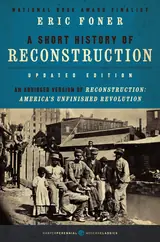 A Short History of Reconstruction [updated Edition]Eric Foner69% match
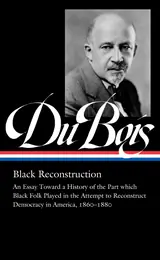 W.e.b. Du Bois: Black Reconstruction (LOA #350)W.E.B. Du Bois68% match
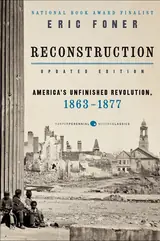 Reconstruction Updated EditionEric Foner65% match
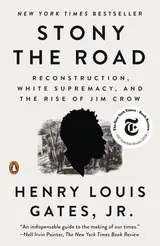 Stony the RoadHenry Louis Gates Jr.64% match
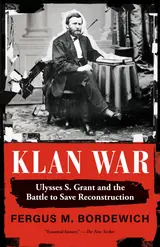 Klan WarFergus M. Bordewich, Landon Woodson63% match
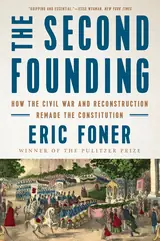 The Second FoundingEric Foner62% match
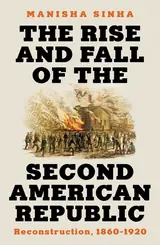 The Rise and Fall of the Second American RepublicManisha Sinha62% matchAlso shares Civil Rights
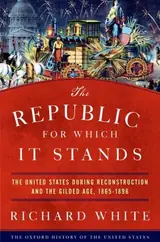 The Republic for Which It StandsRichard White, Noah Michael Levine60% match
For younger readers: Stolen Justice: the Struggle for African American Voting Rights (scholastic Focus), What Was Reconstruction?, Black Birds in the Sky
Start with three books, and this one can be the first.
Members get a new edition every morning: a route out from their books to essays, research and talks, with the reason for each.
Start with this bookAbout this book
After the Civil War’s end, reports surged of violence by Southern whites against Union troops and Black men, women, and children.
Continue reading
While some in Washington, D.C., sought to downplay the growing evidence of atrocities, in September 1866, Freedmen’s Bureau commissioner O. O. Howard requested that assistant commissioners in the readmitted states compile reports of “murders and outrages” to catalog the extent of violence, to prove that the reports of a peaceful South were wrong, and to argue in Congress for the necessity of martial law. What ensued was one of the most fascinating and least understood fights of the Reconstruction era—a political and analytical fight over information and its validity, with implications that dealt in life and death. Here William A. Blair takes the full measure of the bureau’s attempt to document and deploy hard information about the reality of the violence that Black communities endured in the wake of Emancipation. Blair uses the accounts of far-flung Freedmen’s Bureau agents to ask questions about the early days of Reconstruction, which are surprisingly resonant with the present day: How do you prove something happened in a highly partisan atmosphere where the credibility of information is constantly challenged? And what form should that information take to be considered as fact?
Freedmen’s Bureau Reports
Blair examines how the Freedmen’s Bureau documented racial violence and contested its evidence.
Come here for
- Freedmen’s Bureau agents’ reports of violence after Emancipation
- Washington’s debate over the reports’ credibility
Expect
- A Reconstruction-era fight over how information could count as fact
- The political stakes of documenting violence against Black communities
Where it sits
| Civil War Era | 97% |
|---|---|
| Black History | 46% |
| Civil Rights | 29% |
Percentages are BookFrontier’s reading of the book.
Publisher categories
- Civil War Era
- Black History
- African American Studies
- Authors
- William A. Blair
- Publisher
- The University of North Carolina Press
- Published
- September 21, 2021
- Format
- Print & ebook
- Theme
- Racial violence after Emancipation · Reconstruction-era political conflict · Contested evidence and credibility
- Reading lane
- Civil War Era