
Fugitive Modernities
Kisama and the Politics of Freedom
Duke University Press · Print & ebook · December 26, 2018
During the early seventeenth century, Kisama emerged in West Central Africa (present-day Angola) as communities and an identity for those fleeing expanding states and the violence of the trans-Atlantic slave trade.
We earn from qualifying purchases.
- Who it’s for
- Jessica A. Krug traces Kisama’s histories and the movement of its ideas across the Atlantic.
- Themes
- Kisama resistance to colonialism, Fugitive communities and slavery, African ideas across the Atlantic
- Genres
- Central African History, Slavery Studies, Colonialism & Its Aftermath
Nearest books
Matched by what the books are about, then ordered by what their readers also loved.
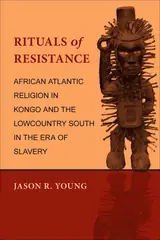 Rituals of ResistanceJason R. Young56% matchShares Slavery Studies
 African Art and the Colonial EncounterStith Thompson, Sidney Littlefield Kasfir53% matchShares Colonialism & Its Aftermath
 The Brink of FreedomDavid Kazanjian53% matchShares Colonialism & Its Aftermath
 Resistance and DecolonizationAmilcar Cabral, Amílcar Cabral49% matchShares Colonialism & Its Aftermath
 As Black As ResistanceWilliam C. Anderson, Zoé Samudzi49% match
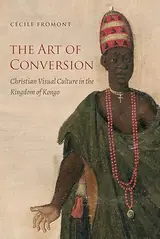 The Art of ConversionCécile Fromont48% matchShares Central African History
 Decolonizing Maasai HistoryMeitamei Olol Olol Dapash, Mary Poole48% matchShares Colonialism & Its Aftermath
 A Fistful of ShellsToby Green48% matchShares Central African History and Slavery Studies
For younger readers: I Am the Mau and Other Stories, Good Fortune, Forest of the Pygmies
Start with three books, and this one can be the first.
Members get a new edition every morning: a route out from their books to essays, research and talks, with the reason for each.
Start with this bookAbout this book
During the early seventeenth century, Kisama emerged in West Central Africa (present-day Angola) as communities and an identity for those fleeing expanding states and the violence of the trans-Atlantic slave trade. The fugitives mounted effective resistance to European colonialism despite—or because of—the absence of centralized authority or a common language.
Continue reading
In Fugitive Modernities Jessica A. Krug offers a continent- and century-spanning narrative exploring Kisama's intellectual, political, and social histories. Those who became Kisama forged a transnational reputation for resistance, and by refusing to organize their society around warrior identities, they created viable social and political lives beyond the bounds of states and the ruthless market economy of slavery. Krug follows the idea of Kisama to the Americas, where fugitives in the New Kingdom of Grenada (present-day Colombia) and Brazil used it as a means of articulating politics in fugitive slave communities. By tracing the movement of African ideas, rather than African bodies, Krug models new methods for grappling with politics and the past, while showing how the history of Kisama and its legacy as a global symbol of resistance that has evaded state capture offers essential lessons for those working to build new and just societies.
Kisama Across Continents
Jessica A. Krug traces Kisama’s histories and the movement of its ideas across the Atlantic.
Come here for
- Kisama’s political and social histories in West Central Africa
- The idea of Kisama in fugitive communities in Colombia and Brazil
Expect
- Resistance beyond centralized states and warrior identities
- Kisama’s legacy as a symbol of resistance
Where it sits
| Colonialism & Its Aftermath | 44% |
|---|---|
| Slavery Studies | 38% |
| Central African History | 33% |
Percentages are BookFrontier’s reading of the book.
Publisher categories
- West African History
- Latin American History
- Global Black Studies
- Authors
- Jessica A. Krug
- Publisher
- Duke University Press
- Published
- December 26, 2018
- Format
- Print & ebook
- Theme
- Kisama resistance to colonialism · Fugitive communities and slavery · African ideas across the Atlantic
- Reading lane
- West African History