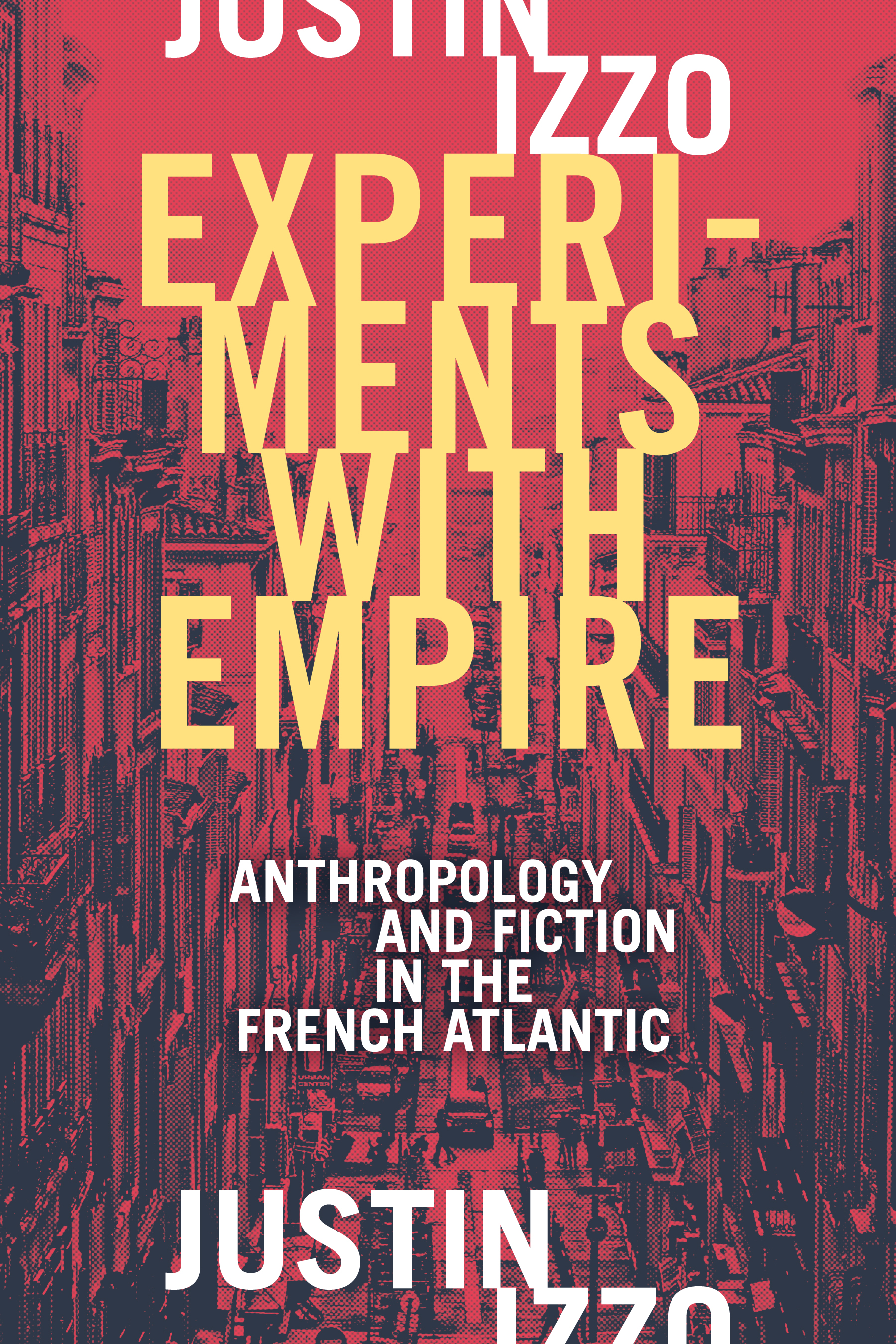
Experiments With Empire
Anthropology and Fiction in the French Atlantic
Duke University Press · Print & ebook · June 7, 2019
In Experiments with Empire Justin Izzo examines how twentieth-century writers, artists, and anthropologists from France, West Africa, and the Caribbean experimented with ethnography and fiction in order to explore new ways of knowing the colonial and postcolonial world.
We earn from qualifying purchases.
- Who it’s for
- Justin Izzo traces how writers and artists used ethnographic fiction to think beyond empire’s boundaries.
- Genres
- Colonialism & Its Aftermath, How Cultures Work, Caribbean & Latin American Criticism
- Published
- Duke University Press, June 7, 2019
Nearest books
Matched by what the books are about, then ordered by what their readers also loved. Most of these share its genre: Colonialism & Its Aftermath.
 Empire UnseenMélanie Lamotte60% match
 The Brink of FreedomDavid Kazanjian53% match
 After BarbaryTimothy Mason Roberts52% match
For younger readers: Kiffe Kiffe Tomorrow
Start with three books, and this one can be the first.
Members get a new edition every morning: a route out from their books to essays, research and talks, with the reason for each.
Start with this bookAbout this book
In Experiments with Empire Justin Izzo examines how twentieth-century writers, artists, and anthropologists from France, West Africa, and the Caribbean experimented with ethnography and fiction in order to explore new ways of knowing the colonial and postcolonial world.
Continue reading
Focusing on novels, films, and ethnographies that combine fictive elements and anthropological methods and modes of thought, Izzo shows how empire gives ethnographic fictions the raw materials for thinking beyond empire's political and epistemological boundaries. In works by French surrealist writer Michel Leiris and filmmaker Jean Rouch, Malian writer Amadou Hampâté Bâ, Martinican author Patrick Chamoiseau, and others, anthropology no longer functions on behalf of imperialism as a way to understand and administer colonized peoples; its relationship with imperialism gives writers and artists the opportunity for textual experimentation and political provocation. It also, Izzo contends, helps readers to better make sense of the complicated legacy of imperialism and to imagine new democratic futures.
Ethnography Meets Fiction
Justin Izzo traces how writers and artists used ethnographic fiction to think beyond empire’s boundaries.
Come here for
- Ethnography and fiction in novels, films, and ethnographies
- Works by Michel Leiris, Jean Rouch, Amadou Hampâté Bâ, and Patrick Chamoiseau
Expect
- Twentieth-century work from France, West Africa, and the Caribbean
- Attention to imperialism’s complicated legacy and imagined democratic futures
Where it sits
| Colonialism & Its Aftermath | 37% |
|---|---|
| How Cultures Work | 23% |
| Caribbean & Latin American Criticism | 22% |
Percentages are BookFrontier’s reading of the book.
Publisher categories
- Literary Theory
- Comparative Literature
- How Cultures Work
- Authors
- Justin Izzo
- Publisher
- Duke University Press
- Published
- June 7, 2019
- Format
- Print & ebook
- Reading lane
- Literary Theory