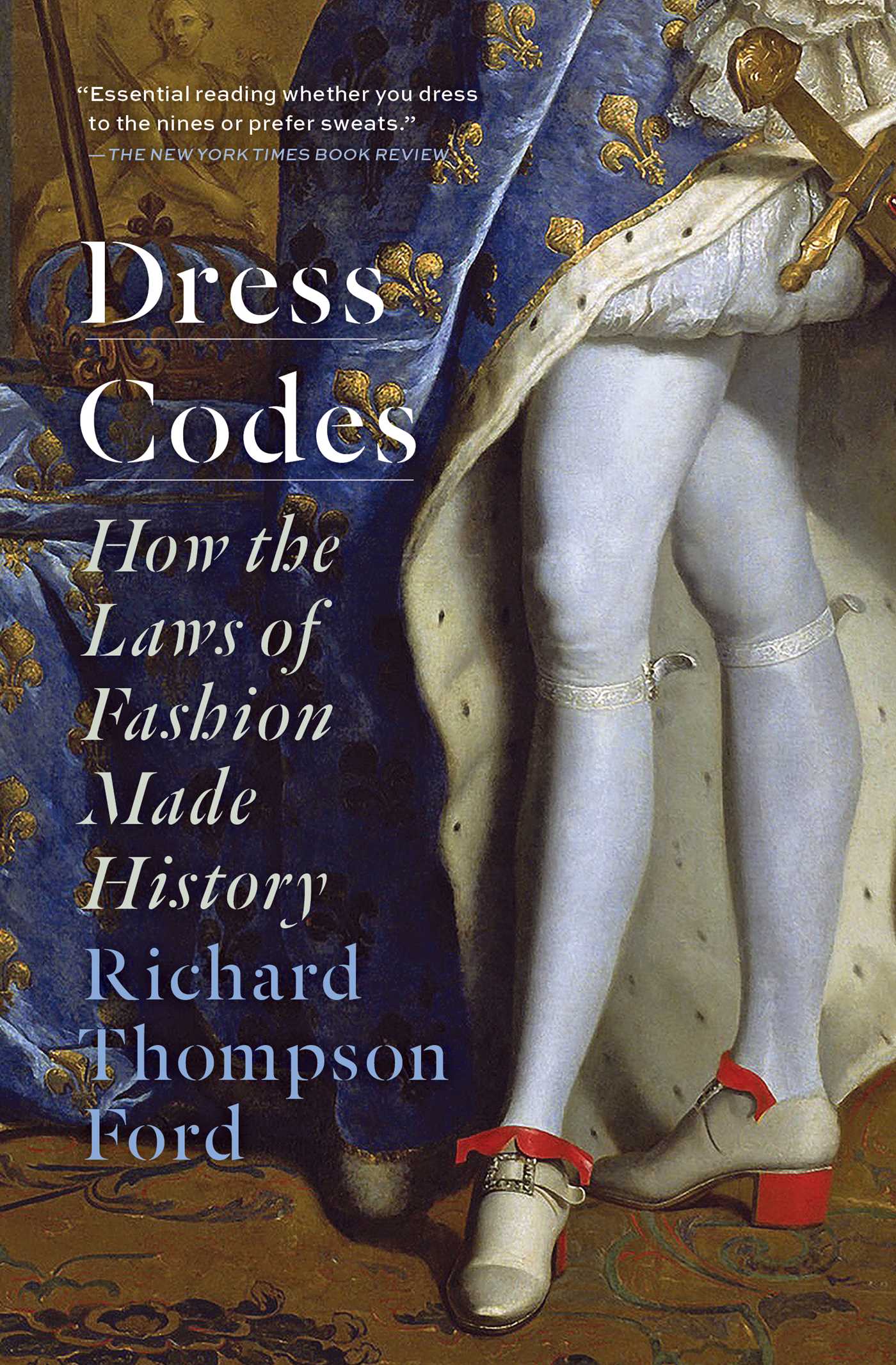
Dress Codes
How the Laws of Fashion Made History
Simon & Schuster · Print & ebook · January 18, 2022
A “sharp and entertaining” (The Wall Street Journal) exploration of fashion through the ages that asks what our clothing reveals about ourselves and our society.
We earn from qualifying purchases.
- Who it’s for
- A lively look at how dress codes shape status, power, and everyday conduct.
- Genres
- Design History, Social History, Fashion & Accessories
- Published
- Simon & Schuster, January 18, 2022
Nearest books
Matched by what the books are about, then ordered by what their readers also loved.
 The Fabric of CivilizationVirginia Postrel55% match
 Dress CodeVéronique Hyland74% matchShares Fashion & Accessories
 How to Be a Renaissance WomanJill Burke53% match
 Meet the Georgians: Epic Tales From Britain’s Wildest CenturyRobert Peal45% match
 Fallen IdolsAlex von Tunzelmann45% match
 WornSofi Thanhauser, Rebecca Lowman67% matchShares Social History and Fashion & Accessories
For younger readers: Bad Girls of Fashion, The Power of Style, What We Wear
Start with three books, and this one can be the first.
Members get a new edition every morning: a route out from their books to essays, research and talks, with the reason for each.
Start with this bookAbout this book
A “sharp and entertaining” (The Wall Street Journal) exploration of fashion through the ages that asks what our clothing reveals about ourselves and our society. Dress codes are as old as clothing itself. For centuries, clothing has been a wearable status symbol; fashion, a weapon in struggles for social change; and dress codes, a way to maintain political control.
Continue reading
Merchants dressing like princes and butchers’ wives wearing gem-encrusted crowns were public enemies in medieval societies structured by social hierarchy and defined by spectacle. In Tudor England, silk, velvet, and fur were reserved for the nobility, and ballooning pants called “trunk hose” could be considered a menace to good order. The Renaissance-era Florentine patriarch Cosimo de Medici captured the power of fashion and dress codes when he remarked, “One can make a gentleman from two yards of red cloth.” Dress codes evolved along with the social and political ideals of the day, but they always reflected struggles for power and status. In the 1700s, South Carolina’s “Negro Act” made it illegal for Black people to dress “above their condition.” In the 1920s, the bobbed hair and form-fitting dresses worn by free-spirited flappers were banned in workplaces throughout the United States, and in the 1940s, the baggy zoot suits favored by Black and Latino men caused riots in cities from coast to coast. Even in today’s more informal world, dress codes still determine what we wear, when we wear it—and what our clothing means. People lose their jobs for wearing braided hair, long fingernails, large earrings, beards, and tattoos or refusing to wear a suit and tie or make-up and high heels. In some cities, wearing sagging pants is a crime. And even when there are no written rules, implicit dress codes still influence opportunities and social mobility. Silicon Valley CEOs wear t-shirts and flip-flops, setting the tone for an entire industry: women wearing fashionable dresses or high heels face ridicule in the tech world, and some venture capitalists refuse to invest in any company run by someone wearing a suit. In Dress Codes, law professor and cultural critic Richard Thompson Ford presents a “deeply informative and entertaining” (The New York Times Book Review) history of the laws of fashion from the middle ages to the present day, a walk down history’s red carpet to uncover and examine the canons, mores, and customs of clothing—rules that we often take for granted. After reading Dress Codes, you’ll never think of fashion as superficial again—and getting dressed will never be the same.
Fashion Rules
A lively look at how dress codes shape status, power, and everyday conduct.
Come here for
- fashion as social rulebook
- sharp history with a legal edge
Expect
- cultural history with bite
- insight over ornament
Where it sits
| Design History | 36% |
|---|---|
| Fashion & Accessories | 32% |
| Social History | 23% |
Percentages are BookFrontier’s reading of the book.
Publisher categories
- Fashion Crafts
- Fashion & Accessories
- Social History
- Customs & Traditions
- Authors
- Richard Thompson Ford
- Publisher
- Simon & Schuster
- Published
- January 18, 2022
- Format
- Print & ebook
- Reading lane
- Fashion Crafts