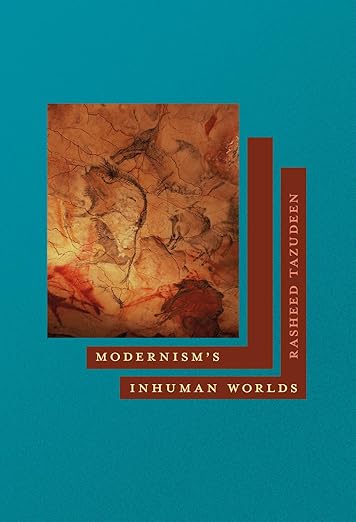
Modernism's Inhuman Worlds
Kindle Edition
Cornell University Press · Ebook · August 15, 2024
We earn from qualifying purchases.
- Genres
- Nature in Literature, 20th-Century Literary Criticism, 21st Century Literature
- Published
- Cornell University Press, August 15, 2024
Nearest books
Matched by what the books are about, then ordered by what their readers also loved.
 Premodern Ecologies in the Modern Literary ImaginationVin Nardizzi, Tiffany Jo Werth65% matchShares Nature in Literature
 Gothic and ModernismJohn Paul Riquelme58% matchShares 20th-Century Literary Criticism
 Modernism: a Very Short IntroductionChristopher Butler57% matchShares 20th-Century Literary Criticism
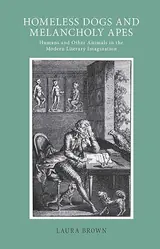 Homeless Dogs and Melancholy ApesLaura S. Brown, Laura Brown57% matchShares Nature in Literature
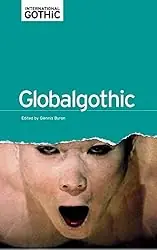 EcogothicAndrew Smith, William Hughes57% matchShares Nature in Literature
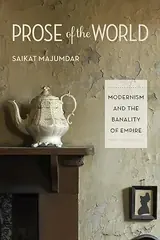 Prose of the WorldSaikat Majumdar56% matchShares 20th-Century Literary Criticism
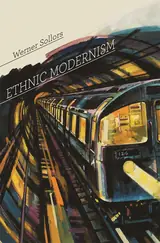 Ethnic ModernismWerner Sollors56% matchShares 20th-Century Literary Criticism
 When We Are HumanJohn Zerzan55% match
For younger readers: Wuftoom, How to Survive the End of the World
Start with three books, and this one can be the first.
Members get a new edition every morning: a route out from their books to essays, research and talks, with the reason for each.
Start with this bookAbout this book
Modernism's Inhuman Worlds explores the centrality of ecological precarity, species indeterminacy, planetary change, and the specter of extinction to modernist and contemporary metamodernist literatures. Modernist ecologies, Rasheed Tazudeen argues, emerge in response to the enigma of how to imagine inhuman being?including soils, forests, oceans, and the earth itself?through languages and epistemologies that have only ever been humanist.
Continue reading
How might (meta)modernist aesthetics help us to imagine (with) inhuman worlds, including the worlds still to be made on the other side of mass extinction? Through innovative readings of canonical and emergent modernist and metamodernist works, Tazudeen theorizes inhuman modernism as a call toward further receptivity to the worlds, beings, and relations that tend to go unthought within Western humanist epistemologies. Modernist engagements with the figures of enigma, riddle, and metaphor, according to the book's central argument, offer a means toward what Franz Kafka calls an "otherwise" speaking, based on language's obliqueness to inhuman and planetary being. Drawing on ecocriticism, decolonial and feminist science studies, postcolonial theory, inhuman geography, and sound studies, Tazudeen analyzes an inhuman modernist lineage?spanning from Darwin, Carroll, and Flaubert, through Joyce, Kafka, and Woolf, to contemporary poetic works?as both part of a collaborative rethinking of modernism's planetary and inhuman aesthetics, as well as occasions for imagining new modes of livingness for the extinctions to come.
Where it sits
| Nature in Literature | 81% |
|---|---|
| 20th-Century Literary Criticism | 78% |
| 21st Century Literature | 43% |
Percentages are BookFrontier’s reading of the book.
Publisher categories
- 16th-Century Literary Criticism
- Aesthetics
- History of Science
- Authors
- Rasheed Tazudeen
- Publisher
- Cornell University Press
- Published
- August 15, 2024
- Format
- Ebook
- Reading lane
- 16th-Century Literary Criticism