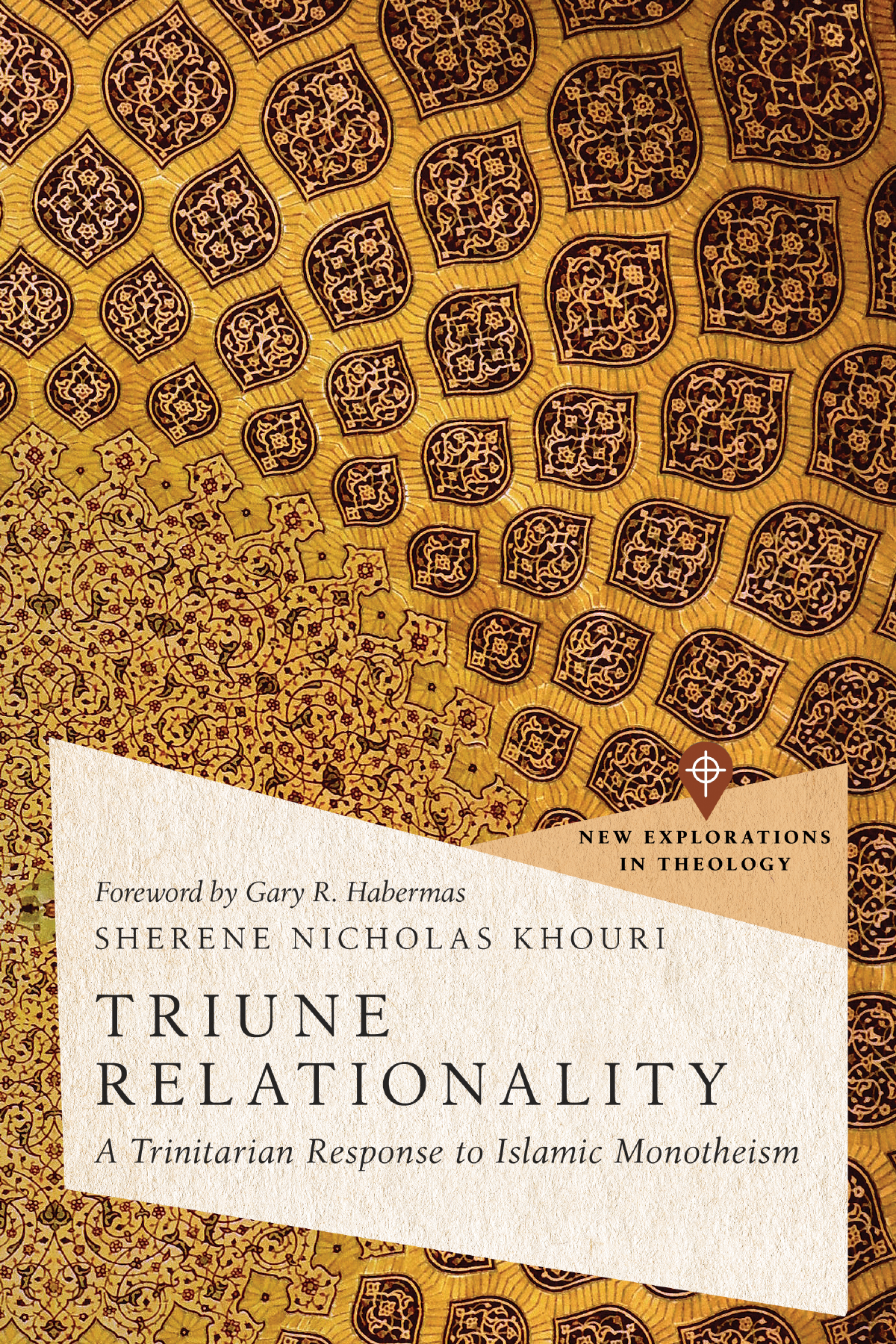
Triune Relationality
A Trinitarian Response to Islamic Monotheism
InterVarsity Press · Print & ebook · November 19, 2024
For centuries, Christians and Muslims have engaged each other in debate and critique.
We earn from qualifying purchases.
- Who it’s for
- Historical Arabic debates and contemporary theology frame a case for divine relationality.
- Themes
- Christian-Muslim theological dialogue, Historical defenses of the Trinity, The relational nature of God
- Genres
- Christian Apologetics, Ecumenism, Comparative Religion
Nearest books
Matched by what the books are about, then ordered by what their readers also loved.
 The Art of New CreationJeremy Begbie, Daniel Train47% match
 Balm in GileadTimothy Larsen, Keith L. Johnson45% match
 Introducing Eastern Orthodox TheologyAndrew Louth46% match
 Models of the ChurchAvery Dulles48% match
 AllahMiroslav Volf62% matchShares Comparative Religion
 BaptismDavid F. Wright48% match
 Is the Father of Jesus the God of Muhammad?Timothy George65% matchShares Christian Apologetics and Comparative Religion
 A History of GodKaren Armstrong60% matchShares Comparative Religion
For younger readers: No God But God: the Origins and Evolution of Islam
Start with three books, and this one can be the first.
Members get a new edition every morning: a route out from their books to essays, research and talks, with the reason for each.
Start with this bookAbout this book
For centuries, Christians and Muslims have engaged each other in debate and critique. A key area of disagreement is the nature of God: Is God a Trinity or absolutely one? To promote interfaith dialogue, Christians must understand the history of the conversation and also articulate the doctrine of the Trinity in reasonable, compelling ways.
Continue reading
In this New Explorations in Theology volume, Sherene Nicholas Khouri offers both historical and constructive responses to Islamic objections to the doctrine of the Trinity. Khouri considers arguments from Arabic Christian theologians and philosophers in the eighth to tenth centuries, primarily John of Damascus, Theodore Abū Qurrah, and Yaḥyā Ibn cAdī. When Muslims expanded beyond the Arabic peninsula, Christians in occupied regions were spurred to defend the Trinity against the Islamic understanding of tawḥid, the absolute oneness of Allah, and against misconceptions of Christian belief. Khouri then applies the insights of these little-known thinkers to current theology and apologetics conversations. She makes the case for appealing to the common ground of God as the greatest conceived being, then arguing that such a being must be relational in nature. While Christians today debate models of the Trinity with each other and with Muslims, they can be confident that Christians throughout history have believed in triune relationality and found in the doctrine of the Trinity an invitation to personal relationship with the divine. Featuring new monographs with cutting-edge research, New Explorations in Theology provides a platform for constructive, creative work in the areas of systematic, historical, philosophical, biblical, and practical theology.
Arabic Trinity Debates
Historical Arabic debates and contemporary theology frame a case for divine relationality.
Come here for
- Eighth- to tenth-century arguments by Arabic Christian theologians and philosophers
- A constructive response to Islamic objections about the Trinity
Expect
- Historical discussion centered primarily on three named thinkers
- Applications of earlier arguments to current theology and apologetics
Where it sits
| Christian Apologetics | 55% |
|---|---|
| Ecumenism | 47% |
| Comparative Religion | 40% |
Percentages are BookFrontier’s reading of the book.
Publisher categories
- Comparative Religion
- Islamic Theology
- Christian Apologetics
- Authors
- Sherene Nicholas Khouri
- Publisher
- InterVarsity Press
- Published
- November 19, 2024
- Format
- Print & ebook
- Theme
- Christian-Muslim theological dialogue · Historical defenses of the Trinity · The relational nature of God
- Reading lane
- Comparative Religion