
Arcticologies
Early Modern Actions for Our Warmer World
University of Minnesota Press · Print & ebook · August 26, 2025
Exploring the frozen past to rethink our warming future Do we really know what cold is?
We earn from qualifying purchases.
- Who it’s for
- Early modern European texts open a path from histories of cold to today’s climate debates.
- Genres
- 16th-Century Literary Criticism, 17th-Century Literary Criticism, Climate Change
- Published
- University of Minnesota Press, August 26, 2025
Nearest books
Matched by what the books are about, then ordered by what their readers also loved. Most of these share its genre: Climate Change.
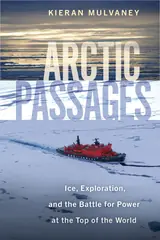 Arctic PassagesKieran Mulvaney70% match
 The Ice at the End of the WorldJon Gertner59% match
 On Thin IceEric Larsen, Hudson Lindenberger57% match
 FrostbiteNicola Twilley56% match
 This Cold HeavenGretel Ehrlich56% match
For younger readers: The Arctic Code, Ice Bear: in the Steps of the Polar Bear, Frozen in Time
Start with three books, and this one can be the first.
Members get a new edition every morning: a route out from their books to essays, research and talks, with the reason for each.
Start with this bookAbout this book
Exploring the frozen past to rethink our warming future Do we really know what cold is? In Arcticologies, Lowell Duckert delves into early modern European texts to trace how representations of frigidity from the sixteenth and seventeenth centuries have contributed to historical understandings of climate and contemporary debates on climate change.
Continue reading
Arguing that human culture and science are, in fact, indebted to the cold, Duckert suggests that these early depictions offer critical terms for advancing the aims of climate-change activism and assisting in counterapocalyptic thinking. An imaginative and intellectual journey, Arcticologies reveals the enduring role of cold in wide-ranging storytelling traditions. It draws on Shakespeare’s Hamlet and Othello and the works of Thomas Dekker, René Descartes, and Thomas Hobbes and is informed throughout by contemporary Indigenous writing, including that of Sheila Watt-Cloutier and Leanne Betasamosake Simpson. In reflecting on these assorted accounts, Duckert sees cold as not only an environmental hardship but a source of cultural creativity and resilience, highlighting moments of collaboration between humans and the icy world, from arctic exploration to urban fairs on frozen rivers. Cold, Duckert makes clear, is more than the absence of warmth. Situating our contemporary obsession with impending planetary meltdown within the mazelike arcticologies of the past, Duckert shows how early modern cold brought about forms of curiosity, vocabulary, and interspecies relationality that can serve us today. In doing so, he asks us to identify what has been lost and who is at risk in today’s thinning cold—while also urging us to imagine alternative futures focused not on inevitable and total collapse but on adaptation and preserving what remains.
Early Modern Cold
Early modern European texts open a path from histories of cold to today’s climate debates.
Come here for
- Readings of Shakespeare, Dekker, Descartes, and Hobbes
- Attention to Indigenous writing by Sheila Watt-Cloutier and Leanne Betasamosake Simpson
Expect
- Cold as hardship, cultural creativity, and resilience
- Connections between frozen rivers, Arctic exploration, and climate-change activism
Where it sits
| Climate Change | 53% |
|---|---|
| 17th-Century Literary Criticism | 37% |
| 16th-Century Literary Criticism | 30% |
Percentages are BookFrontier’s reading of the book.
Publisher categories
- 16th-Century Literary Criticism
- 17th-Century Literary Criticism
- Nature in Literature
- Authors
- Duckert, Lowell Duckert
- Publisher
- University of Minnesota Press
- Published
- August 26, 2025
- Format
- Print & ebook
- Reading lane
- 16th-Century Literary Criticism