The Slow Plague
A Geography of the AIDS Pandemic
Wiley · Print & ebook · October 8, 1993
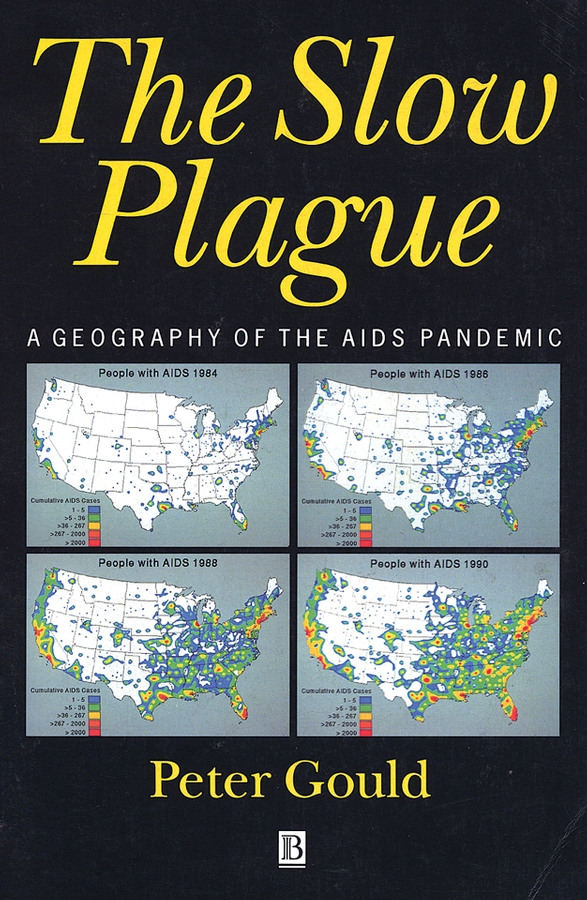
Based on research by a leading geographer and specialist in diffusion theory, The Slow Plague discloses the geographic dimension of the AIDS pandemic.
We earn from qualifying purchases.
- Who it’s for
- Peter R. Gould traces HIV’s geographic spread through regional epicenters and four case studies.
- Genres
- HIV & AIDS, Geography, Epidemiology
- Published
- Wiley, October 8, 1993
Nearest books
Matched by what the books are about, then ordered by what their readers also loved.
 The EpidemicJonathan Engel70% matchShares HIV & AIDS
 Scrambling for AfricaJohanna Tayloe Crane66% match
 AIDS, Identity, and CommunityGregory M Herek, Beverly A. Greene65% match
 The Secret EpidemicJacob Levenson65% match
 War in the BloodChris Beyrer64% matchShares HIV & AIDS
For younger readers: The Fight of Our Lives: AIDS in America, When Plague Strikes, New York Times Deadly Invaders
Start with three books, and this one can be the first.
Members get a new edition every morning: a route out from their books to essays, research and talks, with the reason for each.
Start with this bookAbout this book
Based on research by a leading geographer and specialist in diffusion theory, The Slow Plague discloses the geographic dimension of the AIDS pandemic. It provides a lucid description of the HIV, its origins, and the extent to which it has now permeated our lives. The author shows how the virus jumps from city to city, creating regional epicenters from which it spreads into surrounding areas.
Continue reading
Four case studies at different geographic scales demonstrate the devastating effects of the disease. In Africa the situation is catastrophic, in Thailand it is rapidly becoming so. In the US there are over 300,000 people with AIDS and more than one million infected by the HIV. The relationships between poverty, drugs and HIV infection are brought out poignantly in a chapter about the Bronx. The author argues that a real understanding of AIDS has been hampered by conscious or unconscious beliefs that those affected are, and will continue to be, confined to specific minority groups and to parts of the Third World. He shows that such views have led to fundamental misconceptions about the pattern of the spread of the disease and about those who will be most at risk, now and in the immediate future.
HIV’s Geographic Spread
Peter R. Gould traces HIV’s geographic spread through regional epicenters and four case studies.
Come here for
- How HIV spreads from city to city
- Case studies spanning Africa, Thailand, the United States, and the Bronx
Expect
- A discussion of poverty, drugs, and HIV infection in the Bronx
- An account of misconceptions about who is at risk
Where it sits
| Geography | 68% |
|---|---|
| HIV & AIDS | 45% |
| Epidemiology | 43% |
Percentages are BookFrontier’s reading of the book.
Publisher categories
- Geography
- Authors
- Peter R. Gould, Peter Gould
- Publisher
- Wiley
- Published
- October 8, 1993
- Format
- Print & ebook
- Reading lane
- Geography