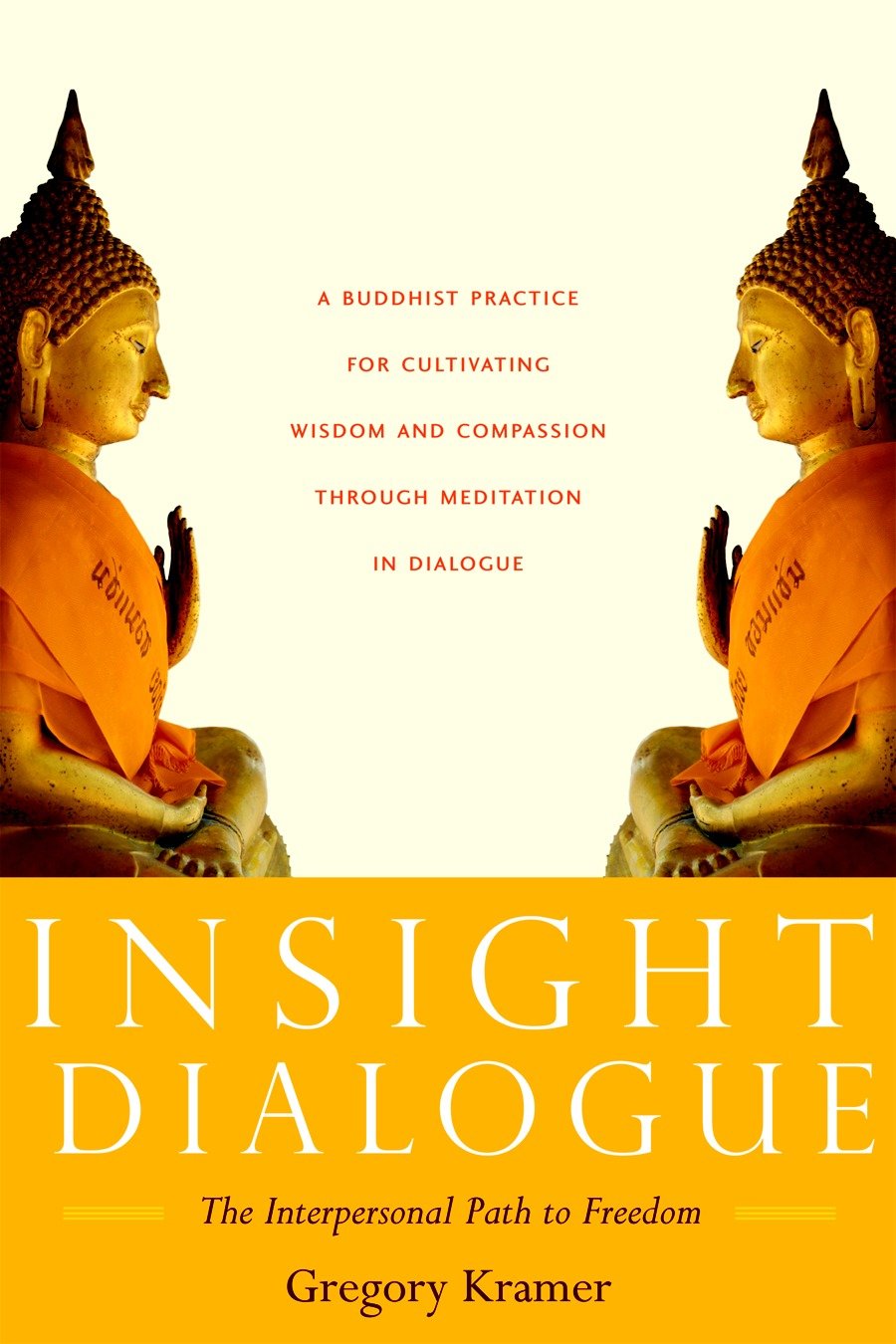
Insight Dialogue
The Interpersonal Path to Freedom
Shambhala · Print & ebook · September 11, 2007
We earn from qualifying purchases.
- Genres
- Buddhist Practice & Ritual, Meditation
- Published
- Shambhala, September 11, 2007
Nearest books
Matched by what the books are about, then ordered by what their readers also loved. Most of these share its genre: Meditation.
 Thoughts Without a ThinkerMark Epstein58% match
 Toward a Psychology of AwakeningJohn Welwood56% match
 Seeking the Heart of WisdomJoseph Goldstein, Jack Kornfield67% matchAlso shares Buddhist Practice & Ritual
 The World Exists to Set US FreeLarry Rosenberg, Madeline Drexler63% match
 Already FreeBruce Tift MA LMFT, Tami Simon62% match
 LovingkindnessSharon Salzberg60% matchAlso shares Buddhist Practice & Ritual
 MindfulnessJoseph Goldstein58% match
 Mindfulness and InsightVenerable Mahasi Sayadaw58% matchAlso shares Buddhist Practice & Ritual
Start with three books, and this one can be the first.
Members get a new edition every morning: a route out from their books to essays, research and talks, with the reason for each.
Start with this bookAbout this book
Insight Dialogue is a way of bringing the tranquility and insight attained in meditation directly into your interactions with other people. It’s a practice that involves interacting with a partner in a retreat setting or on your own, as a way of accessing a profound kind of insight. Then, you take that insight on into the grind of everyday human interactions.
Continue reading
Gregory Kramer has been teaching the practice (which he originated) for more than a decade in retreats around the world. It’s something strikingly new in the world of Buddhist practice—yet it’s completely grounded in traditional Buddhist teaching. Kramer begins with a detailed presentation of the central Buddhist teaching of the Four Noble Truths seen through an interpersonal lens. Because dukkha (suffering or unsatisfactoriness) is often most forcefully felt in our relations with others, interpersonal relationships are a wonderfully useful place to practice. He breaks the Noble Truths down into component parts to observe how they manifest particularly in relationship to others, using examples from his own life and practice, as well as from his students’. He then goes on to present the practice as it’s taught in his workshops and retreats. There are a few basic steps to the practice, deceptively simple to describe: (1) pause, (2) relax, (3) open, (4) trust emergence, (5) listen deeply, and (6) speak the truth. The sequence begins following a period of meditation, and includes periods of speaking, listening, and mutual silence. Kramer includes numerous examples of people’s experience with the practice from his retreats, and shows how the insight gained from the techniques can be brought into real life. More than just testimonials for how well the practice “works,” the personal stories demonstrate the problems that arise, the different routes the practice can follow, and the sometimes surprising insights that are gained. To learn more about the author, Gregory Kramer, go to www.metta.org.
Where it sits
| Meditation | 72% |
|---|---|
| Buddhist Practice & Ritual | 51% |
Percentages are BookFrontier’s reading of the book.
Publisher categories
- Buddhist Practice & Ritual
- Theravada Buddhism
- Meditations
- Authors
- Gregory Kramer
- Publisher
- Shambhala
- Published
- September 11, 2007
- Format
- Print & ebook
- Reading lane
- Buddhist Practice & Ritual