
Sowing Seeds in the Desert
Natural Farming, Global Restoration, and Ultimate Food Security
Rizzoli · Print & ebook · July 22, 2013
"This is what all of humanity has to learn to do, whether it is in economic desert created by Wall Street, or an ecological desert created by globalized corporate agriculture."—Vandana Shiva, founder of Navdanya Research Foundation for Science Technology & Ecology The earth is in great peril, due to the corporatization of agriculture, the rising climate crisis, and the ever-increasing levels of global poverty, starvation, and desertification on a massive scale.
We earn from qualifying purchases.
- Who it’s for
- A contemplative, practical case for restoring damaged landscapes by changing how we work with nature.
- Themes
- Natural farming, Global restoration, Humanity’s relationship with nature
- Genres
- Sustainable Agriculture, Ecology, Organic Farming
Nearest books
Matched by what the books are about, then ordered by what their readers also loved. Most of these share its genre: Sustainable Agriculture.
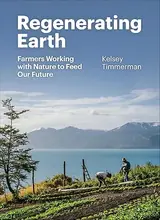 Regenerating EarthKelsey Timmerman71% match
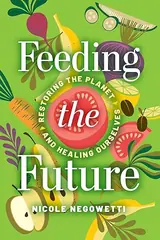 Feeding the FutureNicole Negowetti66% match
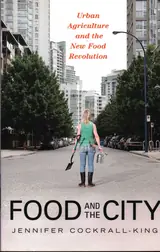 Food and the CityJennifer Cockrall-King65% match
For younger readers: The Story of Seeds, Eyes Wide Open: Going Behind the Environmental Headlines, Farming Is Female
Start with three books, and this one can be the first.
Members get a new edition every morning: a route out from their books to essays, research and talks, with the reason for each.
Start with this bookAbout this book
"This is what all of humanity has to learn to do, whether it is in economic desert created by Wall Street, or an ecological desert created by globalized corporate agriculture."—Vandana Shiva, founder of Navdanya Research Foundation for Science Technology & Ecology The earth is in great peril, due to the corporatization of agriculture, the rising climate crisis, and the ever-increasing levels of global poverty, starvation, and desertification on a massive scale.
Continue reading
This present condition of global trauma is not “natural,” but a result of humanity’s destructive actions. And, according to Masanobu Fukuoka, it is reversible. We need to change not only our methods of earth stewardship, but also the very way we think about the relationship between human beings and nature. Fukuoka grew up on a farm on the island of Shikoku in Japan. As a young man he worked as a customs inspector for plants going into and out of the country. This was in the 1930s when science seemed poised to create a new world of abundance and leisure, when people fully believed they could improve upon nature by applying scientific methods and thereby reap untold rewards. While working there, Fukuoka had an insight that changed his life forever. He returned to his home village and applied this insight to developing a revolutionary new way of farming that he believed would be of great benefit to society. This method, which he called “natural farming,” involved working with, not in opposition to, nature. Fukuoka’s inspiring and internationally best-selling book, The One-Straw Revolution was first published in English in 1978. In this book, Fukuoka described his philosophy of natural farming and why he came to farm the way he did. One-Straw was a huge success in the West, and spoke directly to the growing movement of organic farmers and activists seeking a new way of life. For years after its publication, Fukuoka traveled around the world spreading his teachings and developing a devoted following of farmers seeking to get closer to the truth of nature. Sowing Seeds in the Desert, a summation of those years of travel and research, is Fukuoka’s last major work-and perhaps his most important. Fukuoka spent years working with people and organizations in Africa, India, Southeast Asia, Europe, and the United States, to prove that you could, indeed, grow food and regenerate forests with very little irrigation in the most desolate of places. Only by greening the desert, he said, would the world ever achieve true food security. This revolutionary book presents Fukuoka’s plan to rehabilitate the deserts of the world using natural farming, including practical solutions for feeding a growing human population, rehabilitating damaged landscapes, reversing the spread of desertification, and providing a deep understanding of the relationship between human beings and nature. Fukuoka’s message comes right at the time when people around the world seem to have lost their frame of reference, and offers us a way forward. Sowing Seeds in the Desert will persuade any reader that the imperiled living world is our greatest teacher, and inspire them to care for it as vigorously as Fukuoka has.”—Toby Hemenway, author of Gaia's Garden
Farming With Nature
A contemplative, practical case for restoring damaged landscapes by changing how we work with nature.
Come here for
- Natural farming as a response to desertification and food insecurity
- A wider view of the ties between people and the living world
Expect
- Fukuoka’s plan for rehabilitating deserts and damaged landscapes
- Practical solutions alongside a philosophy of stewardship
Where it sits
| Sustainable Agriculture | 53% |
|---|---|
| Organic Farming | 30% |
| Ecology | 28% |
Percentages are BookFrontier’s reading of the book.
Publisher categories
- Desert Gardening
- Sustainable Agriculture
- Authors
- Masanobu Fukuoka, Larry Korn
- Publisher
- Rizzoli
- Published
- July 22, 2013
- Format
- Print & ebook
- Theme
- Natural farming · Global restoration · Humanity’s relationship with nature
- Reading lane
- Desert Gardening