
Planetary Science
Explore New Frontiers
Nomad Press · Print & ebook · September 15, 2017
What do you see when you look up into the sky at night?
We earn from qualifying purchases.
- Who it’s for
- Explore planets, moons, dwarf planets, and exoplanets through discoveries, illustrations, and hands-on activities.
- Themes
- Planets and the solar system, Planet formation and orbits, Searching for life beyond Earth
- Genres
- Astronomy, Space & Rockets, Science Projects & Experiments
Nearest books
Matched by what the books are about, then ordered by what their readers also loved. Most of these share its genres: Astronomy and Space & Rockets.
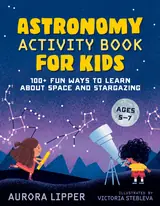 Astronomy Activity Book for KidsAurora Lipper, Victoria Stebleva66% match
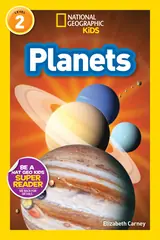 Planets (national Geographic Kids Readers, Level 2)Elizabeth Carney66% match
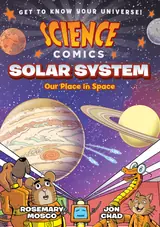 Science Comics: Solar SystemRosemary Mosco66% match
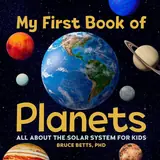 My First Book of PlanetsDr. Bruce Betts, Bruce Betts65% match
 Curiosity: the Story of a Mars RoverMarkus Motum65% match
 Space: Planets, Moons, Stars, and More!Joe Rhatigan63% match
 National Geographic Little Kids First Big Book of SpaceCatherine D. Hughes63% match
 The Mysteries of the UniverseWill Gater63% match
For older readers: Who Owns the Moon?, Chasing New Horizons, I Am the Universe
Start with three books, and this one can be the first.
Members get a new edition every morning: a route out from their books to essays, research and talks, with the reason for each.
Start with this bookAbout this book
What do you see when you look up into the sky at night? The moon, stars, maybe even a comet or asteroid? You can also see other planets! In Planetary Science: Explore New Frontiers, readers ages 12 to 15 embark on a journey through the solar system and beyond, exploring planets, moons, dwarf planets, exoplanets and everything in-between.
Continue reading
For many ancient cultures, planets were mysterious objects that moved against the backdrop of the heavens in strange but predictable patterns. Ever since Galileo Galilee first used a telescope to explore the moons of Jupiter, we’ve known that the planets are much more than mysterious points of light in the night sky. With the creation of incredible technologies such as space probes, giant ground-based telescopes, and Earth-orbiting observatories, we’ve learned that Mars once had water on its surface, that Jupiter’s Great Red Spot has been churning for centuries, and that thousands of exoplanets circle distant suns. Planetary science is also exciting because of what we don’t know. Was there ever life on Mars? Is Planet Nine lurking in the outer reaches of the solar system? Will we ever find another Earth? How far can we go? In Planetary Science, readers examine the latest information on Pluto, the discoveries of the Mars rover Curiosity, and the incredible catalog of distant planets uncovered by the Kepler Space Telescope. They learn about how planets are formed and why they travel on their orbits. Planets, those pinpricks of light you might spot on a clear night, come closer through informative illustrations, links to online primary sources, illuminating sidebars and fun facts, and hands-on, in-depth activities, such as building scale models of planets, hunting for alien worlds through citizen science, and crafting a comet in the kitchen. Planetary Science also promotes critical thinking skills through inquiry, discovery, and research by encouraging readers to explore questions that remain unanswered, such as whether Mars once had life or the possibility of a ninth planet hiding in the furthest reaches of the solar system. With discoveries being made almost every day, it’s an exciting time to be a planetary scientist!
Planetary Frontiers
Explore planets, moons, dwarf planets, and exoplanets through discoveries, illustrations, and hands-on activities.
Come here for
- Planet formation, planetary orbits, and discoveries from Mars and Kepler
- Activities include building scale models and crafting a comet
Expect
- Links to online primary sources, sidebars, and fun facts
- Questions about past life on Mars and a possible ninth planet
Where it sits
| Astronomy | 88% |
|---|---|
| Space & Rockets | 46% |
| Science Projects & Experiments | 41% |
Percentages are BookFrontier’s reading of the book.
Publisher categories
- Space & Rockets
- Science Projects & Experiments
- Scientific Discoveries
- Authors
- Matthew Brenden Wood
- Publisher
- Nomad Press
- Published
- September 15, 2017
- Format
- Print & ebook
- Theme
- Planets and the solar system · Planet formation and orbits · Searching for life beyond Earth
- Reading lane
- Space & Rockets