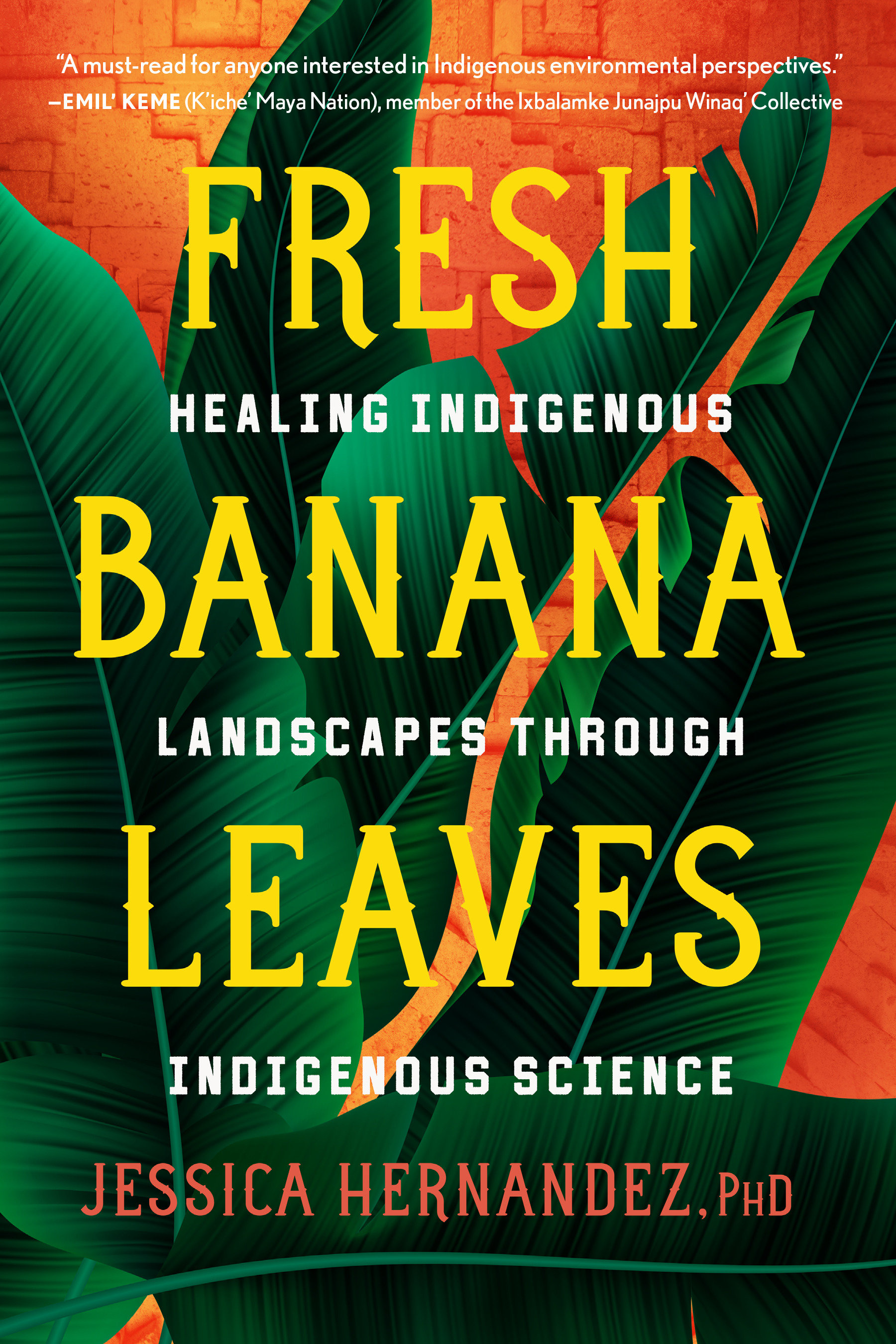
Fresh Banana Leaves
Healing Indigenous Landscapes Through Indigenous Science
North Atlantic Books · Print & ebook · January 18, 2022
A 2022 Los Angeles Times Book Prize Finalist in Science & Technology An Indigenous environmental scientist breaks down why western conservationism isn't working--and offers Indigenous models informed by case studies, personal stories, and family histories that center the voices of Latin American women and land protectors.
We earn from qualifying purchases.
- Who it’s for
- A layered look at landscapes, knowledge, and the stories we tell about both.
- Genres
- Conservation, Indigenous Studies, Climate Change
- Published
- North Atlantic Books, January 18, 2022
Nearest books
Matched by what the books are about, then ordered by what their readers also loved.
 Reclaiming Two-spiritsGregory Smithers, Shaun Taylor-Corbett61% match
 The Intersectional EnvironmentalistLeah Thomas63% matchShares Conservation and Climate Change
 Sea of GrassDave Hage, Josephine Marcotty58% matchShares Conservation
 LatinolandMarie Arana51% match
 Still Life With BonesAlexa Hagerty52% match
 All in Her HeadElizabeth Comen50% match
 Sacred InstructionsSherri Mitchell66% matchShares Indigenous Studies
For younger readers: Origin, When Water Flows, We Are Water Protectors
Start with three books, and this one can be the first.
Members get a new edition every morning: a route out from their books to essays, research and talks, with the reason for each.
Start with this bookAbout this book
A 2022 Los Angeles Times Book Prize Finalist in Science & Technology An Indigenous environmental scientist breaks down why western conservationism isn't working--and offers Indigenous models informed by case studies, personal stories, and family histories that center the voices of Latin American women and land protectors.
Continue reading
Despite the undeniable fact that Indigenous communities are among the most affected by climate devastation, Indigenous science is nowhere to be found in mainstream environmental policy or discourse. And while holistic land, water, and forest management practices born from millennia of Indigenous knowledge systems have much to teach all of us, Indigenous science has long been ignored, otherized, or perceived as "soft"--the product of a systematic, centuries-long campaign of racism, colonialism, extractive capitalism, and delegitimization. Here, Jessica Hernandez--Maya Ch'orti' and Zapotec environmental scientist and founder of environmental agency Piña Soul--introduces and contextualizes Indigenous environmental knowledge and proposes a vision of land stewardship that heals rather than displaces, that generates rather than destroys. She breaks down the failures of western-defined conservatism and shares alternatives, citing the restoration work of urban Indigenous people in Seattle; her family's fight against ecoterrorism in Latin America; and holistic land management approaches of Indigenous groups across the continent. Through case studies, historical overviews, and stories that center the voices and lived experiences of Indigenous Latin American women and land protectors, Hernandez makes the case that if we're to recover the health of our planet--for everyone--we need to stop the eco-colonialism ravaging Indigenous lands and restore our relationship with Earth to one of harmony and respect.
Where Knowledge Lives
A layered look at landscapes, knowledge, and the stories we tell about both.
Come here for
- Indigenous science framing
- Nature writing with cultural insight
Expect
- Insight / explanation
- Thoughtful, category-crossing reading
Where it sits
| Indigenous Studies | 68% |
|---|---|
| Conservation | 45% |
| Climate Change | 31% |
Percentages are BookFrontier’s reading of the book.
Publisher categories
- Conservation
- Climate Change
- Indigenous Studies
- Authors
- Jessica Hernandez Ph.D., Jessica Hernandez
- Publisher
- North Atlantic Books
- Published
- January 18, 2022
- Format
- Print & ebook
- Reading lane
- Conservation