
Understanding David Foster Wallace
University of South Carolina Press · Print & ebook · September 30, 2020
A Nonfiction pick for readers exploring Understanding David Foster Wallace.
We earn from qualifying purchases.
- Genres
- American Lit Crit, Writers' Lives, Literary Theory
- Published
- University of South Carolina Press, September 30, 2020
Nearest books
Matched by what the books are about, then ordered by what their readers also loved.
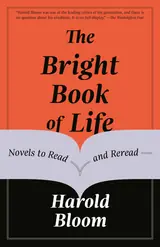 The Bright Book of LifeStephen Mendel, Harold Bloom54% match
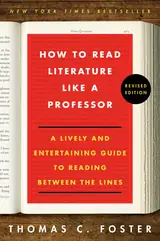 How to Read Literature Like a Professor Revised EditionThomas C Foster54% match
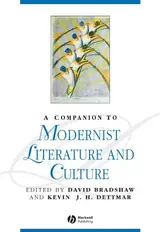 A Companion to Modernist Literature and CultureDavid Bradshaw, Kevin J. H. Dettmar53% matchShares American Lit Crit
 WonderlandsCharles Baxter52% match
 How Fiction WorksJames Wood52% match
 What Makes This Book So GreatJo Walton52% match
 The William H. Gass ReaderWilliam H. Gass52% match
 Wallace StevensHelen Vendler51% match
For younger readers: Bright Shining World
Start with three books, and this one can be the first.
Members get a new edition every morning: a route out from their books to essays, research and talks, with the reason for each.
Start with this bookAbout this book
Since its publication in 2003, Understanding David Foster Wallace has served as an accessible introduction to the rich array of themes and formal innovations that have made Wallace's fiction so popular and influential.
Continue reading
A seminal text in the burgeoning field of David Foster Wallace studies, the original edition of Understanding David Foster Wallace was nevertheless incomplete as it addressed only his first four works of fiction—namely the novels The Broom of the System and Infinite Jest and the story collections Girl with Curious Hair and Brief Interviews with Hideous Men. This revised edition adds two new chapters covering his final story collection, Oblivion, and his posthumous novel, The Pale King. Tracing Wallace's relationship to modernism and postmodernism, this volume provides close readings of all his major works of fiction. Although critics sometimes label Wallace a postmodern writer, Boswell argues that he should be regarded as the nervous leader of some still-unnamed (and perhaps unnamable) third wave of modernism. In charting a new direction for literary practice, Wallace does not seek to overturn postmodernism, nor does he call for a return to modernism. Rather his work moves resolutely forward while hoisting the baggage of modernism and postmodernism heavily, but respectfully, on its back. Like the books that serve as its primary subject, Boswell's study directly confronts such arcane issues as postmodernism, information theory, semiotics, the philosophy of Ludwig Wittgenstein, and poststructuralism, yet it does so in a way that is comprehensible to a wide and general readership—the very same readership that has enthusiastically embraced Wallace's challenging yet entertaining and redemptive fiction.
Where it sits
| American Lit Crit | 51% |
|---|---|
| Literary Theory | 40% |
| Writers' Lives | 36% |
Percentages are BookFrontier’s reading of the book.
Publisher categories
- Literary Theory
- 21st Century Literature
- Post-Structuralism
- Authors
- Marshall Boswell
- Publisher
- University of South Carolina Press
- Published
- September 30, 2020
- Format
- Print & ebook
- Reading lane
- Literary Theory