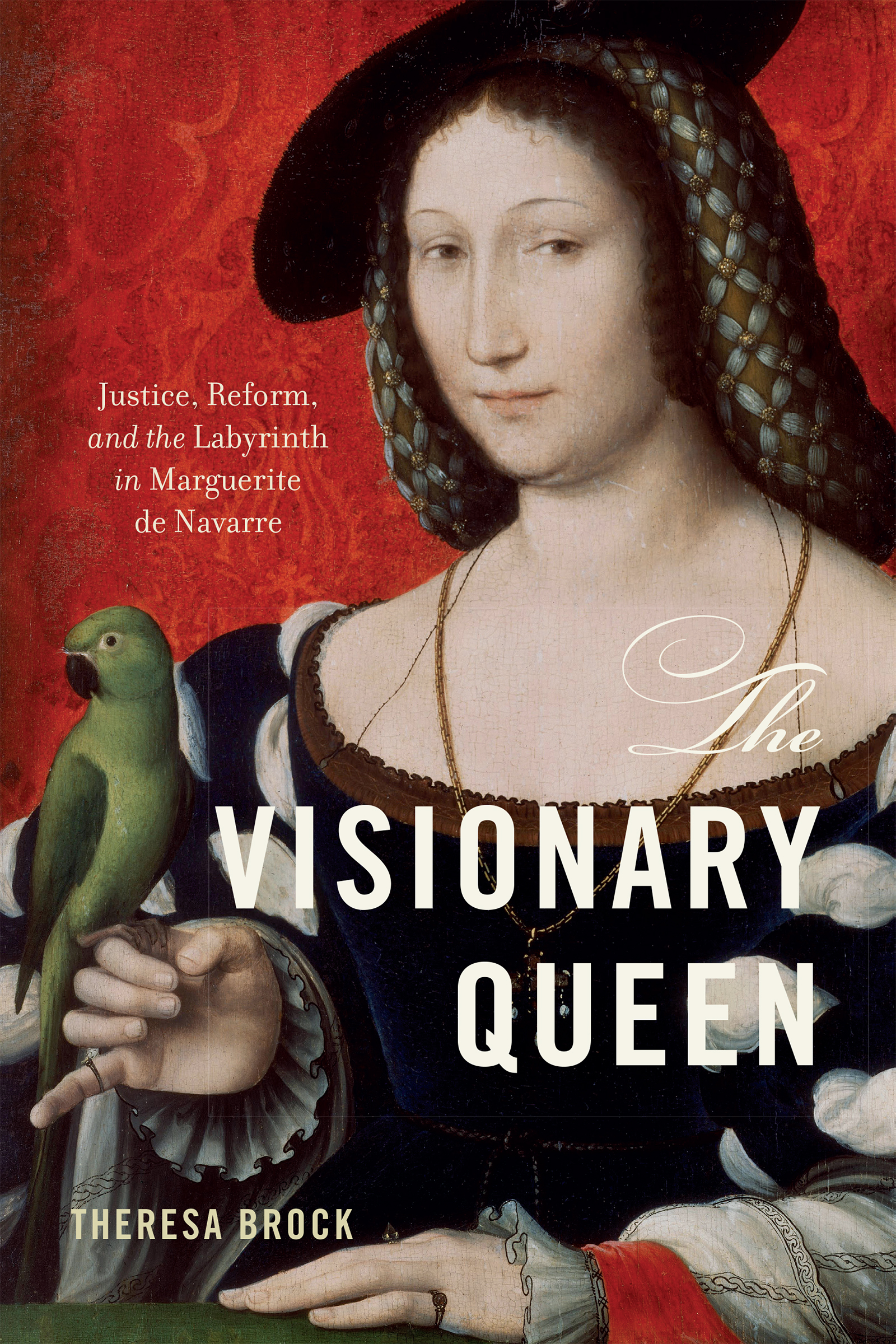
The Visionary Queen
Justice, Reform, and the Labyrinth in Marguerite De Navarre
University of Delaware Press · Print & ebook · October 13, 2023
We earn from qualifying purchases.
- Who it’s for
- Theresa Brock examines how Marguerite de Navarre used literature to imagine institutional reform.
- Themes
- Gendered injustice, Institutional reform, Labyrinth and redemption
- Genres
- Renaissance Literary Criticism, Women Authors Criticism, French Literary Criticism
Nearest books
Matched by what the books are about, then ordered by what their readers also loved.
 Women on the MarginsNatalie Zemon Davis49% match
 The Heroine's JourneyMaureen Murdock, Laurel Lefkow47% match
 Queens and Power in Medieval and Early Modern EnglandRobert Bucholz, Carole Levin47% match
 When God Was a WomanMerlin Stone47% match
For younger readers: Queen Eleanor, Queen's Own Fool, Merlin's Harp
Start with three books, and this one can be the first.
Members get a new edition every morning: a route out from their books to essays, research and talks, with the reason for each.
Start with this bookAbout this book
The Visionary Queen affirms Marguerite de Navarre’s status not only as a political figure, author, or proponent of nonschismatic reform but also as a visionary. In her life and writings, the queen of Navarre dissected the injustices that her society and its institutions perpetuated against women. We also see evidence that she used her literary texts, especially the Heptaméron, as an exploratory space in which to generate a creative vision for institutional reform.
Continue reading
The Heptaméron’s approach to reform emerges from statistical analysis of the text’s seventy-two tales, which reveals new insights into trends within the work, including the different categories of wrongdoing by male, institutional representatives from the Church and aristocracy, as well as the varying responses to injustice that characters in the tales employ as they pursue reform. Throughout its chapters, The Visionary Queen foregrounds the trope of the labyrinth, a potent symbol in early modern Europe that encapsulated both the fallen world and redemption, two themes that underlie Marguerite's project of reform.
The Heptaméron’s Reform
Theresa Brock examines how Marguerite de Navarre used literature to imagine institutional reform.
Come here for
- Marguerite de Navarre’s critique of injustices against women
- The Heptaméron’s tales and their approaches to reform
Expect
- Analysis of wrongdoing by male representatives of the Church and aristocracy
- The labyrinth as a symbol of the fallen world and redemption
Where it sits
| French Literary Criticism | 59% |
|---|---|
| Renaissance Literary Criticism | 37% |
| Women Authors Criticism | 31% |
Percentages are BookFrontier’s reading of the book.
Publisher categories
- Feminist Lit Crit
- French Literary Criticism
- Women Authors Criticism
- Renaissance Literary Criticism
Show all 6 publisher categories
- History of Christian Thought
- Religion & Gender
- Authors
- Theresa Brock
- Publisher
- University of Delaware Press
- Published
- October 13, 2023
- Format
- Print & ebook
- Theme
- Gendered injustice · Institutional reform · Labyrinth and redemption
- Reading lane
- Feminist Lit Crit