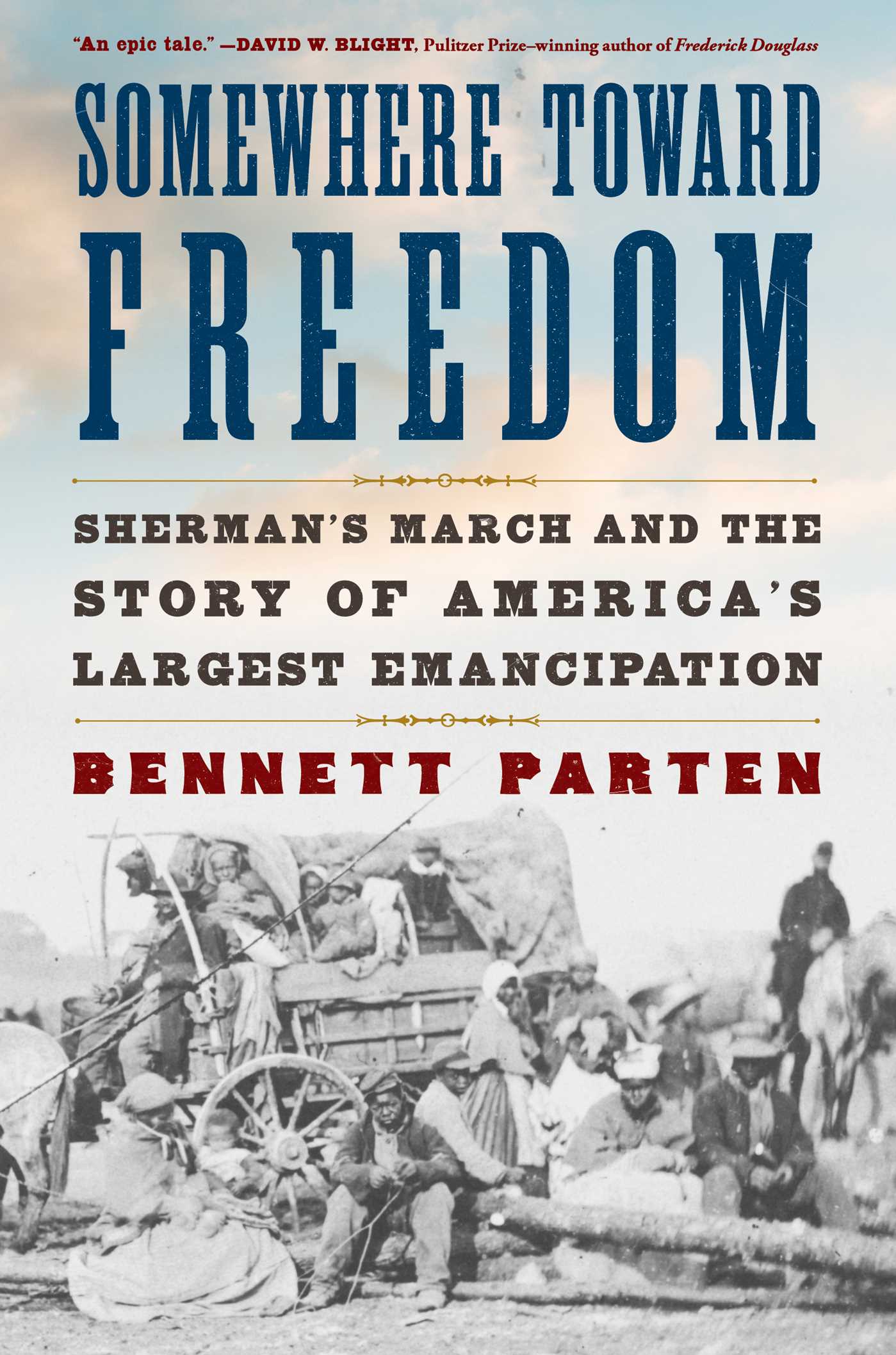
Somewhere Toward Freedom
Sherman's March and the Story of America's Largest Emancipation
Simon & Schuster · Print & ebook · January 21, 2025
Considered one of “the most innovative studies of American emancipation in the Civil War” (David W. Blight, Pulitzer Prize–winning author of Frederick Douglass), Somewhere Toward Freedom is a groundbreaking account of Sherman’s March to the Sea—the critical Civil War campaign that destroyed the Confederacy—told for the first time from the perspective of the enslaved people who transformed it into the biggest liberation event in American history.
We earn from qualifying purchases.
- Who it’s for
- See Sherman’s march through the experiences of enslaved people who made it a vast liberation event.
- Themes
- Emancipation and self-liberation, Enslaved people's experiences, Reconstruction
- Genres
- Civil War Era, Black History, Slavery Studies
Nearest books
Matched by what the books are about, then ordered by what their readers also loved. Most of these share its genre: Civil War Era.
 Midnight on the PotomacScott Ellsworth58% match
 Embattled RebelJames M. McPherson56% match
 Klan WarFergus M. Bordewich, Landon Woodson55% matchAlso shares Black History
 Charles SumnerZaakir Tameez55% match
 April 1865Jay Winik60% match
 To Rescue the RepublicBret Baier, Catherine Whitney55% match
 Lincoln's PeaceMichael Vorenberg58% match
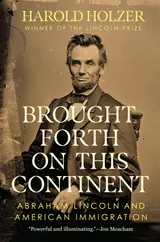 Brought Forth on This ContinentHarold Holzer53% match
For younger readers: Freedom on the Sea, The Flag Never Touched the Ground, What Was the Battle of Gettysburg?
Start with three books, and this one can be the first.
Members get a new edition every morning: a route out from their books to essays, research and talks, with the reason for each.
Start with this bookAbout this book
Considered one of “the most innovative studies of American emancipation in the Civil War” (David W. Blight, Pulitzer Prize–winning author of Frederick Douglass), Somewhere Toward Freedom is a groundbreaking account of Sherman’s March to the Sea—the critical Civil War campaign that destroyed the Confederacy—told for the first time from the perspective of the enslaved people who transformed it into the biggest liberation event in American history.
Continue reading
In the fall of 1864, General William Tecumseh Sherman led his army through Atlanta, Georgia, burning buildings of military significance—and ultimately most of the city—along the way. From Atlanta, they marched across the state to the most important city at the time: Savannah. Mired in the deep of the South with no reliable supply lines, Sherman’s army had to live off the land and the provisions on the plantations they seized along the way. As the army marched to the east, plantation owners fled, but even before they did so, slaves self-emancipated to Union lines. By the time the army seized Savannah in December, as many as 20,000 enslaved people had attached themselves to Sherman’s army. They endured hardships, marching as much as twenty miles a day—often without food or shelter from the winter weather—and at times Union commanders discouraged and even prevented the self-emancipated from staying with the army. Racism was not confined to the Confederacy. In Somewhere Toward Freedom, historian Bennett Parten brilliantly reframes this seminal episode in Civil War history. He not only helps us understand how Sherman’s March impacted the war, and what it meant to the enslaved, but also reveals how it laid the foundation for the fledging efforts of Reconstruction. When the war ended, Sherman and various government and private aid agencies seized plantation lands—particularly in the sea islands off the Georgia and South Carolina coasts—in order to resettle the newly emancipated. They were fed, housed, and in some instances, taught to read and write. This first real effort at Reconstruction was short-lived, however. As federal troops withdrew to the north, Confederate sympathizers and Southern landowners eventually brought about the downfall of this program. Sherman’s march has remained controversial to this day. But as Parten reveals, it played a significant role in ending the Civil War, due in no small part to the efforts of the tens of thousands of enslaved people who became a part of it. In Somewhere Toward Freedom, this critical moment in American history has finally been given the attention it deserves.
A March Reframed
See Sherman’s march through the experiences of enslaved people who made it a vast liberation event.
Come here for
- A Civil War campaign retold from the perspective of the enslaved
- A sharper view of emancipation’s place in the war
Expect
- A sustained account of hardship, self-emancipation, and contested freedom
- A clear-eyed look at the march’s legacy and early Reconstruction
Where it sits
| Civil War Era | 93% |
|---|---|
| Black History | 53% |
| Slavery Studies | 32% |
Percentages are BookFrontier’s reading of the book.
Publisher categories
- Civil War Era
- Southern U.S. History
- Black History
- Authors
- Bennett Parten
- Publisher
- Simon & Schuster
- Published
- January 21, 2025
- Format
- Print & ebook
- Theme
- Emancipation and self-liberation · Enslaved people's experiences · Reconstruction
- Reading lane
- Civil War Era