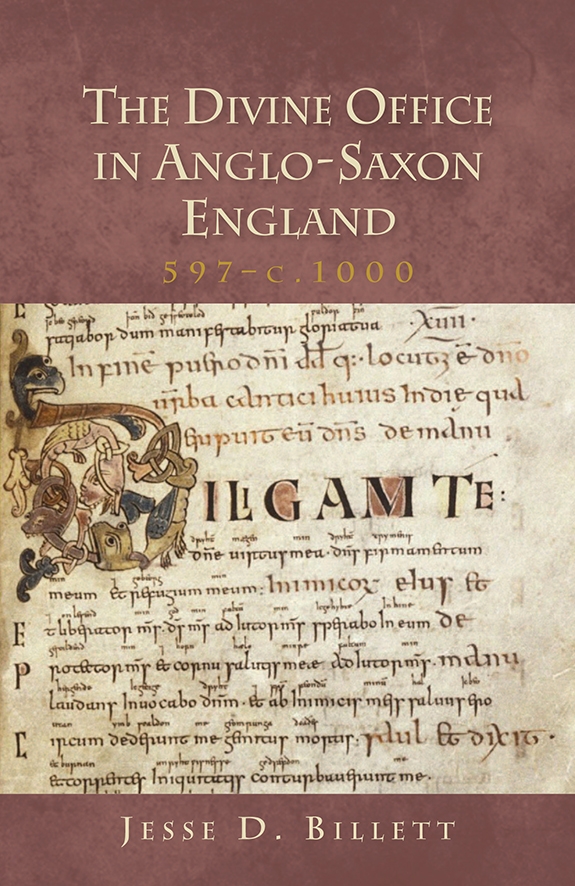
The Divine Office in Anglo-saxon England, 597-c.1000
Boydell & Brewer Inc. · Hardcover · September 18, 2014
At the heart of life in any medieval Christian religious community was the communal recitation of the daily "hours of prayer" or Divine Office.
We earn from qualifying purchases.
- Who it’s for
- A reconstruction of how Anglo-Saxon minster churches sang the Divine Office across four centuries.
- Genres
- Worship & Liturgy, Early Medieval Britain (to 1066), Monasticism
- Published
- Boydell & Brewer Inc., September 18, 2014
Nearest books
Matched by what the books are about, then ordered by what their readers also loved. Most of these share its genre: Early Medieval Britain (to 1066).
 Anglo-saxon ChronicleMichael Swanton, Anglo-Saxon Chronicle60% match
 The Birth of the Anglo-saxonsMax Adams59% match
 The Anglo-saxonsMarc Morris57% match
For younger readers: Enjoy the Silence, The Story of the Middle Ages, The Dragon and the Raven
Start with three books, and this one can be the first.
Members get a new edition every morning: a route out from their books to essays, research and talks, with the reason for each.
Start with this bookAbout this book
At the heart of life in any medieval Christian religious community was the communal recitation of the daily "hours of prayer" or Divine Office. This book draws on narrative, conciliar, and manuscript sources to reconstruct the history of how the Divine Office was sung in Anglo-Saxon minster churches from the coming of the first Roman missionaries in 597 to the height of the "monastic revival" in the tenth century.
Continue reading
Going beyond both the hagiographic "Benedictine" assumptions of older scholarship and the cautious agnosticism of more recent historians of Anglo-Saxon Christianity, the author demonstrates that the early Anglo-Saxon Church followed a non-Benedictine "Roman" monasticliturgical tradition. Despite Viking depredations and native laxity, this tradition survived, enriched through contact with varied Continental liturgies, into the tenth century. Only then did a few advanced monastic reformers conclude, based on their study of ninth-century Frankish reforms fully explained for the first time in this book, that English monks and nuns ought to follow the liturgical prescriptions of the Rule of St Benedict to the letter. Fragmentary manuscript survivals reveal how monastic leaders such as Dunstan and Æthelwold variously adapted the native English liturgical tradition - or replaced it - to implement this forgotten central plank of the "Benedictine Reform". Jesse D. Billett is Assistant Professor in the Faculty of Divinity, Trinity College, Toronto.
Anglo-Saxon Minster Worship
A reconstruction of how Anglo-Saxon minster churches sang the Divine Office across four centuries.
Come here for
- The sung Divine Office in Anglo-Saxon minster churches
- Narrative, conciliar, and manuscript sources
Expect
- A non-Benedictine Roman tradition and its Continental liturgical contacts
- Tenth-century adaptations and replacements under monastic reformers
Where it sits
| Worship & Liturgy | 75% |
|---|---|
| Monasticism | 58% |
| Early Medieval Britain (to 1066) | 50% |
Percentages are BookFrontier’s reading of the book.
Publisher categories
- History of Religion
- Monasticism
- Authors
- Jesse D. Billett
- Publisher
- Boydell & Brewer Inc.
- Published
- September 18, 2014
- Format
- Hardcover
- Reading lane
- History of Religion