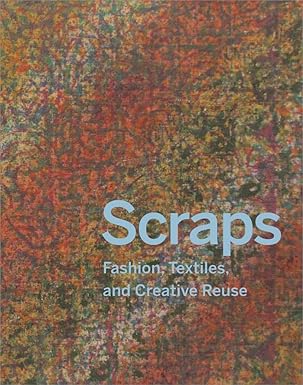
Scraps: Fashion, Textiles, and Creative Reuse
Three Stories of Sustainable Design
Cooper Hewitt, Smithsonian Design Museum · Print & ebook · October 25, 2016
The textile and fashion industries produce millions of tons of solid waste every year through the many processes used--from yarn production, weaving, knitting, dyeing and finishing, to apparel construction, quality inspection and unsold goods--generating waste at each step.
We earn from qualifying purchases.
- Who it’s for
- Three designers approach textile waste through reuse, craft traditions, and new design practices.
- Genres
- Textile & Costume Design, Fashion & Accessories, Group Show Catalogs
- Published
- Cooper Hewitt, Smithsonian Design Museum, October 25, 2016
Nearest books
Matched by what the books are about, then ordered by what their readers also loved. Most of these share its genre: Fashion & Accessories.
 Why French Women Wear VintageAlois Guinut60% match
 The Art of Clothing CareSteamery, Steamery Stockholm58% match
 The Conscious ClosetElizabeth L. Cline, Penguin Audio58% match
 WornSofi Thanhauser, Rebecca Lowman58% matchAlso shares Textile & Costume Design
For younger readers: How to Be a Fashion Designer, Total Garbage, The Power of Style
Start with three books, and this one can be the first.
Members get a new edition every morning: a route out from their books to essays, research and talks, with the reason for each.
Start with this bookAbout this book
The textile and fashion industries produce millions of tons of solid waste every year through the many processes used--from yarn production, weaving, knitting, dyeing and finishing, to apparel construction, quality inspection and unsold goods--generating waste at each step. Typically, this waste is sent to landfills, incinerated or, at best, recycled into low-quality fibers used for industrial applications.
Continue reading
Scraps , published for Cooper Hewitt, Smithsonian Design Museum’s exhibition of the same name, presents three designers’ alternative approaches to the shockingly high human and environmental costs of textile industry waste. Christina Kim, founder of Los Angeles–based brand Dosa; Reiko Sudo, cofounder of Tokyo textile firm Nuno; and Luisa Cevese, founder of Milan-based accessories and home goods company Riedizioni, all share a profound respect for scraps as repositories of raw materials, energy, labor and creativity. Inspired by the long tradition of using handcraft to give new life to scraps and castoffs, each takes an entirely different approach to contending with textile waste, but all agree that there is much to be gained--aesthetically and financially, as well as environmentally and socially--by making recycling an integral part of their design practice. The delicate beauty of the fabrics featured here ensures a seductive visual experience, framing the exploration of sustainable design practices: using materials and resources efficiently, providing meaningful labor, sustaining local craft traditions and exploring new technologies as integral to the recycling process. Each copy of the book is bound in its own unique discarded Indian woodblock-printed textile with foil stamping. Read more
Textile Scraps
Three designers approach textile waste through reuse, craft traditions, and new design practices.
Come here for
- Alternative approaches from Christina Kim, Reiko Sudo, and Luisa Cevese
- Scraps considered as raw materials, energy, labor, and creativity
Expect
- Textile waste across production, from yarn-making to unsold goods
- Sustainable design practices involving local craft traditions and new technologies
Where it sits
| Textile & Costume Design | 75% |
|---|---|
| Fashion & Accessories | 42% |
| Group Show Catalogs | 31% |
Percentages are BookFrontier’s reading of the book.
Publisher categories
- Sustainable & Green Design
- Group Show Catalogs
- Textile & Costume Design
- Authors
- Susan Brown, Matilda McQuaid
- Publisher
- Cooper Hewitt, Smithsonian Design Museum
- Published
- October 25, 2016
- Format
- Print & ebook
- Reading lane
- Sustainable & Green Design