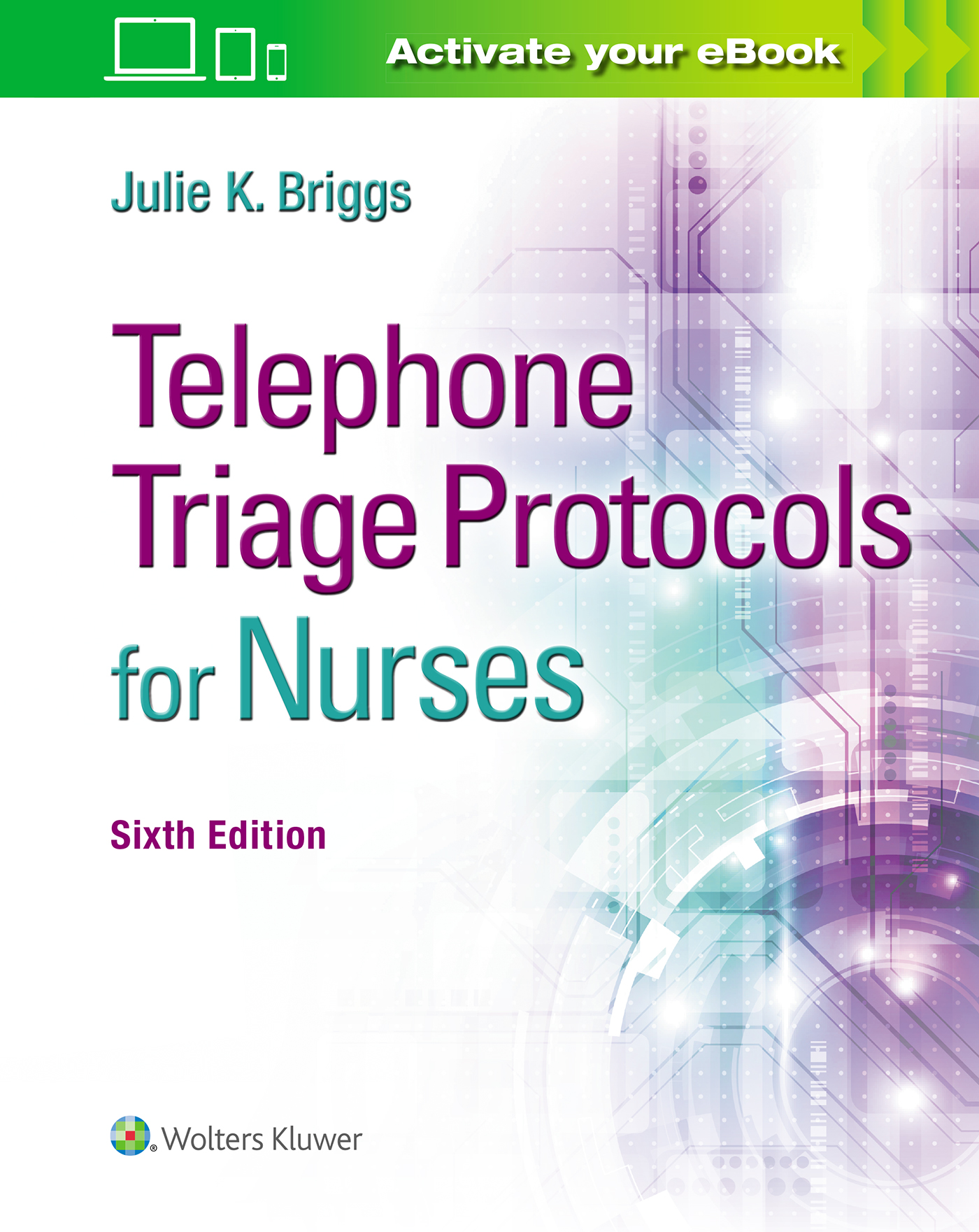
Telephone Triage Protocols for Nurses
Wolters Kluwer · Print & ebook · June 17, 2020
A Nursing pick for readers exploring Telephone Triage Protocols for Nurses.
We earn from qualifying purchases.
- Who it’s for
- Flow charts turn callers' Yes-or-No answers into specific care recommendations.
- Themes
- Telephone symptom assessment, Triage of medical emergencies, Nursing care recommendations
- Genres
- Nursing Assessment, Emergency Nursing, Community & Home Nursing
Nearest books
Matched by what the books are about, then ordered by what their readers also loved.
 Fast Facts for the Triage NurseLynn Sayre Visser, Anna Sivo Montejano69% matchShares Nursing Assessment and Emergency Nursing
 Fast Facts for the ER NurseJennifer R. Buettner65% matchShares Emergency Nursing
 RNotesEhren Myers59% match
 Medical-surgical Nursing Made Incredibly EasyLippincott Williams & Wilkins, Keelin Cromar58% match
 Taylor's Clinical Nursing SkillsPamela B Lynn57% match
 Fast Facts for the Radiology NurseValerie Aarne Grossman57% match
 The Art of Communication in Nursing and Health CareTheresa Raphael-Grimm56% match
 Critical Care Nursing Made Incredibly EasyDavid W. Woodruff56% matchShares Emergency Nursing
For younger readers: Will Puberty Last My Whole Life?, The Girl's Body Book
Start with three books, and this one can be the first.
Members get a new edition every morning: a route out from their books to essays, research and talks, with the reason for each.
Start with this bookAbout this book
Assess the nature and severity of callers' symptoms quickly and confidently, withTelephone Triage Protocols for Nurses, 6th Edition.More than 200 alpha-organized protocols address a wide range of symptoms, disorders and medical emergencies, while the flow chart format leads callers to provide vital Yes or No answers to appropriate questions.
Continue reading
This comprehensive manual - a must-have for nurses both new and experienced - offers accurate care recommendations even when client information is limited. Follow expert direction and make quick, accurate assessments ... - NEWand updated protocolsoffer current best practices and reflect changes in access to medications and health care - Protocols address adult, pediatric, geriatric, maternal/child, home health concerns, current health issues, and communicable disease outbreaks - NEWprotocols include arthritis, chronic obstructive pulmonary disease (COPD), elder abuse, stroke symptoms, and Zika virus - Post-operative conditions and considerations have been added to numerous protocols - Expanded appendices include altered mental status, PTSD, suicide prevention, and emergency preparedness - Alpha-organized protocolshelp you quickly locate topics by symptom or condition - Table of contents by body systemhelps you quickly locate topics by body system, body part or set of related symptoms - Peer-reviewed by nursing experts - Easy-to-follow question-asking flow chart - Yes or No answers lead to specific care recommendations - Ideal guidance for all nurses, particularly those in triage and ambulatory practice - Sorts life-threatening problemsfrom those not requiring physician or emergency care - Increases consistencyof advice and documentation - Nurse Alerts- help the nurse identify potentially life-threatening conditions related to the symptoms and provides additional information to consider when choosing a protocol or triaging the caller's concern - Symptoms alpha-organized andgrouped by level of urgency,addressing injuries, trauma, pain, swelling and other symptoms for: - Body part problems - Body system problems - Chronic and infectious diseases - Behavioral problems - Pediatric-specific problems - Maternal/obstetric specific problems or conditions - Sections under every symptom or condition include: - Key Questionsto ask caller - Other Protocols to Consider - Reminder- what to note for proper documentation - Assessment- Yes or No questions to determine the urgency of symptoms or conditions - Actions- clear direction following Yes or No answers to questions - Immediate actions- proven protocols that refer caller to emergency, physician, or at-home care instructions - Home Care Instructions- comprehensive actions to take before emergency care, before appointment, or at-home care - Emergency Instructions- in-the-moment first aid&l
Yes-or-No Triage
Flow charts turn callers' Yes-or-No answers into specific care recommendations.
Come here for
- Question flow charts that lead from caller answers to care recommendations
- Protocols grouped by symptom urgency
Expect
- Protocols organized alphabetically by symptom or condition
- A table of contents organized by body system
Where it sits
| Emergency Nursing | 51% |
|---|---|
| Nursing Assessment | 48% |
| Community & Home Nursing | 36% |
Percentages are BookFrontier’s reading of the book.
Publisher categories
- Nursing
- Emergency Nursing
- Authors
- Julie K Briggs
- Publisher
- Wolters Kluwer
- Published
- June 17, 2020
- Format
- Print & ebook
- Theme
- Telephone symptom assessment · Triage of medical emergencies · Nursing care recommendations
- Reading lane
- Nursing