
The Art of Writing Reasonable Organic Reaction Mechanisms
Third Edition 2019
Springer Nature · Print & ebook · January 8, 2021
Intended for students of intermediate organic chemistry, this text shows how to write a reasonable mechanism for an organic chemical transformation.
We earn from qualifying purchases.
- Who it’s for
- Learn to write organic reaction mechanisms through pathways, conditions, worked problems, and practical drawing advice.
- Genres
- Organic Chemistry, Biochemistry, Inorganic Chemistry
- Published
- Springer Nature, January 8, 2021
Nearest books
Matched by what the books are about, then ordered by what their readers also loved. Most of these share its genre: Organic Chemistry.
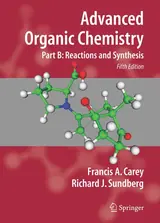 Advanced Organic ChemistryFrancis A. Carey, Richard J. Sundberg71% match
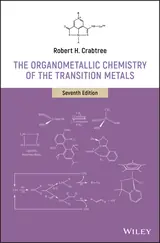 The Organometallic Chemistry of the Transition MetalsRobert H. Crabtree70% matchAlso shares Inorganic Chemistry
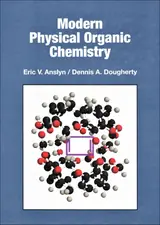 Modern Physical Organic ChemistryEric V. Anslyn, Dennis A. Dougherty67% match
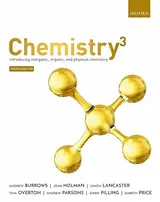 Chemistry 3Andrew Burrows, John Holman67% match
 Inorganic ChemistryGary L. Miessler, Donald A. Tarr65% matchAlso shares Inorganic Chemistry
 Heterocyclic ChemistryJohn A. Joule, Keith Mills64% match
 Inorganic ExperimentsJ. Derek Woollins64% matchAlso shares Inorganic Chemistry
 Chemical Structure and ReactivityJames Keeler, Peter Wothers64% match
For younger readers: CHEM MAT & CHG SE, Everything You Need to Ace Chemistry in One Big Fat Notebook
Start with three books, and this one can be the first.
Members get a new edition every morning: a route out from their books to essays, research and talks, with the reason for each.
Start with this bookAbout this book
Intended for students of intermediate organic chemistry, this text shows how to write a reasonable mechanism for an organic chemical transformation. The discussion is organized by types of mechanisms and the conditions under which the reaction is executed, rather than by the overall reaction as is the case in most textbooks. The treatment emphasizes unifying principles, showing how common mechanisms link seemingly disparate reactions.
Continue reading
Each chapter discusses common mechanistic pathways and suggests practical tips for drawing them. Worked problems are included in the discussion of each mechanism, and "common error alerts" are scattered throughout the text to warn readers about pitfalls and misconceptions that bedevil students. Each chapter is capped by a large problem set. The author has drawn on his own research and the current literature to ensure that appropriate attention is given to topics across the range of modern organic chemistry. The text is unique inits inclusion of a chapter on reactions mediated or catalyzed by transition metals, an area in which mechanistic understanding is now essential. More modern topics such as olefin metathesis and cycloaromatization are covered without giving short shrift to more traditional areas such as carbonyl chemistry. The text assumes a basic knowledge of organic chemistry. It can be used either in a formal course or by students working on their own, and will be particularly useful for graduate students studying for qualifying examinations. It will also be useful to students and researchers in biochemistry, pharmacology, and inorganic chemistry. The third edition includes greater discussion of the reactions of biological cofactors such as thiamine and pyridoxal, and discussions of modern developments such as metal-catalyzed C-H activation reactions have been added. In terms of stylistic improvements, the author has introduced color into drawings to improve visual clarity and has improved the depictions of radical anions and radical chain reactions.
Mechanism by Pathway
Learn to write organic reaction mechanisms through pathways, conditions, worked problems, and practical drawing advice.
Come here for
- Mechanisms organized by pathway and reaction conditions
- Worked problems, practical drawing tips, and common-error alerts
Expect
- Chapter-ending problem sets and coverage from carbonyl chemistry to metal catalysis
- Third-edition additions on biological cofactors and C–H activation
Where it sits
| Organic Chemistry | 100% |
|---|---|
| Biochemistry | 27% |
| Inorganic Chemistry | 27% |
Percentages are BookFrontier’s reading of the book.
Publisher categories
- Clinical Medicine
- Pharmacology
- Authors
- Robert B. Grossman
- Publisher
- Springer Nature
- Published
- January 8, 2021
- Format
- Print & ebook
- Reading lane
- Clinical Medicine